營運數據重質不重量 S4E40

營運數據重質不重量 S4E40

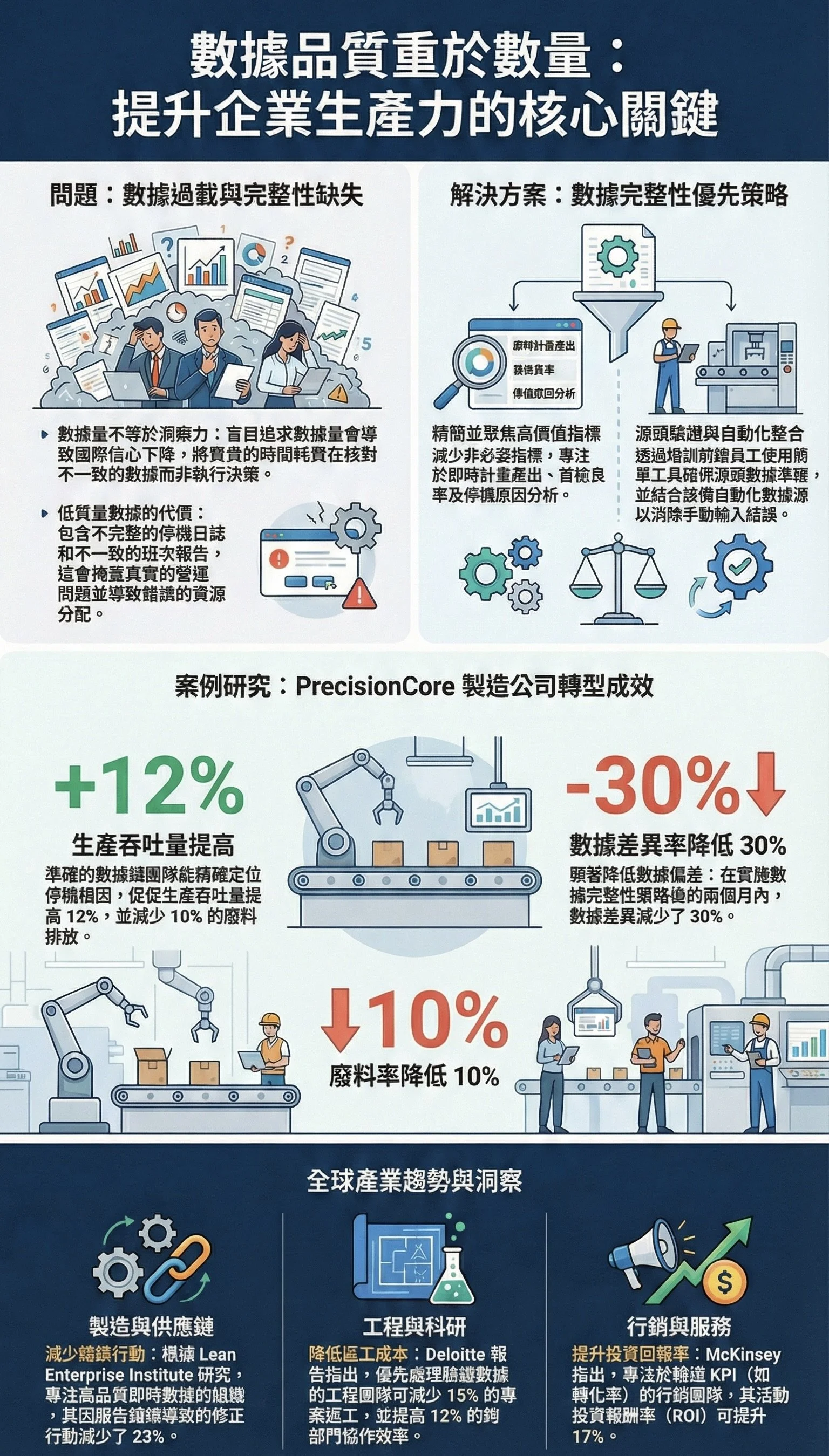
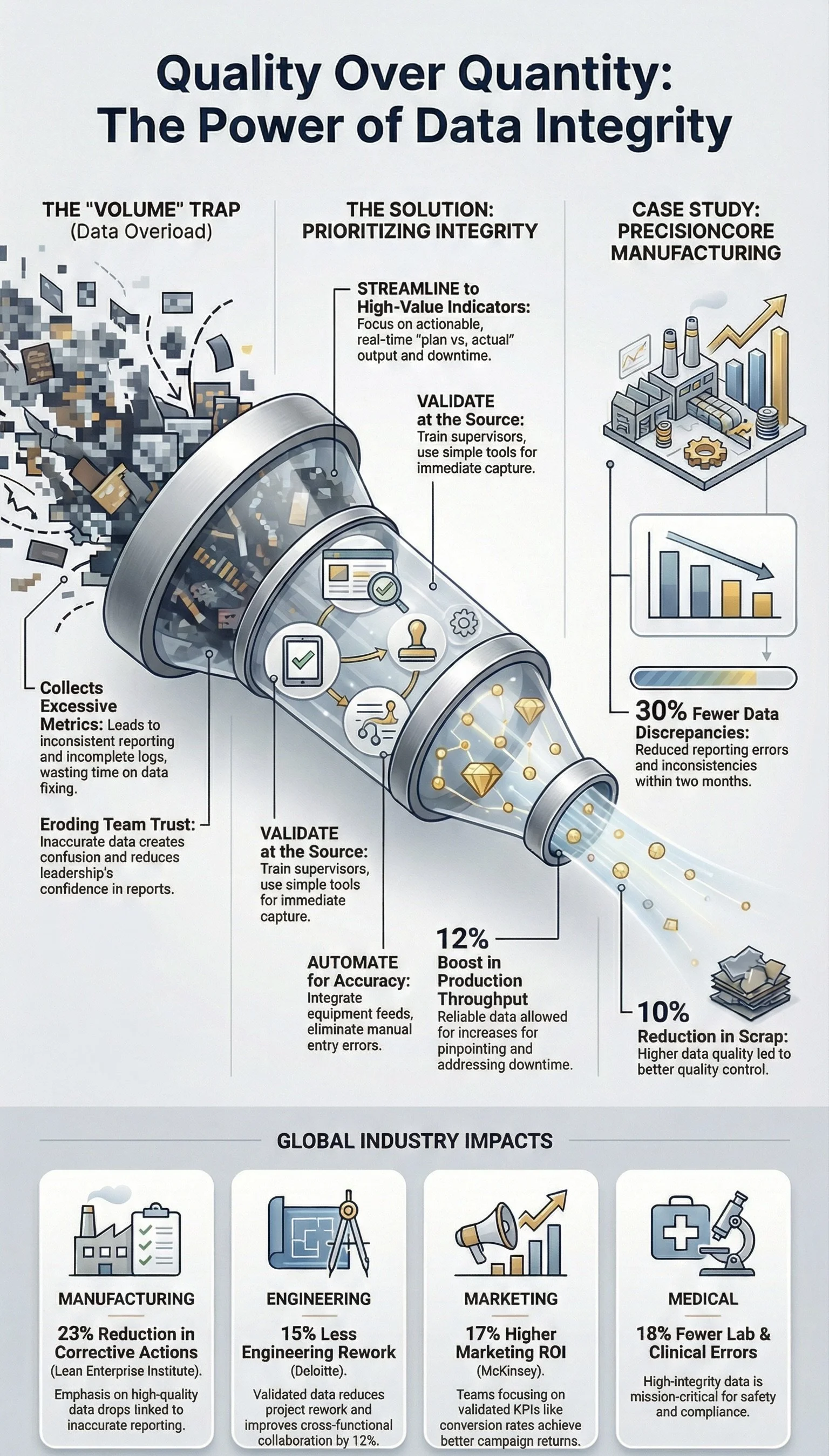
在當代的企業管理決策中,領導者正普遍面臨一種新型態的危機:數據過載導致的「決策癱瘓」(Analysis Paralysis)。許多管理者迷信「大數據」的力量,認為監測的指標越多、儀表板越華麗,決策就越精準。然而,現實往往事與願違。當你走進每日晨會,團隊成員若不是在討論如何解決產線瓶頸,而是在爭辯數據來源是否可靠、或是為何報表邏輯出現偏差時,這些多餘的數據已成為組織效率的絆腳石。

這種「數據洪流」不僅耗費昂貴的行政成本,更會蠶食管理層的認知頻寬。事實上,數據量(Volume)往往是決策效率的敵人,而「數據誠信」(Data Integrity)才是決定企業能否保持敏捷的核心競爭力。
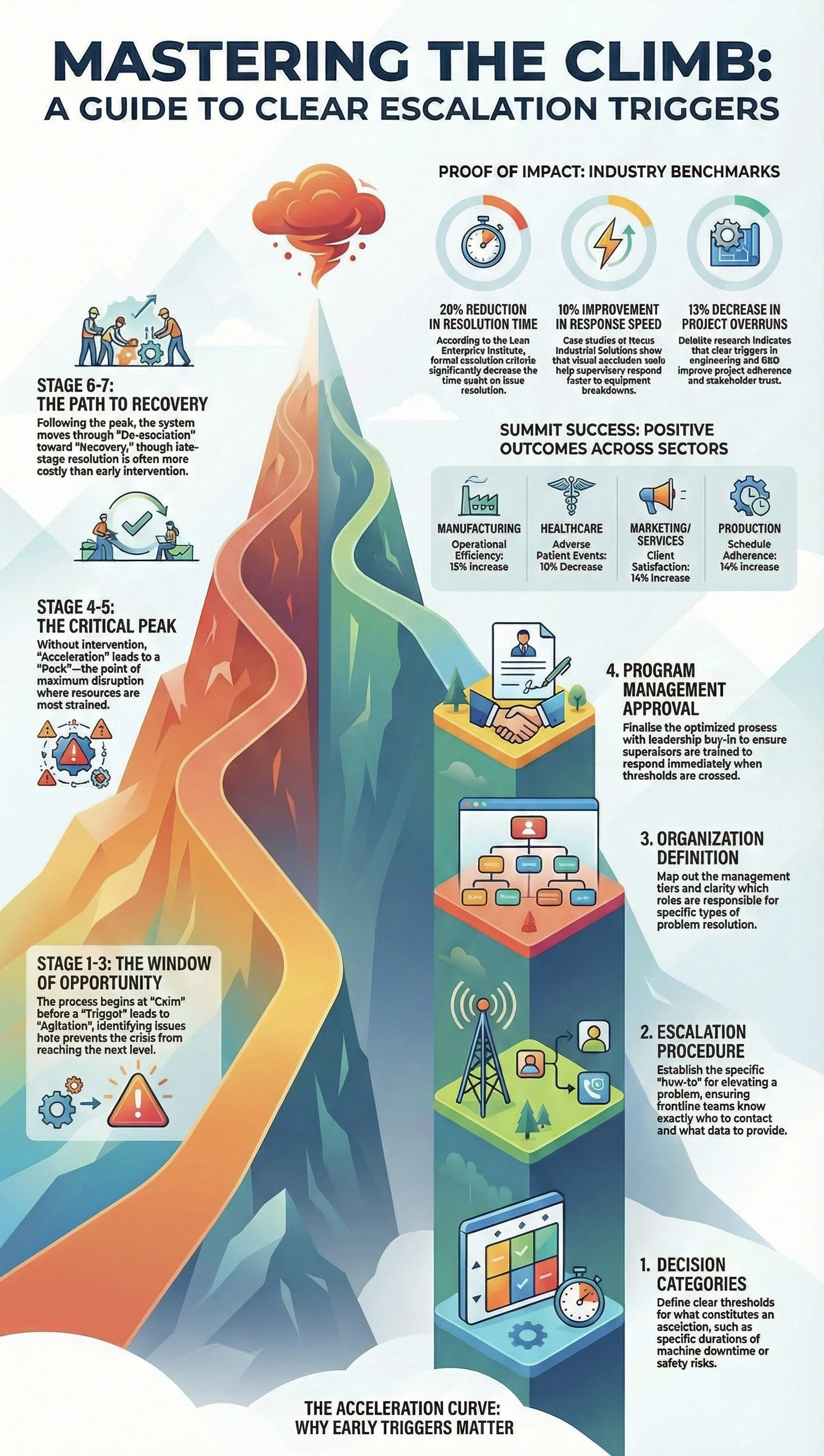
Operational Discipline|Do Strict Escalation Triggers Acceleration|S4E41 Continuous Improvement Lab

Operational Discipline|Do Strict Escalation Triggers Acceleration|S4E41 Continuous Improvement Lab

In the high-pressure environments of modern industry, "firefighting" is frequently misdiagnosed as productivity. It is a pervasive workplace frustration: a minor mechanical hiccup or a slight quality deviation occurs, but frontline workers—uncertain of the threshold for intervention—attempt to resolve the issue in isolation. By the time the problem surfaces to management, it has snowballed into a catastrophic production stoppage.

Management Operating Systems| Prioritize Data Integrity Over Volume| S4E40 - Continuous Improvement Lab

Management Operating Systems| Prioritize Data Integrity Over Volume| S4E40 - Continuous Improvement Lab

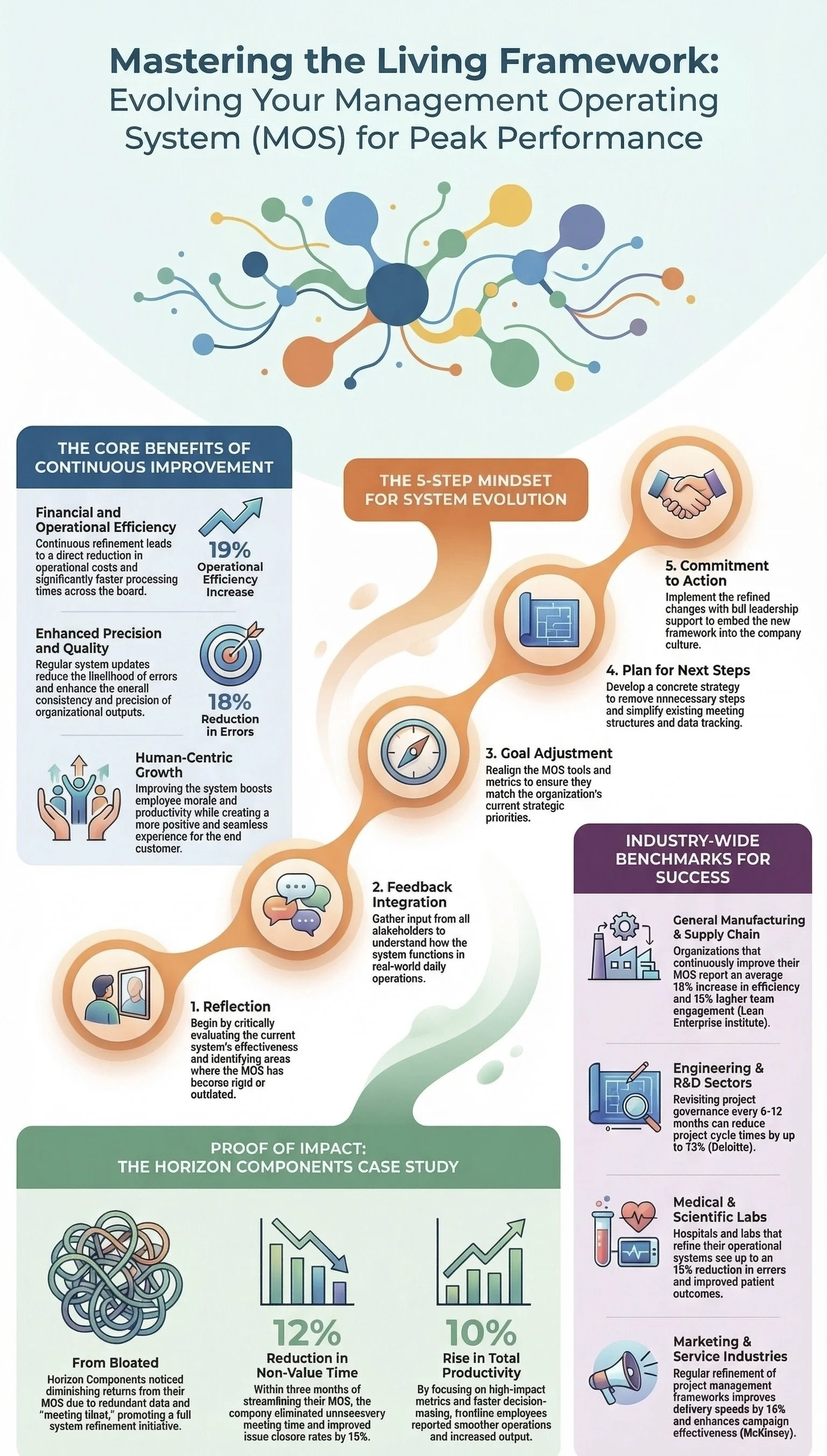
Most leaders begin their day buried under 50-page slide decks and exhaustive dashboards, yet they often struggle to answer a fundamental question: Why did we miss our target yesterday? This is the "data drowning" reality of the modern enterprise. We operate under the flawed assumption that volume equals insight, but in practice, excessive data often creates "decision latency" and operational friction. The counter-intuitive truth known to the most effective organizations is that a leaner data set—rooted in integrity and actionability—is the ultimate catalyst for high-velocity decision-making. To reclaim productivity, leadership must pivot from managing the quantity of metrics to ruthlessly protecting the integrity of the information.

贏了就該踩剎車 S6E54

贏了就該踩剎車 S6E54

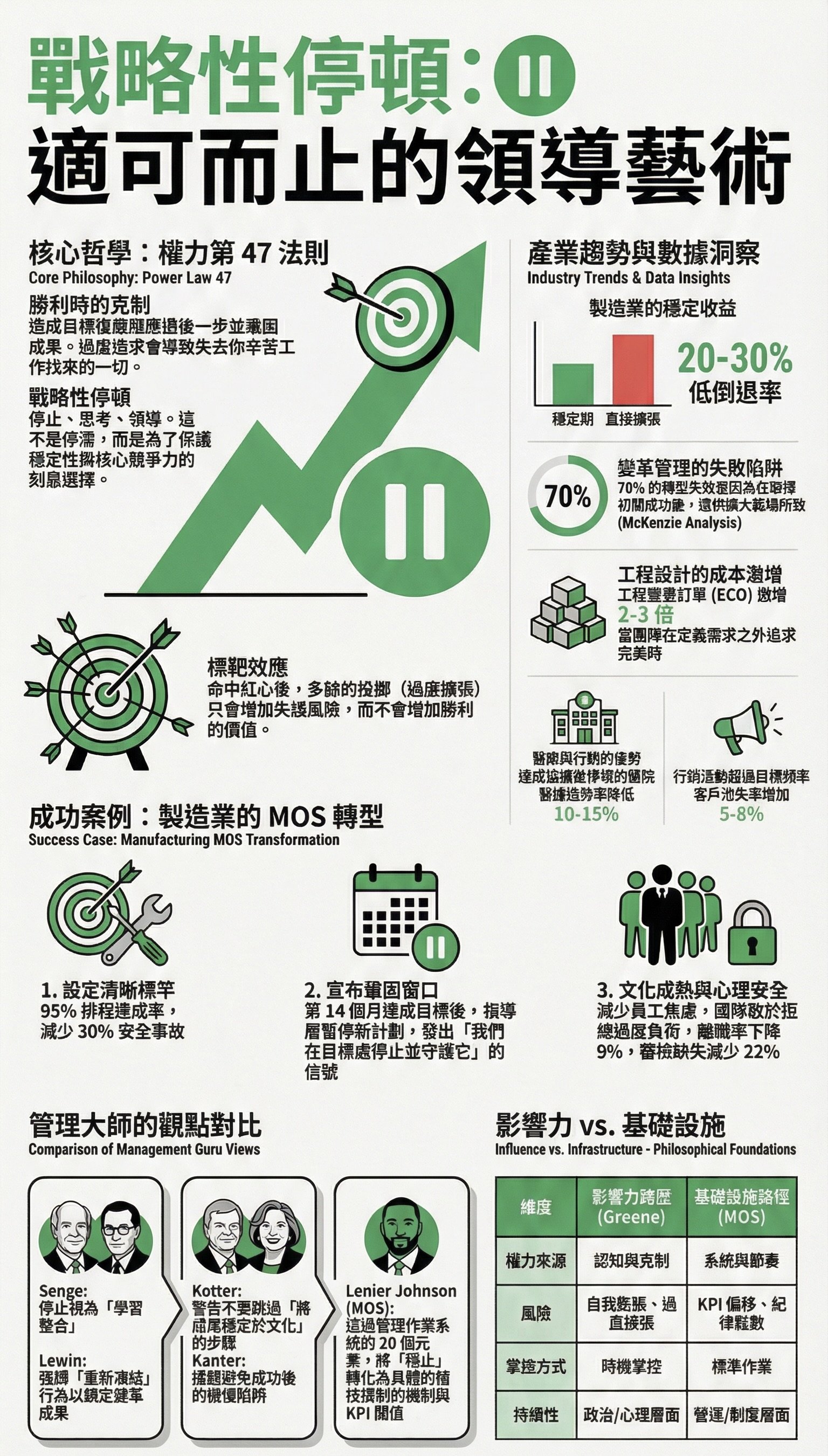
在當代商業競爭的修羅場中,我們經常目睹一個令人費解的悖論:許多企業在達到業績巔峰、完成重大的轉型後,往往會迅速滑落。這種衰退並非源於失敗,反而源於「成功」帶來的盲目擴張。當領導者被初期的勝利衝昏頭腦,試圖跨越原本設定的界線時,組織的承載力往往會崩潰。

這正是戰略專家 Don Graumann 所提出的「戰略性停頓」(Strategic Pause) 概念之核心。卓越領導力的真諦不在於永無止盡的衝鋒,而是在於:「停止、思考、領導」(Stop. Think. Lead.)。本文將結合羅伯特·格林的權力動態與現代管理作業系統 (MOS),深度剖析為何「不超越預定目標」才是保存長期實力的最高智慧。

Sustain Victory by Knowing When to Stop S6E54

Sustain Victory by Knowing When to Stop S6E54

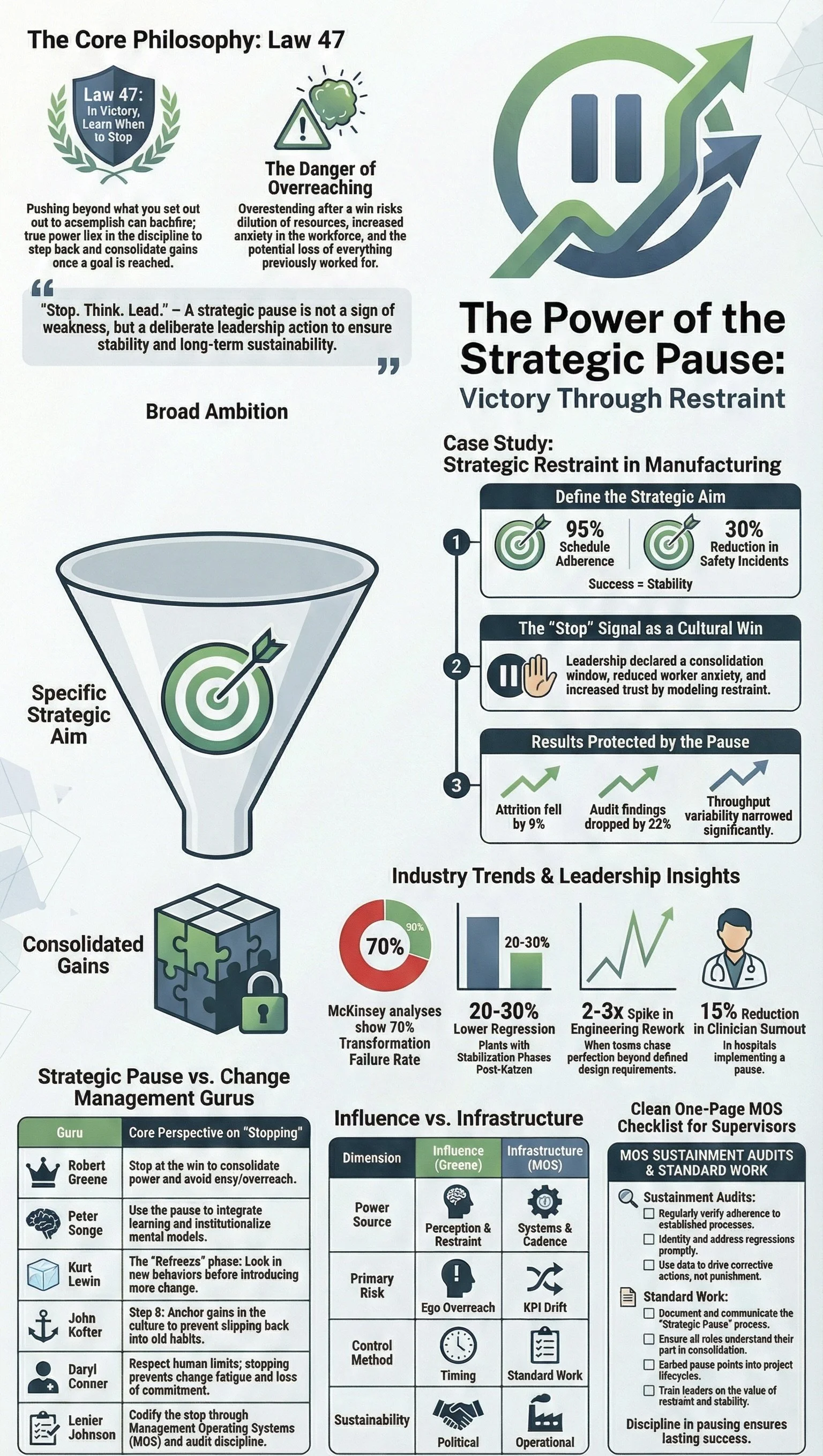
For most executives, the "Glory of the Charge" is an intoxicating siren song. We are conditioned to believe that relentless momentum is the only hallmark of a high-performer and that every milestone reached is merely a green light to push harder. However, in the high-stakes arena of organizational transformation, the most dangerous moment for a leader is the one immediately following a hard-won victory.

This is the Victory Trap: an ego-driven obsession with "more" that blinds leaders to the reality that they have outrun their own supply lines. When success leads to immediate overreach, the result is rarely growth; it is the accumulation of cultural and technical debt that eventually bankrupts the original win. To navigate this, the modern architect of culture must master the Strategic Pause. By internalizing the framework to Stop. Think. Lead., leaders transform from impulsive chasers of momentum into disciplined guardians of sustainable performance.

會議格式標準化是萬靈丹還是枷鎖 S4E39

會議格式標準化是萬靈丹還是枷鎖 S4E39

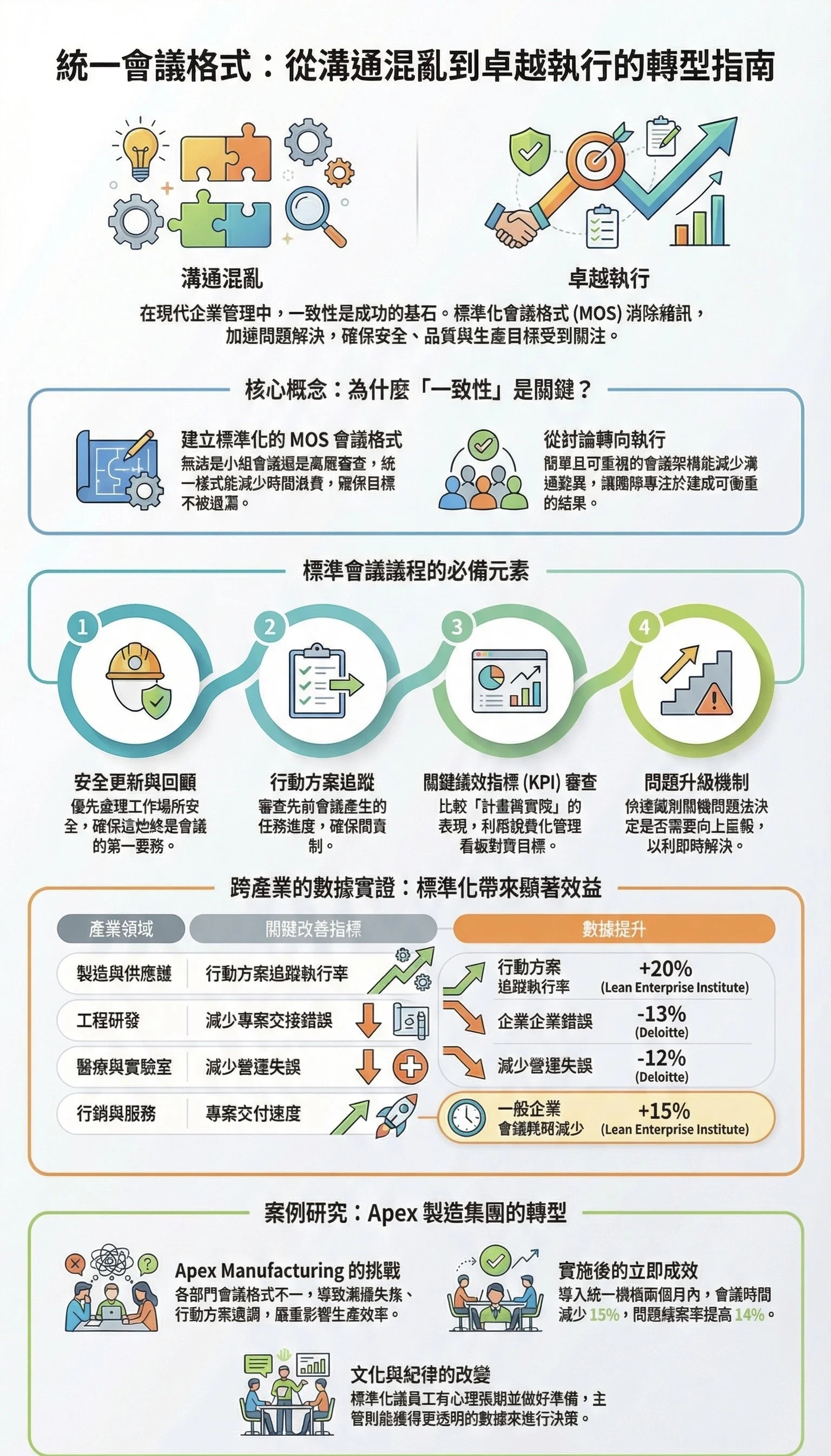
在企業營運的戰場上,無效率的會議不僅是時間的黑洞,更是一項沉重的「隱形稅收」。身為營運策略顧問,我常看到許多管理者的行事曆被碎片化、無重點且充滿程序變異性 (Process Variability) 的討論填滿。這並非單純的時間管理問題,而是組織缺乏營運紀律 (Operational Discipline) 的體現。

當會議缺乏結構,團隊的認知負荷會被浪費在試圖理解「現在要討論什麼」,而非「如何解決問題」。要終結這種混亂,我們必須導入 MOS (管理作業系統) 的核心原則:透過格式標準化,將討論轉化為精確的執行力。

Why Every Meeting Needs A Standard Format S4E39

Why Every Meeting Needs A Standard Format S4E39

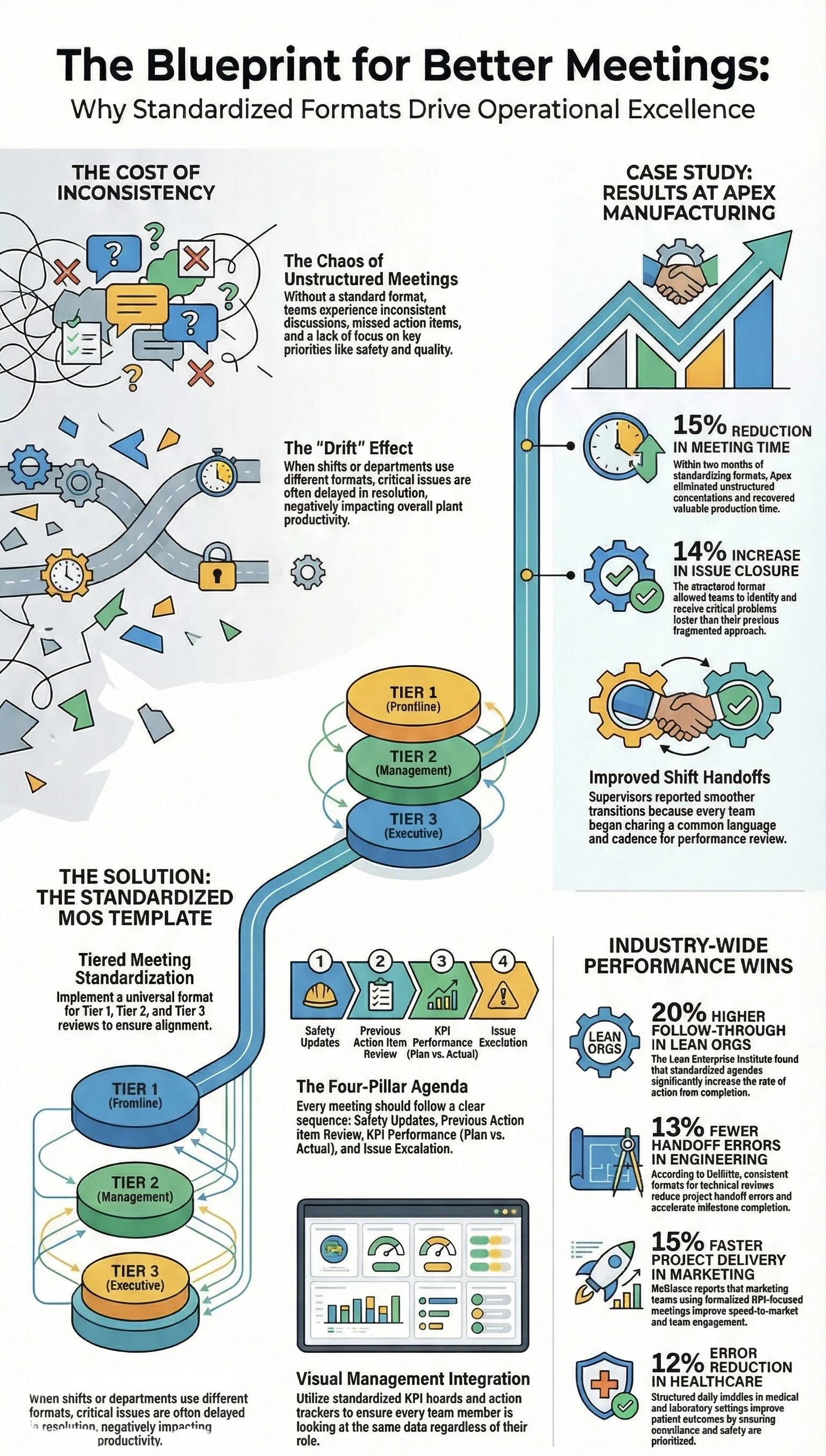
Most professionals view the "unstructured" meeting as a necessary evil—a wandering, aimless calendar void that drains energy and stalls momentum. We’ve been conditioned to think that rigid agendas stifle creativity, yet the opposite is true. In the high-stakes theater of global operations, predictability is the silent engine of agility. To transform chaos into a competitive advantage, leading organizations are turning to a Management Operating System (MOS) built on a backbone of "Tiered" meetings: Tier 1 (frontline huddles), Tier 2 (middle management coordination), and Tier 3 (executive reviews). By standardizing these touchpoints, leadership moves beyond mere discussion and into a rhythm of relentless execution.

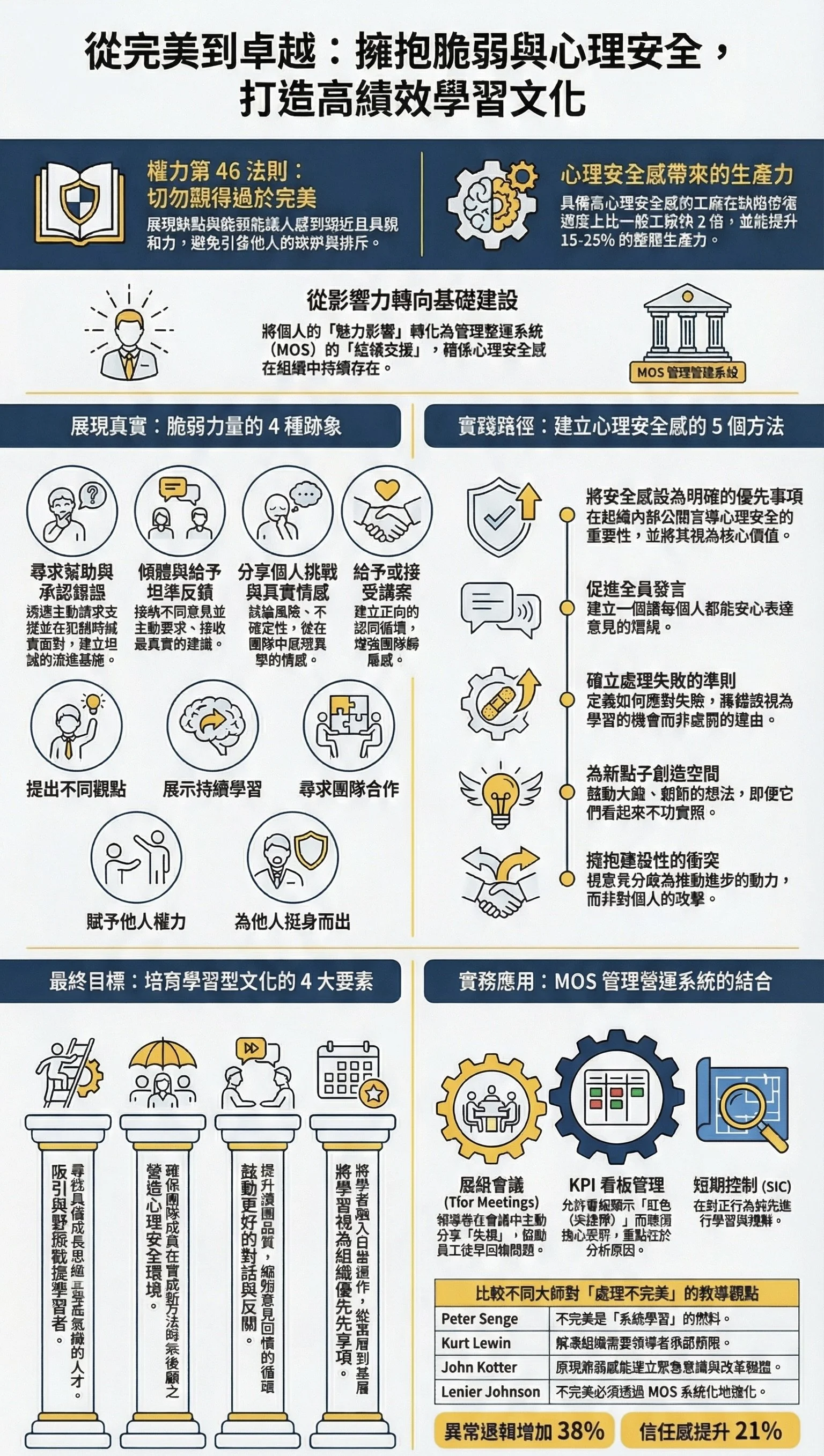
主管千萬別太完美 S6E53

主管千萬別太完美 S6E53

在企業諮詢的實務中,我經常遇到一類令人惋惜的領導者:他們技術精湛、決策精準,在公開場合幾乎從不犯錯。然而,這種「無懈可擊」的形象往往伴隨著高昂的組織代價。當領導者展現出完美的假象時,會無意識地在組織內營造出一種「表現劇場」(Performance Theater),導致成員因恐懼而陷入系統性沈默,並增加團隊的認知負荷。這種現象完美印證了 Robert Greene 在《權力 48 法則》中提出的「法則 46:絕不要顯得太完美」(Law 46: Never Appear Too Perfect)。完美無瑕不僅會引發團隊內部的嫉妒與怨恨,更會阻礙真實的資訊流動,最終導致人才流失與士氣低落。

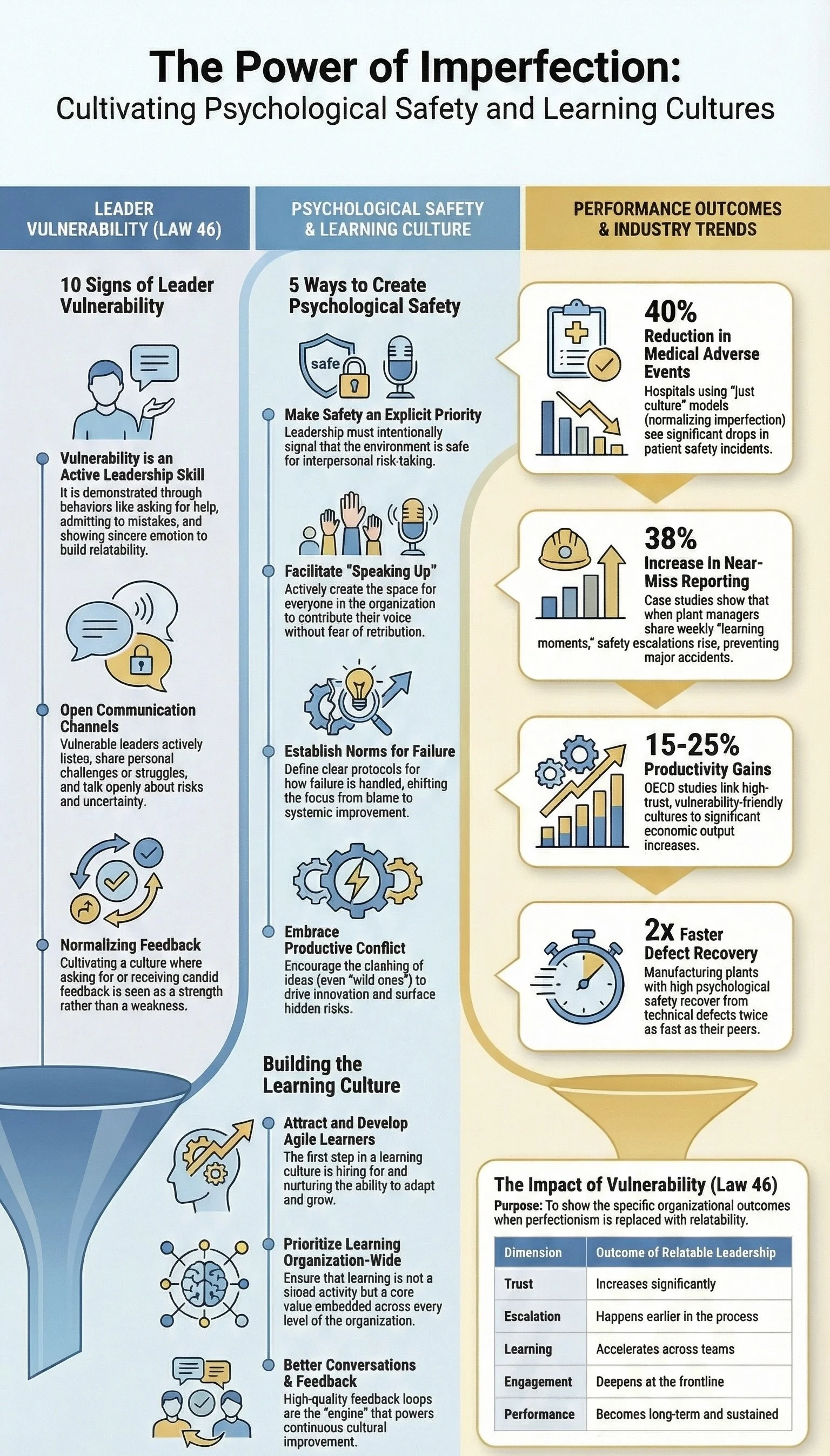
Why Leaders Should Never Appear Perfect S6E53

Why Leaders Should Never Appear Perfect S6E53

In high-stakes industrial and corporate environments, there is a lingering belief that a leader must be a beacon of unshakable execution. However, this "pedestal" approach to leadership creates a dangerous paradox that stalls organizational growth. When a leader appears to have no flaws, they unintentionally foster a culture of silence, envy, and hidden mistakes.

The pressure to mirror a "perfect" leader forces teams into "performance theater" where maintaining an image of competence is prioritized over solving problems. This dynamic sits at the heart of Robert Greene’s Law 46: "Never Appear Too Perfect." When leaders project an image of unattainable excellence, they don’t inspire their workforce—they alienate them, creating a barrier of resentment that prevents honest communication.

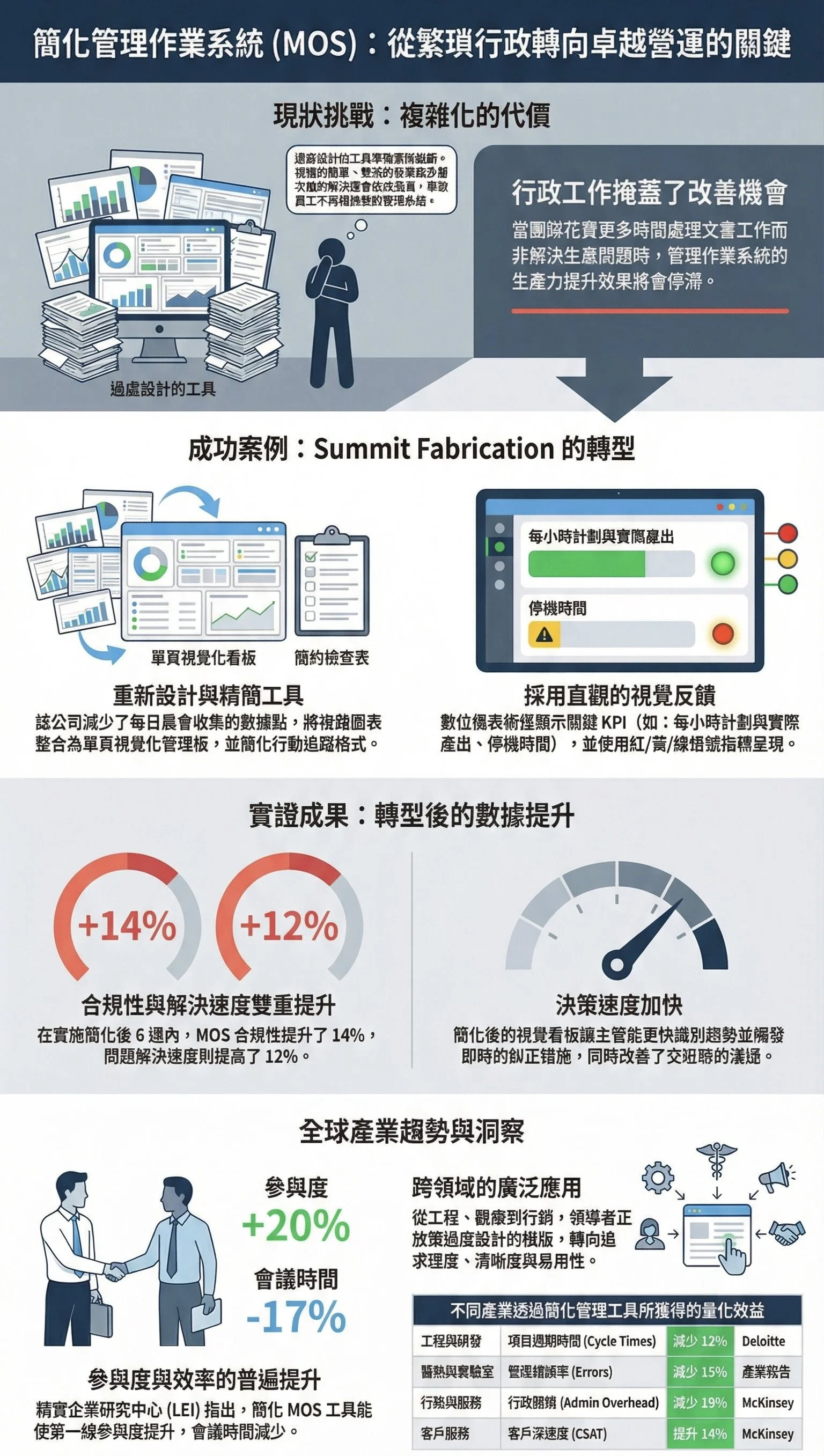
簡化管理系統救績效 S4E38

簡化管理系統救績效 S4E38

引言:被數據淹沒的生產現場

在追求精準管理的時代,許多生產現場卻陷入了一種詭譎的悖論:管理者與一線員工的智慧,正被消磨在瑣碎的試算表格子裡。他們埋頭於填寫冗長的表單、校對多層級的儀表板,卻無暇抬頭解決真正的營運問題。

這曾是客製化金屬組件製造商 Summit Fabrication 的真實寫照。當管理系統(MOS)演變成一疊疊厚重的報告與無止盡的數位迷宮,工具便不再是輔助,而成了束縛。我們必須銘記:管理工具存在的唯一價值是「賦能」,而非創造更多的行政廢言。