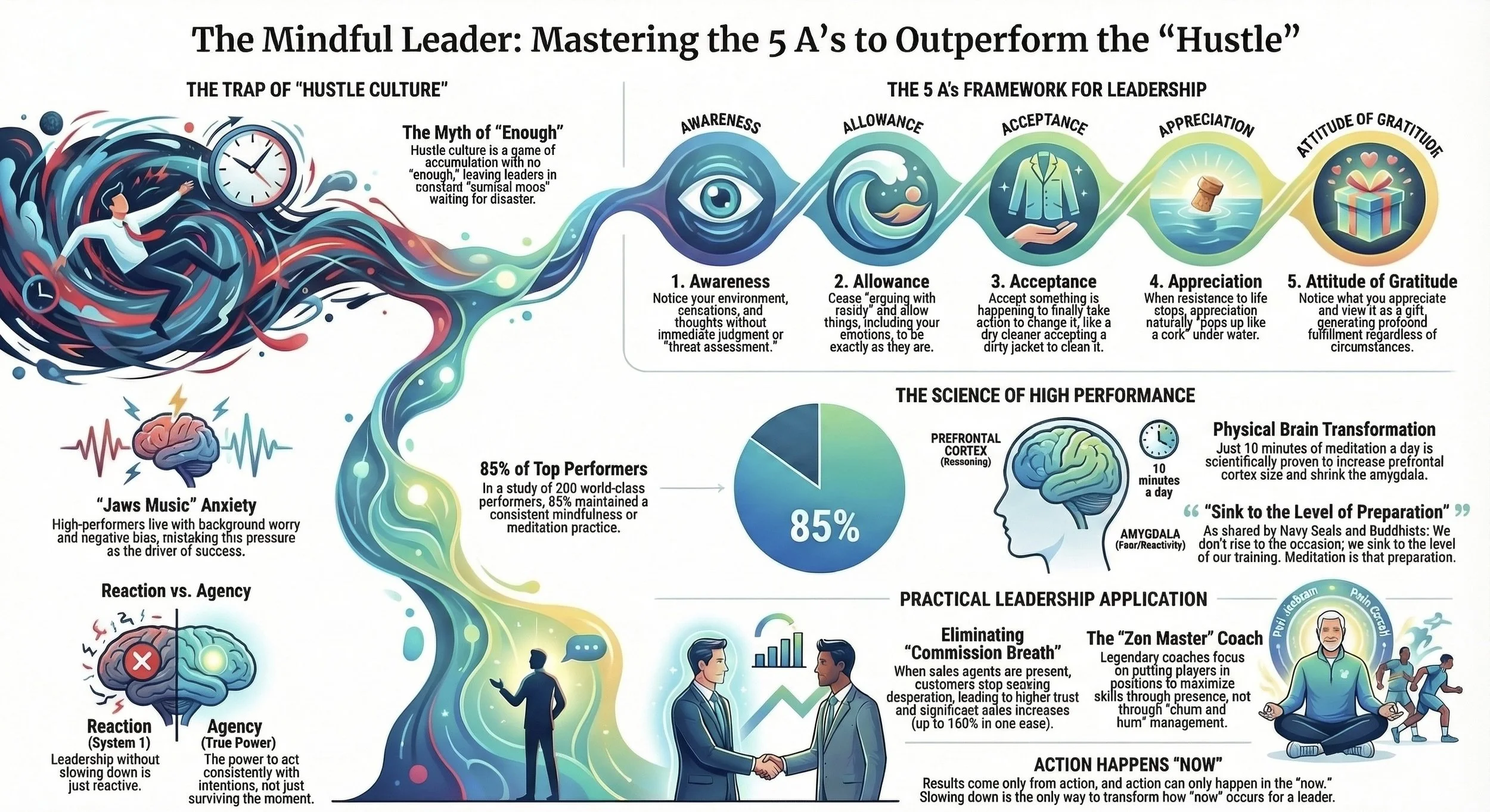
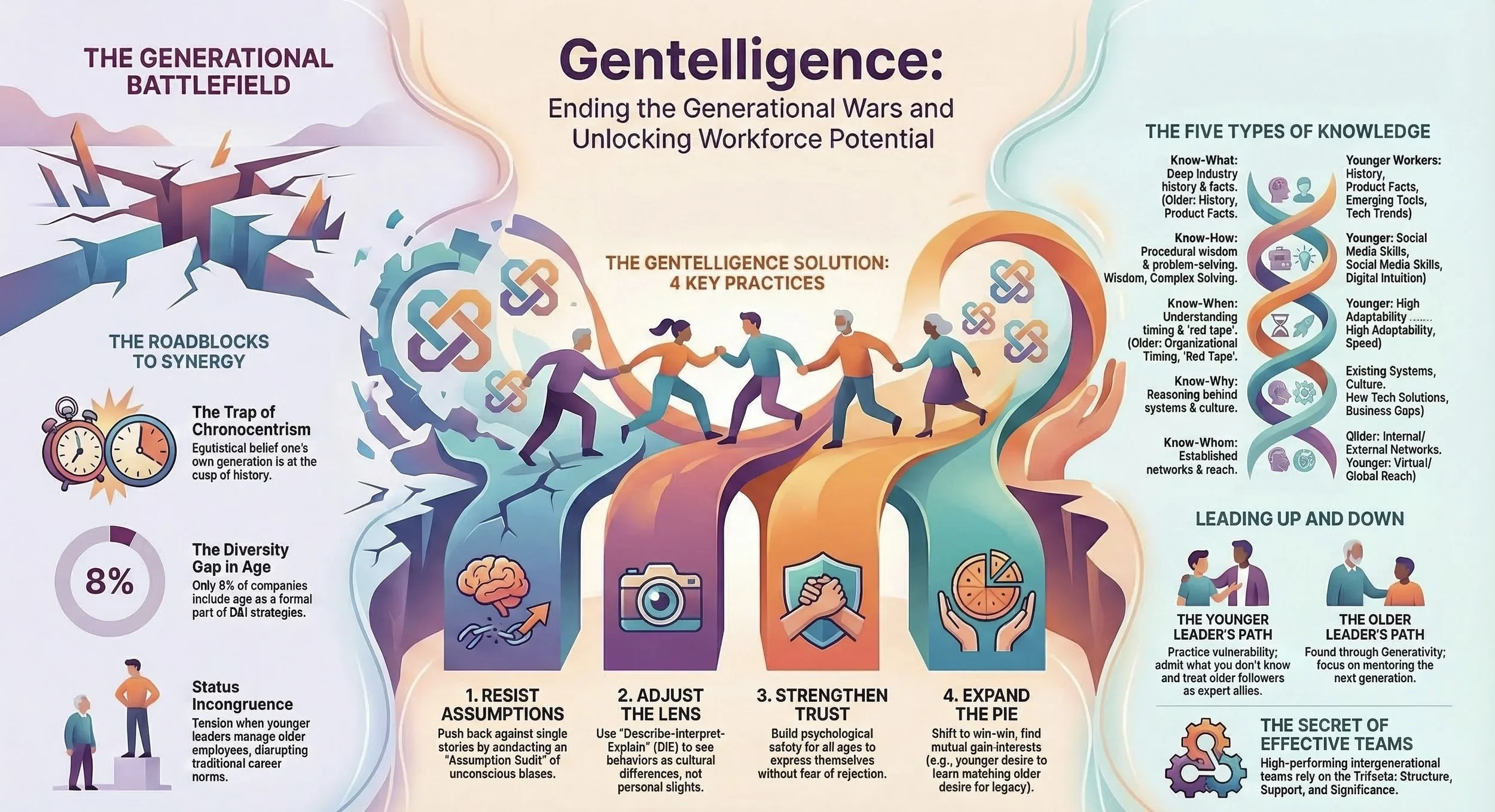
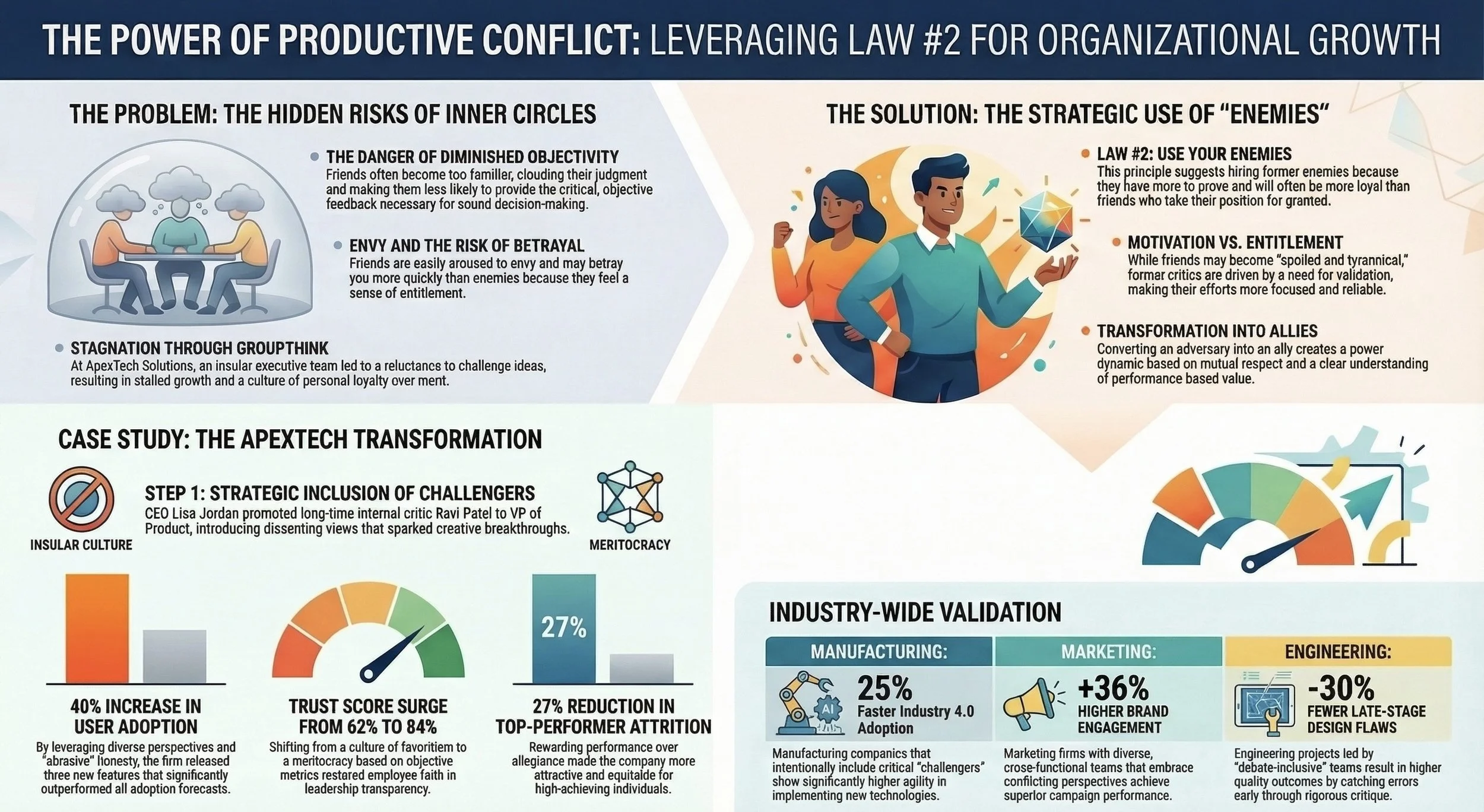
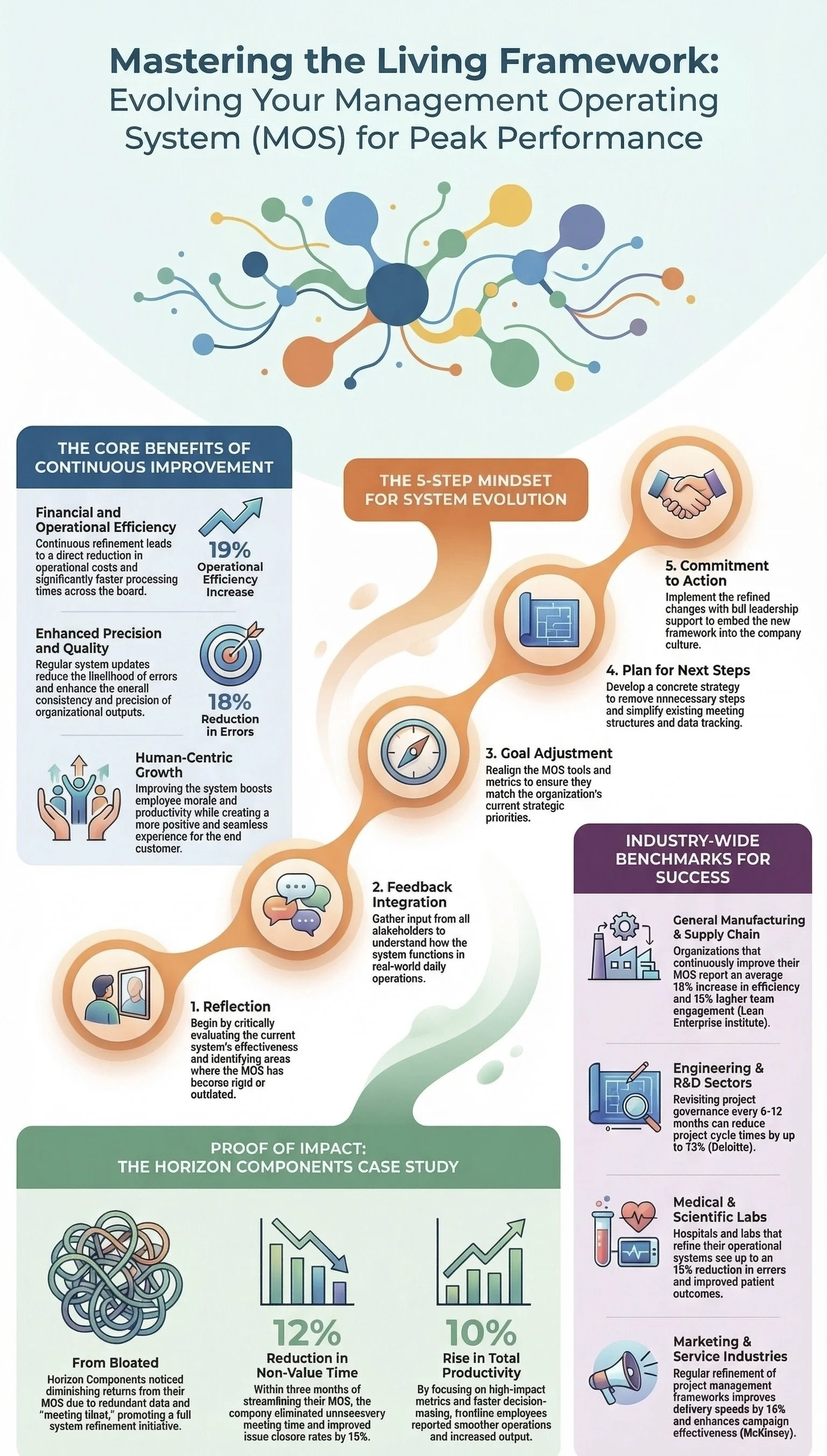
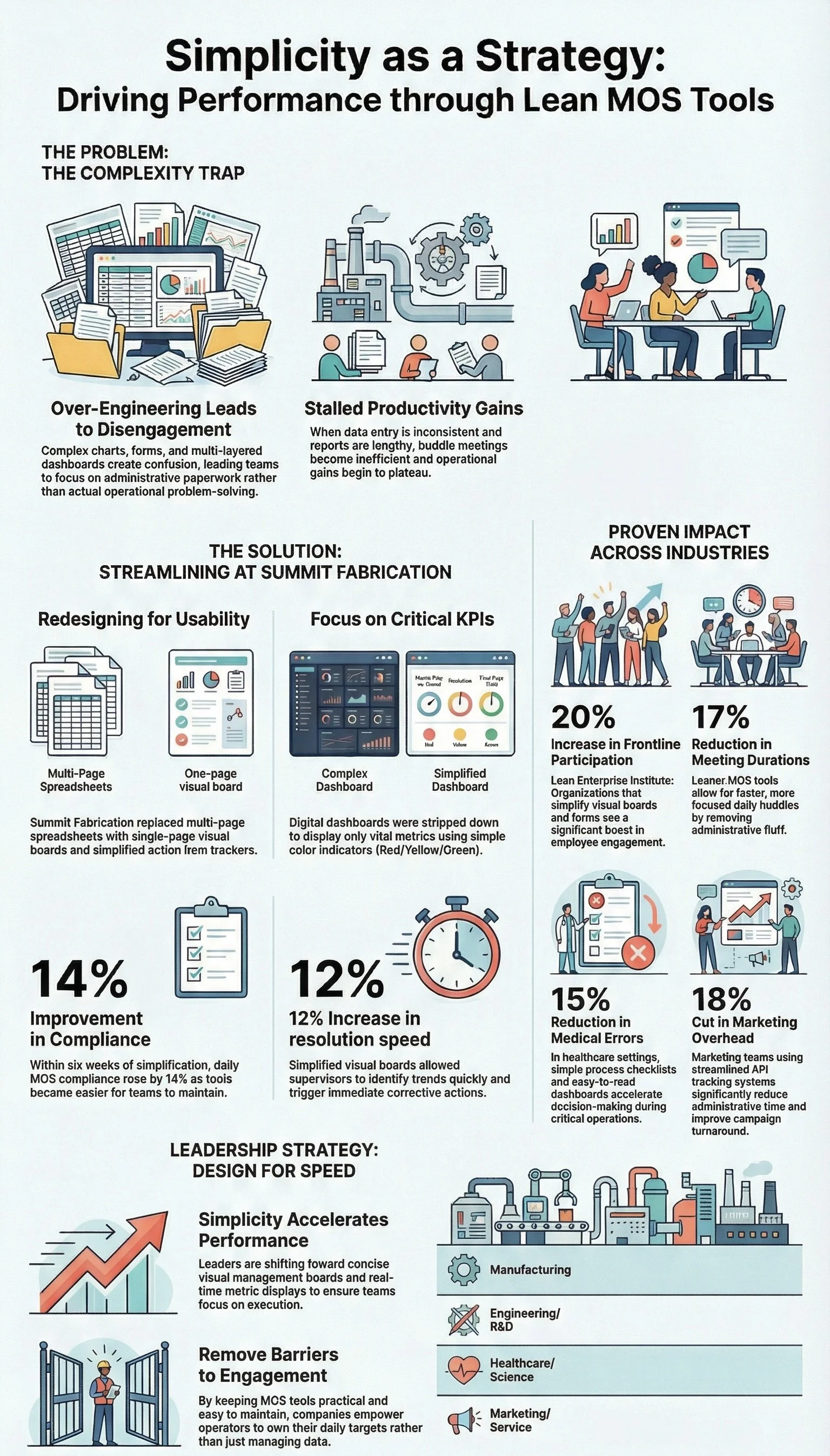
In boardrooms and factory floors alike, there is a seductive myth that has become the "silent killer" of productivity: the belief that more data equals more control. We see it every Monday morning—leaders walking into huddles armed with multi-page spreadsheets, granular dashboards, and complex trackers, believing that this "thoroughness" is the key to excellence.
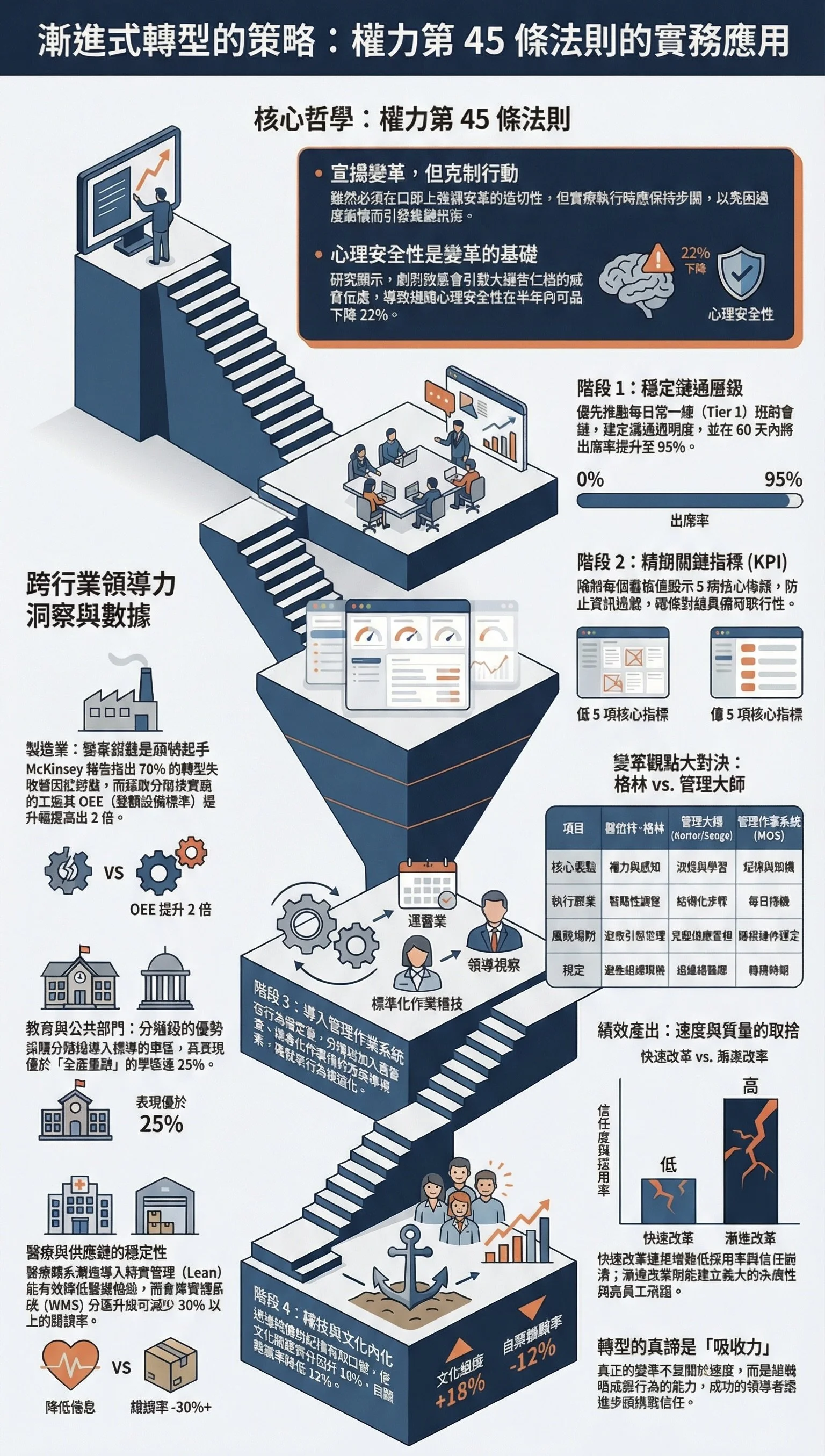
變革越慢反而越快 S6E52
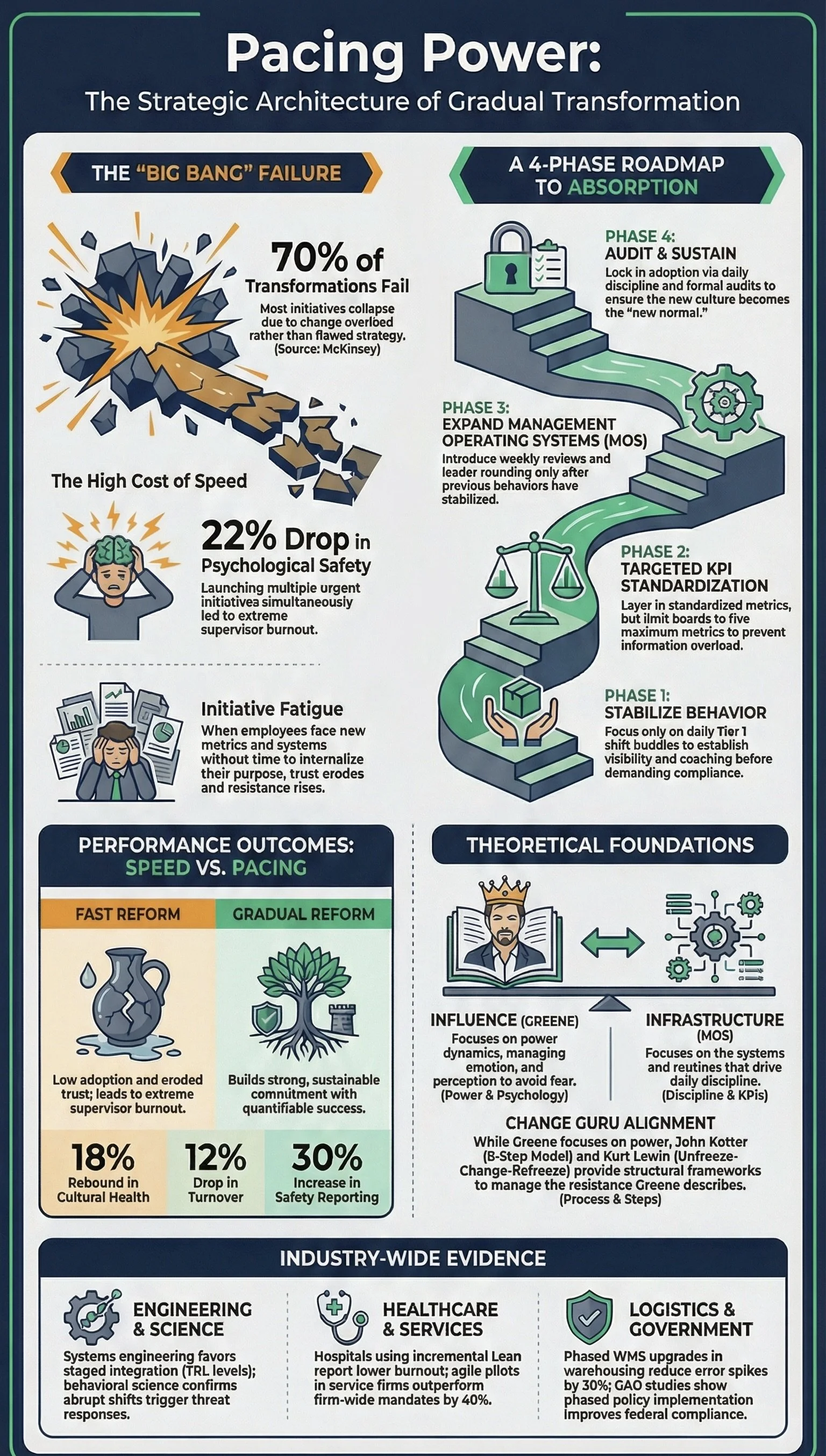
Rapid Reform Is a Death Sentence S6E52
In the modern executive suite, the fallacy persists that the velocity of a transformation initiative is a direct proxy for its efficacy. This mindset precipitates the launch of multiple, uncoordinated "urgent" programs that inevitably collide, resulting in profound "initiative fatigue." While these shifts are born of a desire for progress, the strategic imperative is to recognize that the fastest route to systemic change is often a calculated deceleration. By adhering to Robert Greene’s Law 45—preaching the need for change while eschewing excessive reform—leaders can navigate the volatile space between stagnation and chaos.
慶祝小成功是激勵還是陷阱 S4E37
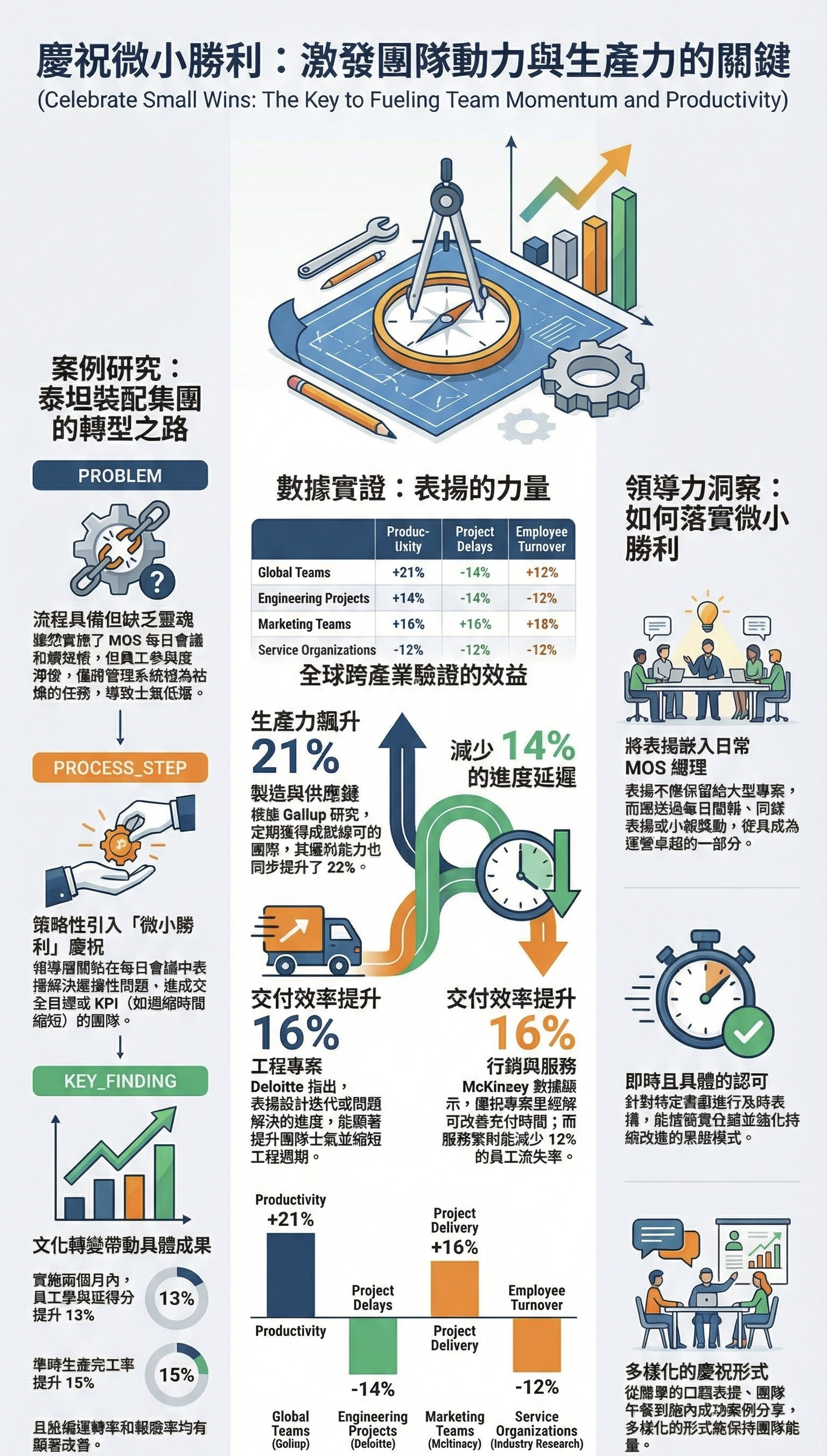
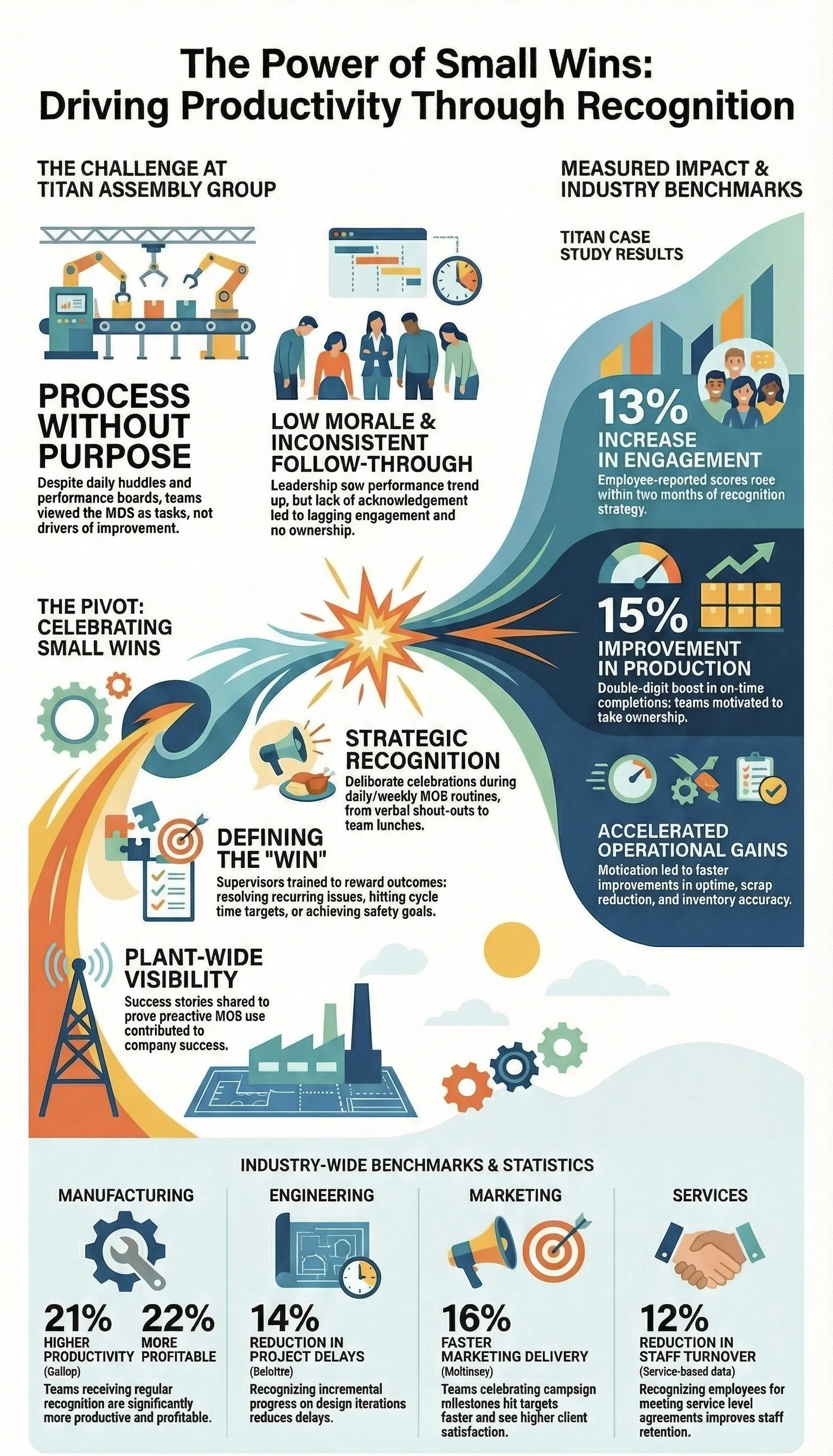
Celebrating Small Wins Fuels High Performance S4E37
For many organizations, a Management Operating System (MOS) eventually feels like a lead weight. What began as a framework for excellence often decays into a "set of tasks"—a repetitive grind of huddles, performance boards, and action items that employees view as chores rather than catalysts for growth. This "checklist trap" doesn't just drain morale; it stalls the very progress the system was designed to accelerate.
The solution isn't more discipline, tighter oversight, or more complex tracking. In fact, the secret to achieving 21% higher productivity lies in a counter-intuitive shift: better celebration. Recognizing incremental progress transforms a stagnant culture into a high-performance engine. This post reveals how identifying "micro-victories" can revolutionize your organizational culture and deliver serious bottom-line results.
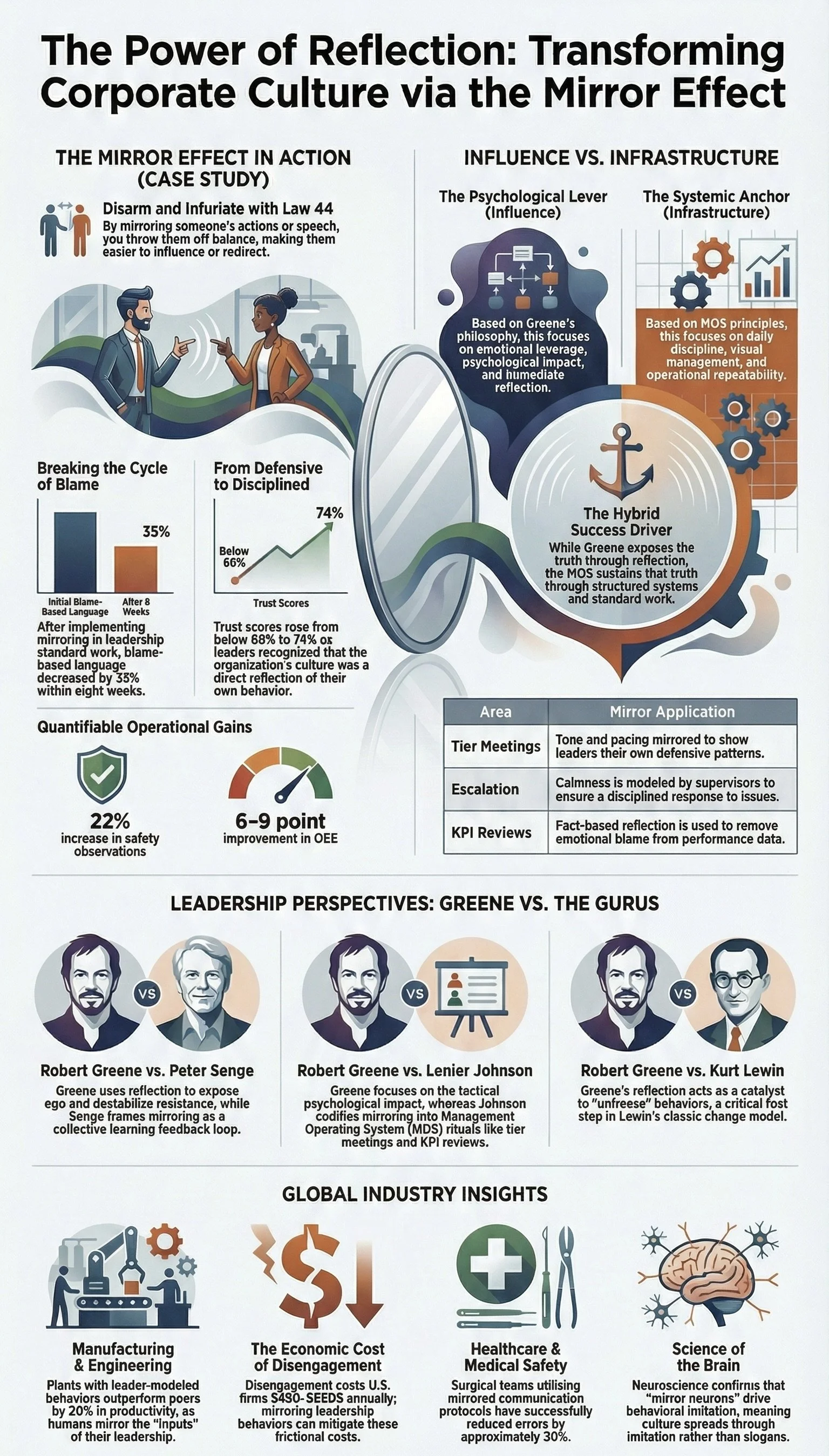
鏡像效應化解團隊防衛 S6E51
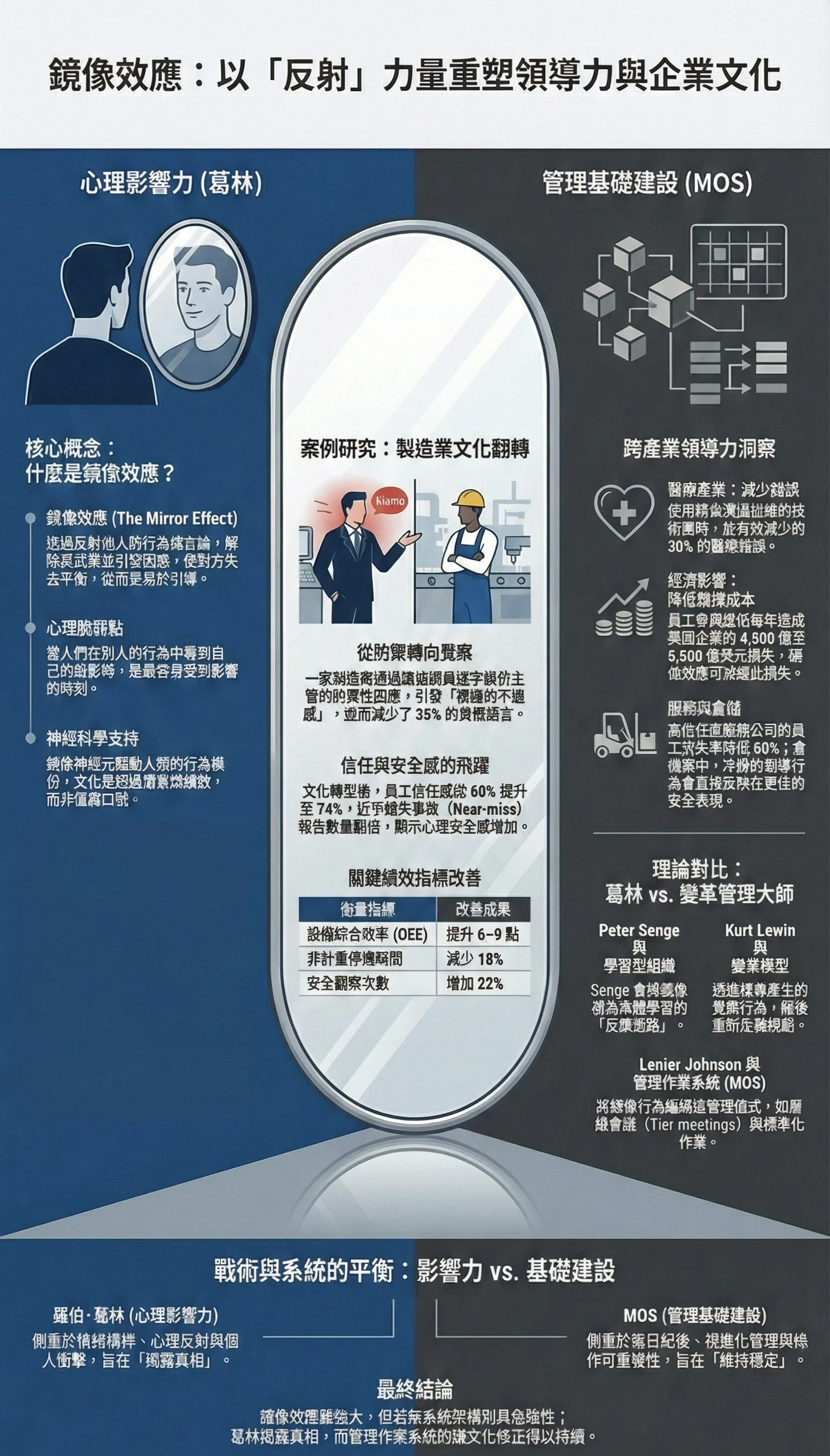
Disarm Defensiveness With The Mirror Effect S6E51
Modern leadership is suffering from a hypocrisy epidemic. We celebrate "accountability culture" in our town halls while simultaneously punishing the messengers of truth in our boardrooms. This creates a destructive defensive loop: leaders demand transparency but react with emotional volatility when faced with challenges, prompting their teams to retreat into performative behavior and silent resistance.
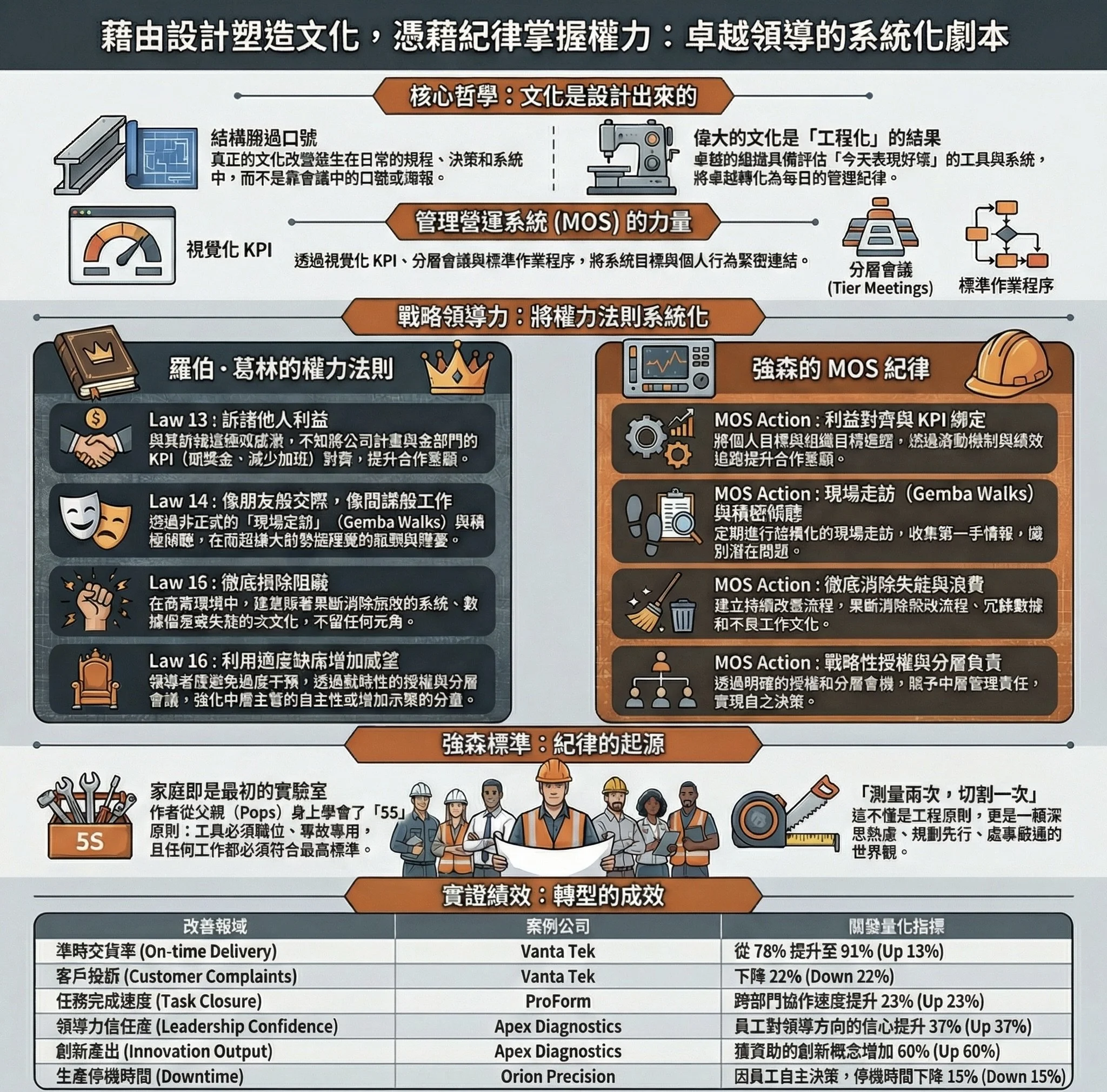
用系統設計取代文化口號 S6E51
【別再喊口號!】深度解析:為什麼「系統結構」才是打造高績效文化的真正關鍵?
在許多企業的會議室裡,牆上貼滿了「以人為本」、「追求卓越」或「團隊協作」的精美口號。然而,觀察其實際運作,卻往往充斥著跨部門內耗、無效會議以及因循苟且的行為。身為一名曾在 General Electric (GE)、Nestlé、Kodak 與 Gillette 等 Fortune 50 企業深耕多年的系統策略師,我看到過無數卓越的願景在缺乏結構的土壤中枯萎。
領導力系統策略師 Lenier Johnson, Jr. 在其著作《設計文化,紀律賦能》(Culture by Design, Power by Discipline)中提出了一個核心工程準則:卓越的文化絕非偶然,而是「設計(Engineered)」出來的結果。
文化不是你在海報上寫了什麼,而是你透過「管理作業系統(Management Operating System, MOS)」、結構化紀律與刻意設計的權力動態,在日常運作中強化並保護的行為總合。本文將揭示五個來自 Johnson 實戰經驗的衝擊性洞見,教你如何透過「結構化流程」來實踐領導力。
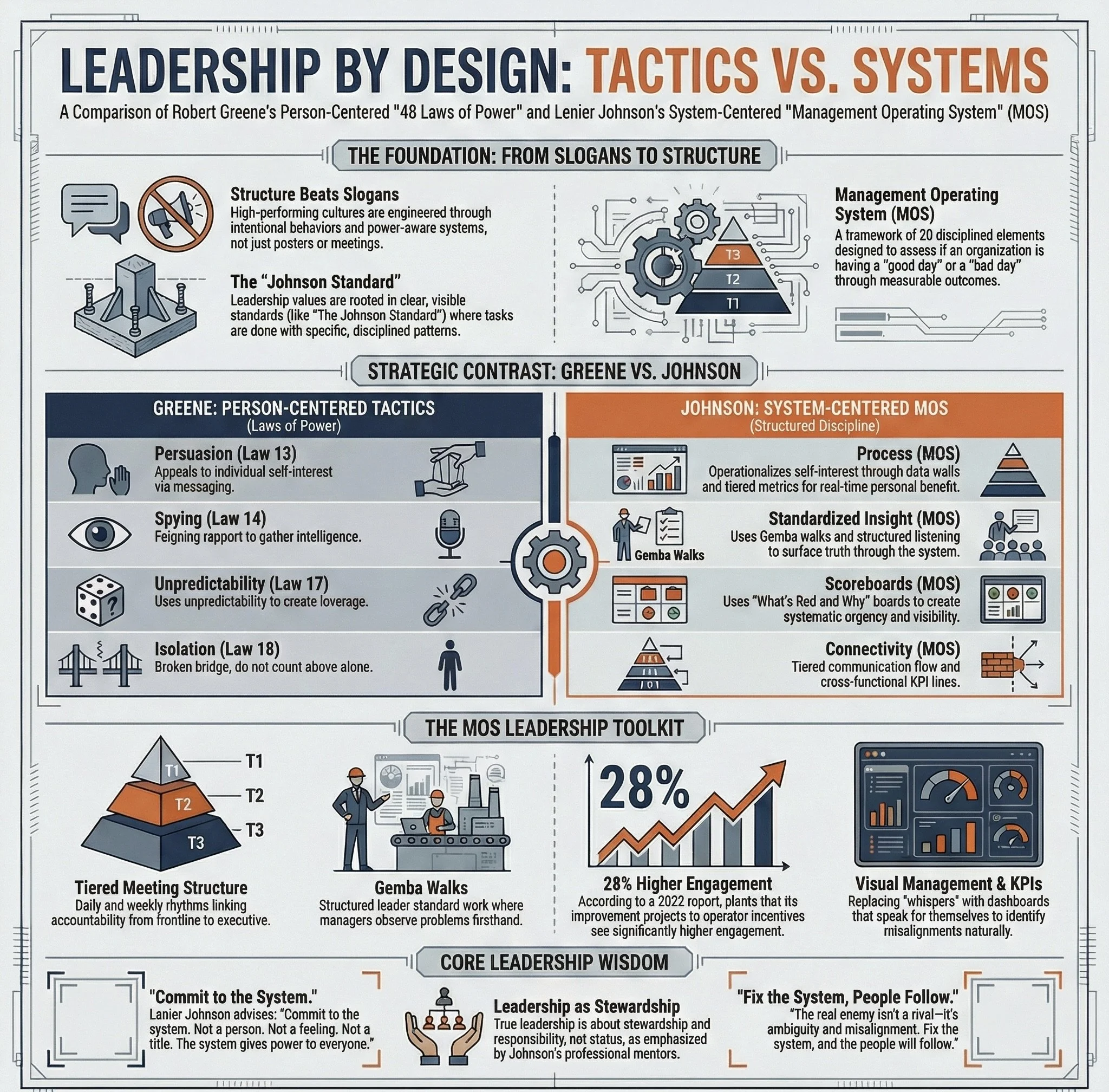
Culture by Design, Power by Discipline - Volume 2 S6E51
1. The High Cost of Posters and Buzzwords
Modern leadership is often reduced to a collection of comfortable slogans: “people over process,” “empower your teams,” and the ubiquitous “culture eats strategy for breakfast.” While these phrases perform well on breakroom posters, they frequently evaporate upon contact with the shop floor or the executive suite. The relatability problem is clear: organizations talk about excellence while operating in a fog of misalignment.
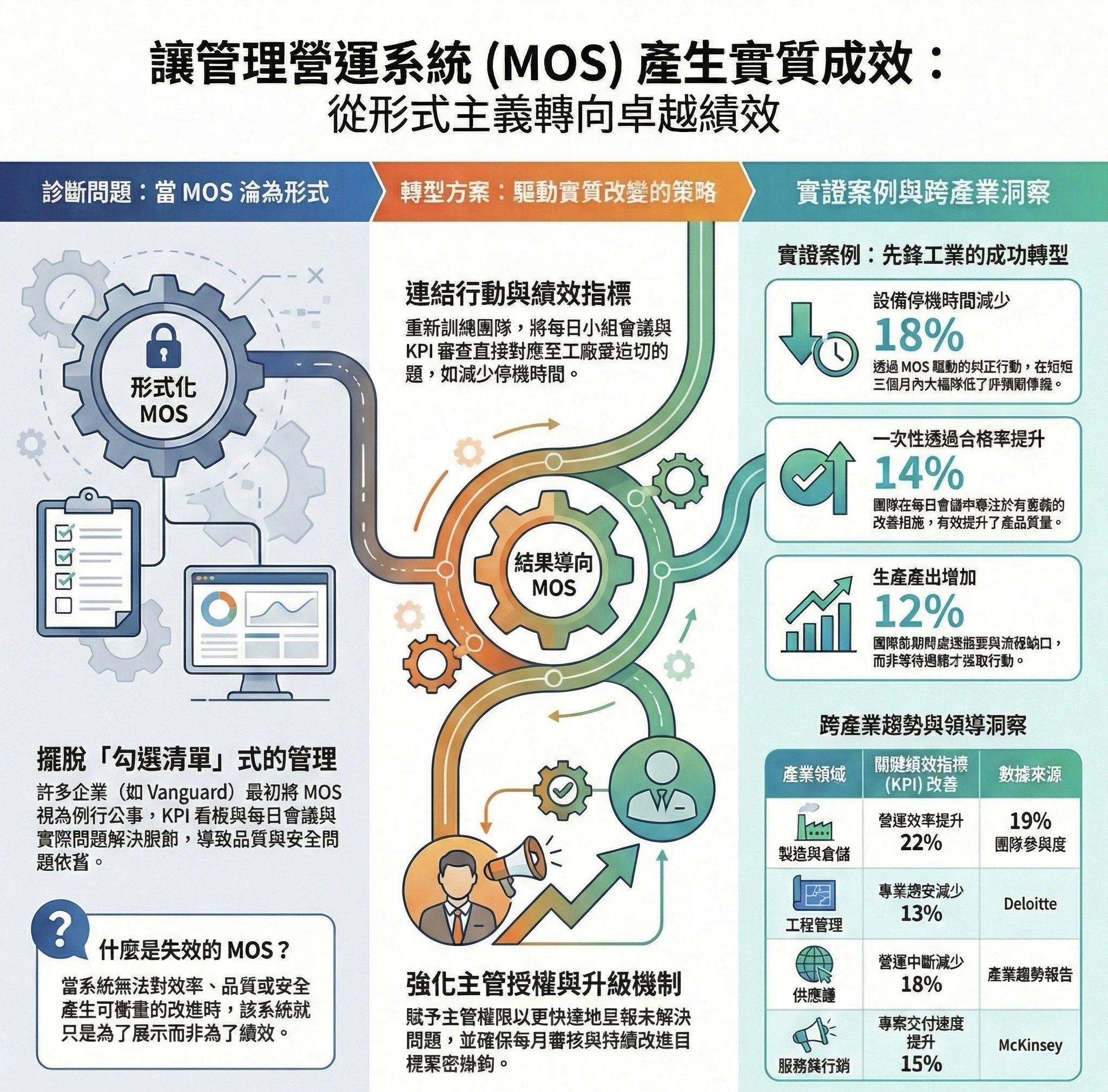
MOS靠數字還是文化 S4E36
別讓管理系統淪為「走格子」遊戲:為什麼你的 MOS 必須以結果為導向?
前言:行政繁榮下的績效貧血
在許多企業中,管理營運系統(Management Operating System, MOS)早已淪為一種「神聖的祭儀」:主管與員工每天準時在看板前集合,熟練地更新數據、勾選檢查表,然後各自散去。表面上組織運作極其紀律,實則績效指標長年原地踏步。
作為顧問,我常看到企業陷入這種「行政繁榮」的幻覺。這種將 MOS 視為單純行政負擔而非營運引擎的行為,正是企業 ROI(投資報酬率)最大的流失來源。為什麼有些公司的管理系統能帶來翻天覆地的轉變,而多數公司卻只是在玩一場昂貴的「走格子」遊戲?關鍵在於你是否將系統從「機械式合規」推向了「成果導向」。