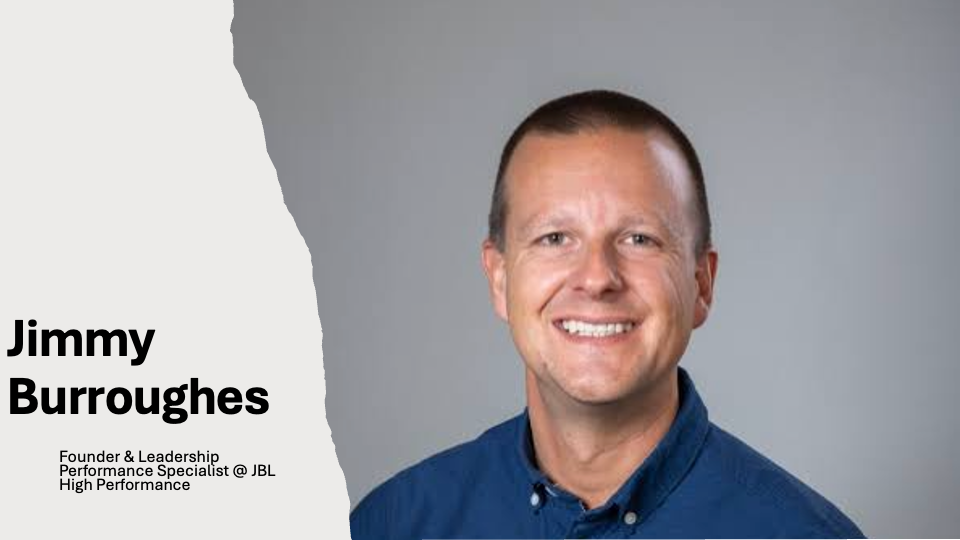

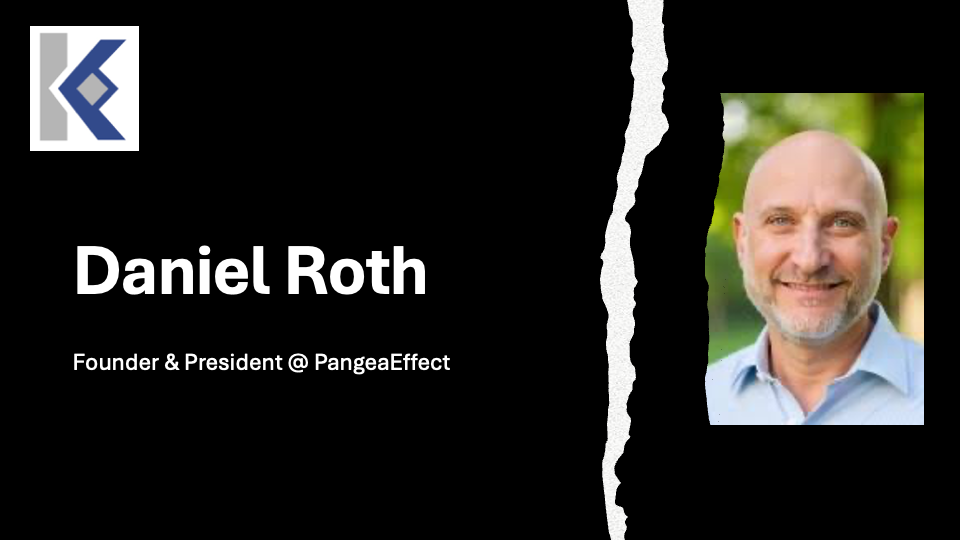
Systems Thinking|Slaying the dragon of hustle culture|S7E59 Systems Thinker Show

Systems Thinking|Slaying the dragon of hustle culture|S7E59 Systems Thinker Show

We are trapped in the "game of enough," a psychological treadmill where we believe that more revenue or more accolades will finally buy us peace. But here is the cold truth: there is no "top" to the mountain of enough. This hustle is an automatic survival mechanism, not a strategy. On your deathbed, you aren't going to wish you closed that merger; you’re going to wish you hadn't been "time-traveling" through your children's soccer games because you were too busy worrying about a client you might lose. To find true agency, you must move from automatic reaction to conscious presence.

Organizational Discipline|Scaling CEOs, Decision Bottlenecks, and the Success by Design Framework| S5E44 Continuous Improvement Lab

Organizational Discipline|Scaling CEOs, Decision Bottlenecks, and the Success by Design Framework| S5E44 Continuous Improvement Lab

You have built a successful business, likely crossing the $1 million revenue mark through sheer force of will, talent, and late nights. But lately, the momentum has shifted. You feel like you are running in sand. Your calendar is a graveyard of back-to-back meetings, your team seems hesitant to move without you, and you are reaching the limits of your physical and mental endurance.

System Thinking|Winning the Generational War with Gentelligence|S7E58 System Thinker Show

System Thinking|Winning the Generational War with Gentelligence|S7E58 System Thinker Show

If you think generational friction is just a "soft" HR issue, look at the bottom line: In 2020, PwC agreed to pay $11.6 million to settle an age-discrimination lawsuit regarding its recruitment practices. Similarly, IKEA has faced multiple lawsuits alleging a corporate culture of age bias where older workers were passed over for "new and innovative" younger candidates. When we allow generational shaming to go unchecked, we transform a diversity of thought into a hard legal and financial risk.

System Thinker|Why your enemies make better teammates|S7E57 The Systems Thinker show

System Thinker|Why your enemies make better teammates|S7E57 The Systems Thinker show

In the modern corporate landscape, we are conditioned to believe that organizational health is a byproduct of seamless harmony and warm professional circles. There is an insidious comfort in the "Camaraderie Trap"—the instinct to populate our inner circles with friends and trusted allies who mirror our perspectives. Yet, this reliance on "blind trust" frequently masks a cold reality: a gradual descent into groupthink, creative stagnation, and a catastrophic decline in operational rigor.

Management Operating System|Structure Versus Culture|S4E42 Continuous Improvement Lab

Management Operating System|Structure Versus Culture|S4E42 Continuous Improvement Lab

It is the silent killer of operational excellence: the process that was once heralded as a lean solution but has mutated into a bloated administrative anchor. We have all seen it—the weekly huddle that now lasts ninety minutes, or the "streamlined" dashboard that requires three full-time employees just to update. What began as a tool for clarity has become a "check-the-box" exercise where the system demands more energy than the problems it was built to solve.

該不該蓋過上司的光芒 S7E56

該不該蓋過上司的光芒 S7E56

在職場的權力走廊中,我們常目睹一種令人心寒的弔詭:那些最聰明、最具創意且工作最努力的菁英,往往不是平步青雲,而是率先被邊緣化。這並非因為他們不夠優秀,恰恰是因為他們「太優秀」了。這種現象在心理學上可視為一種「職涯的捧殺」——當你的光芒過於耀眼,反而會灼傷那些掌握你升遷命脈的人。

Systems Thinking|Never Outshine The Master At Work|S7E56 Systems Thinker Show

Systems Thinking|Never Outshine The Master At Work|S7E56 Systems Thinker Show

In the high-stakes environment of modern business, talent is often viewed as a universal currency. Yet, as a workplace culture strategist, I frequently observe a recurring pathology: the high-performing executive who hits a ceiling not because of a lack of skill, but due to "organizational friction." These individuals suffer from the delusion that technical brilliance alone guarantees advancement, ignoring the shadow dynamics that dictate professional survival.

用無形法則打造有紀律的彈性 S6E55

用無形法則打造有紀律的彈性 S6E55

在過去,製造業的成功基於對「確定性」的極致追求:僵化的標準作業程序(SOP)、層層審核的官僚體系,以及精密的預算計畫。但在演算法與地緣政治雙重夾擊的今日,「可預測性」已從資產轉變為被獵殺的標靶。當供應鏈中斷、勞動力短缺與需求波動成為常態,依賴「剛性」結構的組織在變革面前顯得異常脆弱。Robert Greene 在《權力的 48 條法則》中提出了一個震聾發聵的觀點:「保持無形」(Assume Formlessness)。這不是混亂,而是一種生存策略:在變動不居的時代,任何固定的形狀都意味著被鎖定與被擊敗的風險。

Systems Thinking|Assume Formlessness Through Disciplined Flexibility| S6E55 - The Systems Thinking Show

Systems Thinking|Assume Formlessness Through Disciplined Flexibility| S6E55 - The Systems Thinking Show

In an era defined by volatile demand, labor constraints, and cascading supplier disruptions, the greatest threat to an organization isn’t a lack of discipline—it is rigidity. Standard Operating Procedures were designed as armor; in today’s volatility, they have become a straitjacket. Many organizations operate as "brittle" systems: they are highly optimized and efficient under laboratory conditions, but they shatter the moment reality diverges from the plan.

量化升級門檻的盲點 S4E41

量化升級門檻的盲點 S4E41

在現代企業運營中,存在一個普遍的悖論:那些最具責任感、最試圖獨自解決問題的員工,往往無意間成為了組織中最脆弱的「單一故障點」。當一線員工為了展現韌性而選擇在困境中苦撐時,原本微小的設備抖動或流程偏差,往往會演變成不可收拾的停工危機。

建立標準化的「問題升級機制(Escalation Process)」並非為了監控或問責,更不是弱點的表現;相反地,它是組織健康度與文化韌性的核心指標。一個成熟的升級機制,能將混亂的求救信號轉化為精密的專業支援體系。