Why Accountability Fails: The Surprising Power of Layered Process Audits
The Consistency Gap: Why Strategy Fails in the Shadows
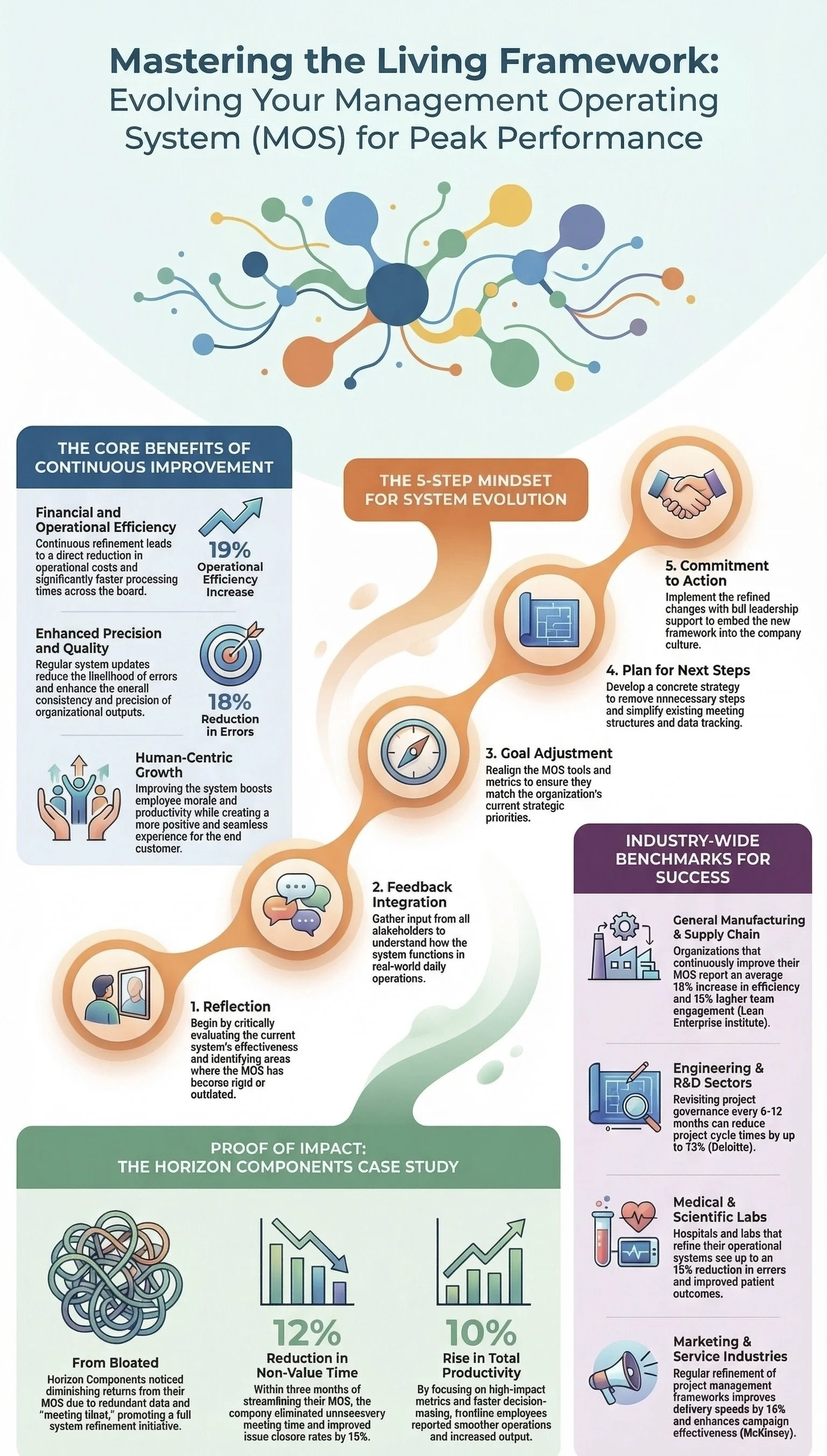
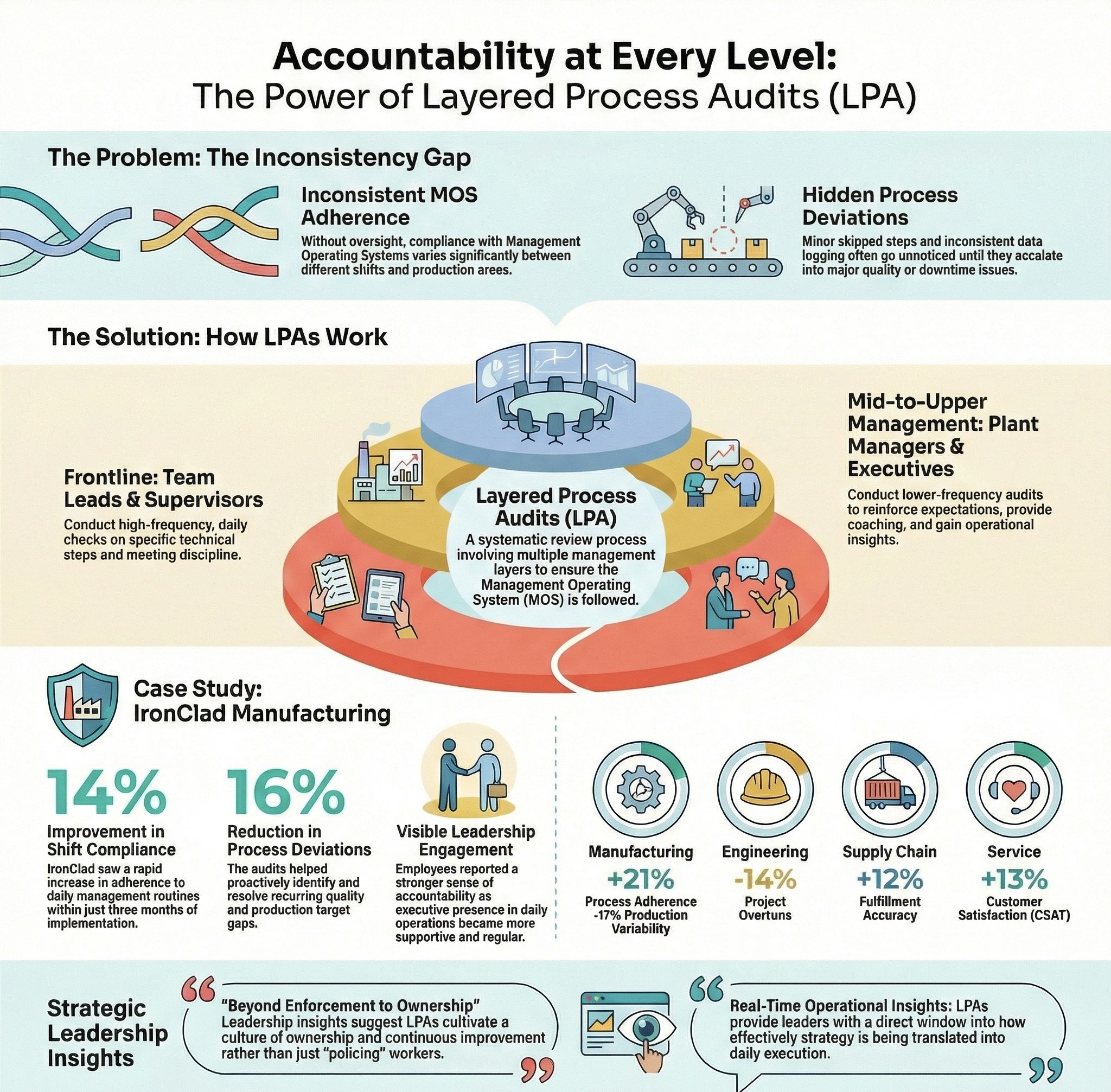
For most executives, the greatest frustration isn't a lack of strategy—it’s the "ghosts in the machine" that haunt execution. You invest heavily in a Management Operating System (MOS), designing sleek KPI trackers and robust standard procedures, only to watch them erode in the real world. We’ve all seen the scenario: the morning shift runs like a Swiss watch, but the afternoon shift falters, leading to quality spikes and missed targets.
This "consistency gap" occurs because systems do not manage themselves; they inevitably degrade without reinforcement. When a process looks good on paper but fails in practice, it is a signal of systemic rot in accountability. To bridge this divide, forward-thinking organizations are turning to Layered Process Audits (LPA)—a systematic verification framework that ensures expectations are met not just by luck, but by design.
Accountability is a Vertical Sport
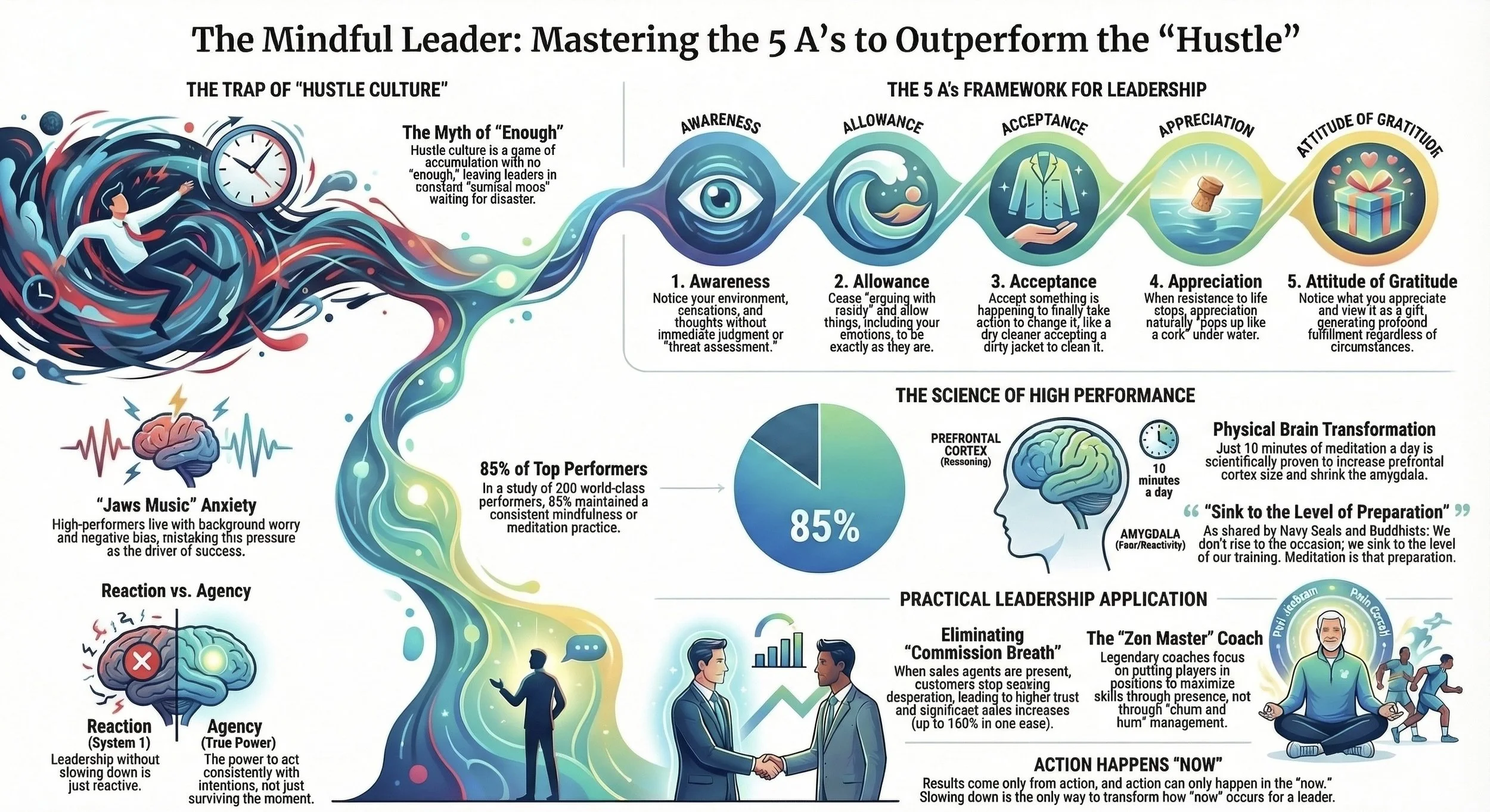
Sustainable accountability cannot be outsourced to frontline supervisors alone. It must be a "vertical sport." Layered Process Audits function by requiring multiple tiers of management to participate in the verification of the MOS, ensuring that the system remains the "pulse" of the organization rather than a dusty manual on a shelf.
"Layered audits involve different management levels reviewing how well the MOS is being followed. From team leads to executives, ensure each layer reinforces expectations and addresses gaps systematically."
When a C-suite executive walks the floor to audit a specific process, the cultural chemistry changes. It shifts from "policing" to "supportive engagement." The goal of an executive audit isn't merely to catch a mistake; it is to provide "air cover" for the team lead. By reviewing meeting discipline or action-item follow-ups, senior leaders identify the systemic hurdles—like a lack of resources or conflicting priorities—that prevent the frontline from succeeding. This turns the audit into a coaching moment, signaling that the process matters enough for the highest levels of leadership to protect it.
The ROI of the Routine: Why Small Checks Yield Big Margins
The impact of these routine "check-ups" is quantifiable and compounding. Rather than waiting for a monthly post-mortem report to highlight a failure, LPAs act as a productivity multiplier by catching deviations in real-time. According to research from the Lean Enterprise Institute and Deloitte, the results of high-frequency adherence are striking:
• 21% increase in process adherence.
• 17% reduction in production variability.
• 14% reduction in project overruns within engineering departments.
These outsized gains are the direct result of reducing "process drift." When an organization commits to the routine, it eliminates the small variances that eventually snowball into catastrophic financial or operational losses.
Breaking the Factory Mold: LPAs in the Knowledge Economy
There is a common misconception that audits are only for assembly lines or warehouses. However, synthesis of data from McKinsey and Deloitte proves that the LPA framework is equally transformative in knowledge-based sectors. In these environments, the "process" isn't a machine—it’s the workflow of collaboration.
In marketing, LPAs are being used to audit creative approval cycles and performance reporting rhythms, ensuring that campaign strategies don't lose their edge during execution. In engineering, the focus shifts to auditing project milestones and risk management actions. These sectors have seen a 13% increase in customer satisfaction scores and a 12% improvement in fulfillment accuracy. By auditing the way people work together, leaders ensure that creative and strategic workflows remain consistent across multi-team projects, preventing the "drift" that leads to missed deadlines.
The IronClad Blueprint: From Compliance to Culture
The transformation of IronClad Manufacturing, a producer of structural steel components, serves as a masterclass in bridging the Strategy-Execution Gap. Facing wildly inconsistent adherence to their MOS, IronClad didn't just issue new mandates; they implemented a layered audit program.