
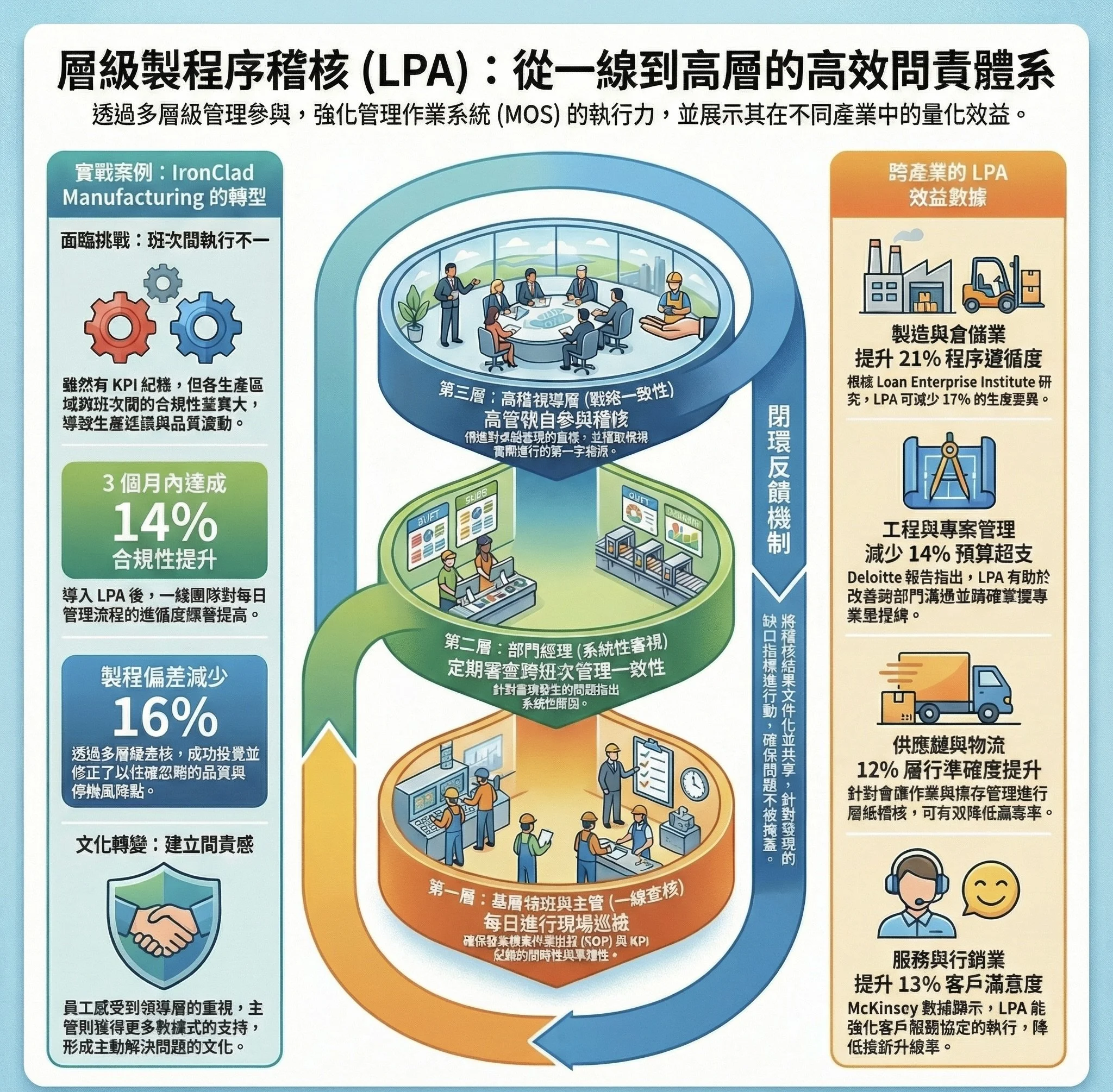
在許多企業的戰情室裡,領導者看著儀表板上看似完美的 KPI 報告,心中卻揮之不去一種無力感:為什麼同樣的標準作業程序,在甲班執行得無懈可擊,到了乙班卻漏洞百出?這種隱藏在表象下的「執行力溫差」,往往決定了企業的生存空間。當管理作業系統 (MOS) 與現實脫節時,多數管理者傾向於增加更多繁瑣的規定,但真正能解決問題的,通常不是更多的規則,而是更深層的問責機制。這正是「分層流程稽核 (Layered Process Audits, LPA)」發揮威力的地方。

Senior leaders face a familiar, costly paradox. Despite pouring millions into enterprise technology, culture workshops, and top-tier management consultants, major transformation efforts routinely stall out or fail entirely. When performance slips, the executive knee-jerk reaction is to deploy immediate, localized patches. But these band-aid solutions ignore a fundamental operational reality: they accrue crippling process debt—the hidden structural friction, redundant handoffs, and workarounds that quietly erode organizational performance over time.
When results stall, the leadership instinct is often to launch another planning cycle or order a strategy refresh. However, repeating the planning process fails to fix the underlying environment where the work actually takes place. Strategy is only as executable as the operational conditions surrounding the people expected to deliver it.
In the high-stakes environments of national security and elite military operations, the word "accountability" isn't a threat—it’s a survival mechanism. Yet, in most corporate boardrooms, the term triggers a defensive crouch. For many, accountability is treated as a post-mortem, a punitive tool invoked only after a project has cratered and a scapegoat is needed.
For decades, the path to innovation was guarded by a formidable resource barrier. If you had a transformative idea, the prerequisite was a mountain of venture capital, grueling development cycles, and an army of specialized engineers. This was the "resource wall," and it forced countless visionaries into innovation paralysis.
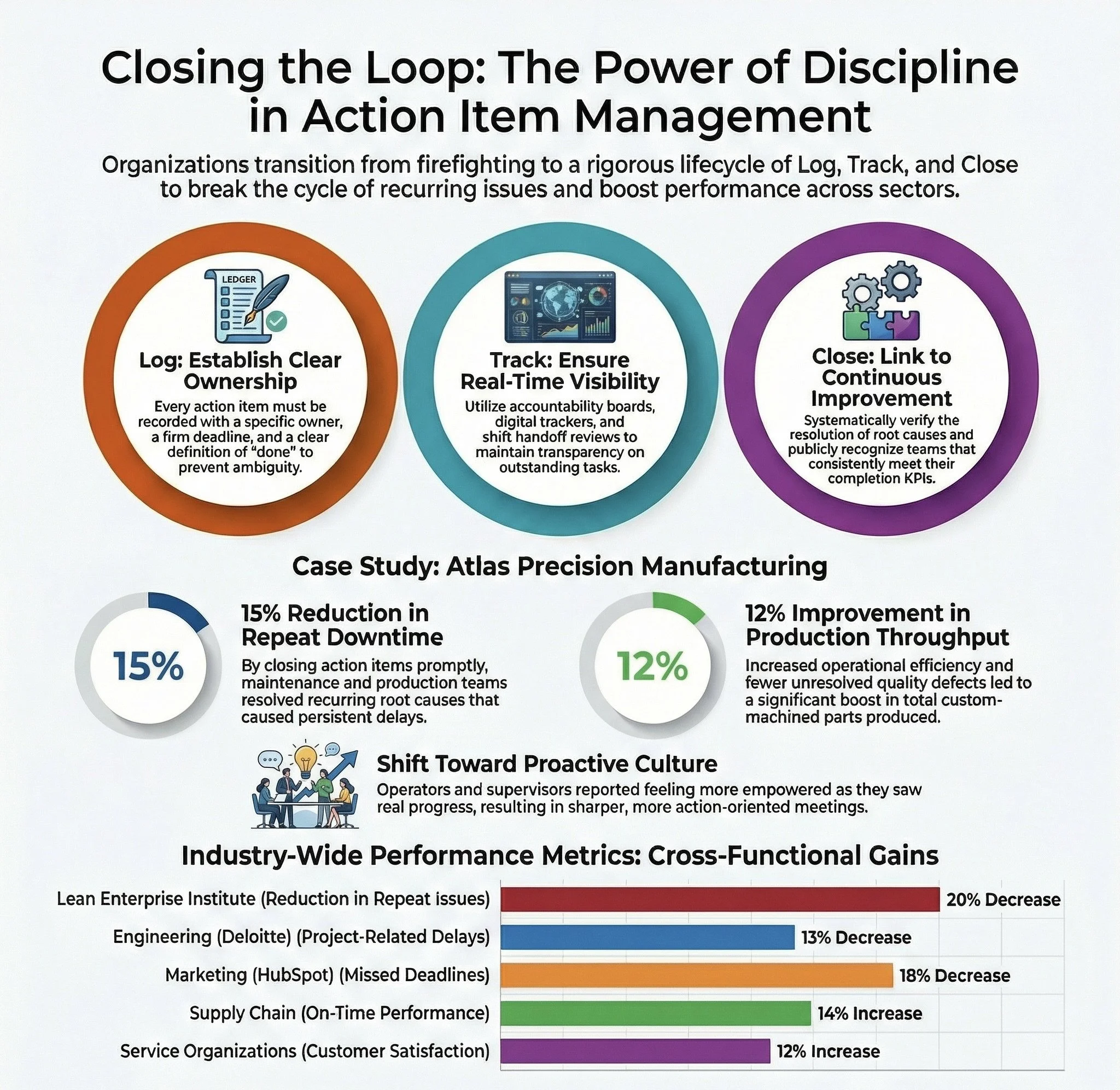
Many organizations are currently trapped in a high-stakes paradox: their teams are working harder than ever, yet they continue to miss their numbers. When progress feels heavy and every strategic initiative meets invisible resistance, your organization is "rowing through treacle."
Why Accountability Fails: The Surprising Power of Layered Process Audits
The Consistency Gap: Why Strategy Fails in the Shadows
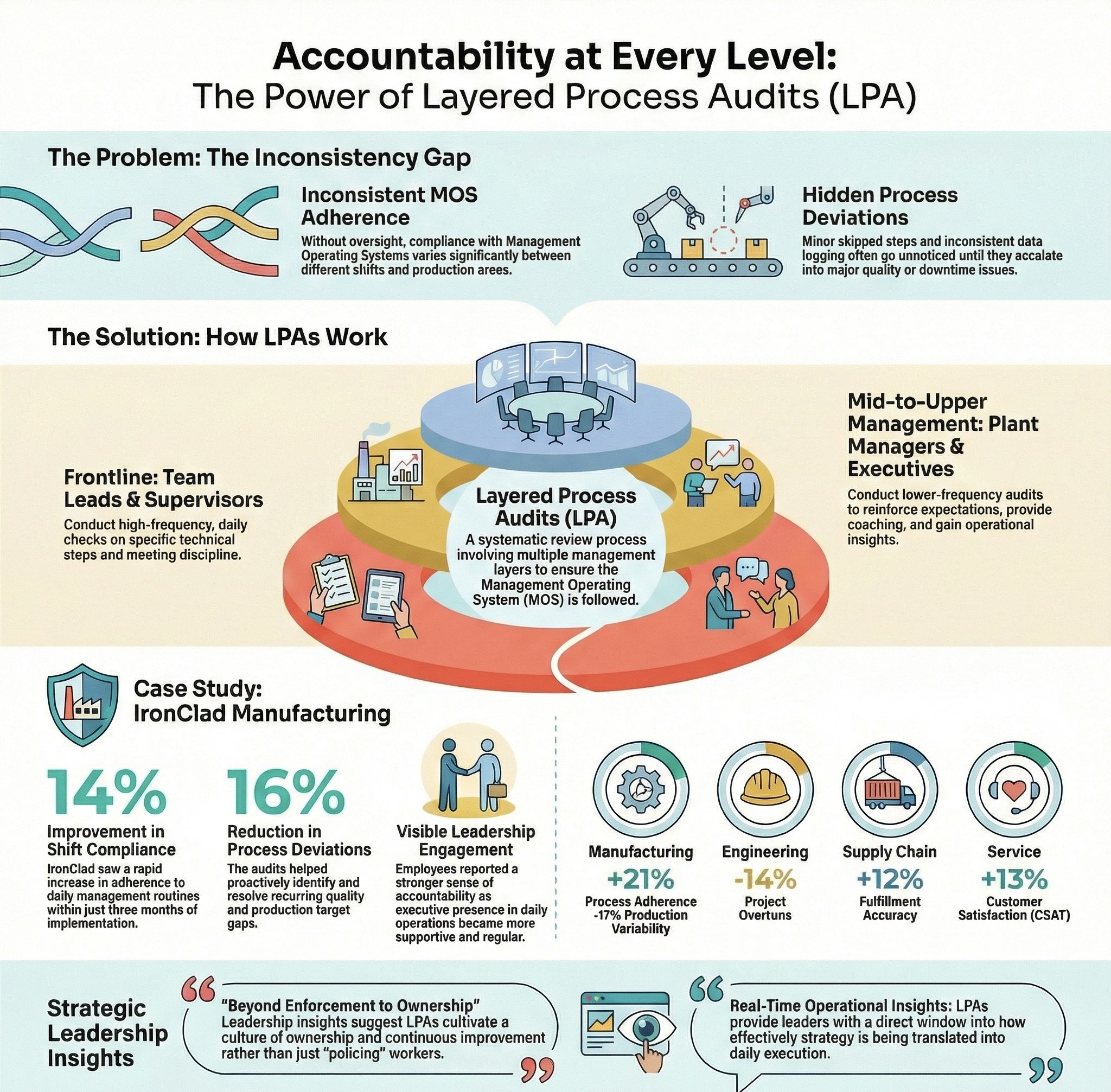
For most executives, the greatest frustration isn't a lack of strategy—it’s the "ghosts in the machine" that haunt execution. You invest heavily in a Management Operating System (MOS), designing sleek KPI trackers and robust standard procedures, only to watch them erode in the real world. We’ve all seen the scenario: the morning shift runs like a Swiss watch, but the afternoon shift falters, leading to quality spikes and missed targets.
This "consistency gap" occurs because systems do not manage themselves; they inevitably degrade without reinforcement. When a process looks good on paper but fails in practice, it is a signal of systemic rot in accountability. To bridge this divide, forward-thinking organizations are turning to Layered Process Audits (LPA)—a systematic verification framework that ensures expectations are met not just by luck, but by design.
Accountability is a Vertical Sport
Sustainable accountability cannot be outsourced to frontline supervisors alone. It must be a "vertical sport." Layered Process Audits function by requiring multiple tiers of management to participate in the verification of the MOS, ensuring that the system remains the "pulse" of the organization rather than a dusty manual on a shelf.
"Layered audits involve different management levels reviewing how well the MOS is being followed. From team leads to executives, ensure each layer reinforces expectations and addresses gaps systematically."
When a C-suite executive walks the floor to audit a specific process, the cultural chemistry changes. It shifts from "policing" to "supportive engagement." The goal of an executive audit isn't merely to catch a mistake; it is to provide "air cover" for the team lead. By reviewing meeting discipline or action-item follow-ups, senior leaders identify the systemic hurdles—like a lack of resources or conflicting priorities—that prevent the frontline from succeeding. This turns the audit into a coaching moment, signaling that the process matters enough for the highest levels of leadership to protect it.
The ROI of the Routine: Why Small Checks Yield Big Margins
The impact of these routine "check-ups" is quantifiable and compounding. Rather than waiting for a monthly post-mortem report to highlight a failure, LPAs act as a productivity multiplier by catching deviations in real-time. According to research from the Lean Enterprise Institute and Deloitte, the results of high-frequency adherence are striking:
• 21% increase in process adherence.
• 17% reduction in production variability.
• 14% reduction in project overruns within engineering departments.
These outsized gains are the direct result of reducing "process drift." When an organization commits to the routine, it eliminates the small variances that eventually snowball into catastrophic financial or operational losses.
Breaking the Factory Mold: LPAs in the Knowledge Economy
There is a common misconception that audits are only for assembly lines or warehouses. However, synthesis of data from McKinsey and Deloitte proves that the LPA framework is equally transformative in knowledge-based sectors. In these environments, the "process" isn't a machine—it’s the workflow of collaboration.
In marketing, LPAs are being used to audit creative approval cycles and performance reporting rhythms, ensuring that campaign strategies don't lose their edge during execution. In engineering, the focus shifts to auditing project milestones and risk management actions. These sectors have seen a 13% increase in customer satisfaction scores and a 12% improvement in fulfillment accuracy. By auditing the way people work together, leaders ensure that creative and strategic workflows remain consistent across multi-team projects, preventing the "drift" that leads to missed deadlines.
The IronClad Blueprint: From Compliance to Culture
The transformation of IronClad Manufacturing, a producer of structural steel components, serves as a masterclass in bridging the Strategy-Execution Gap. Facing wildly inconsistent adherence to their MOS, IronClad didn't just issue new mandates; they implemented a layered audit program.
The Hidden Fragility of the "Hero" Leader
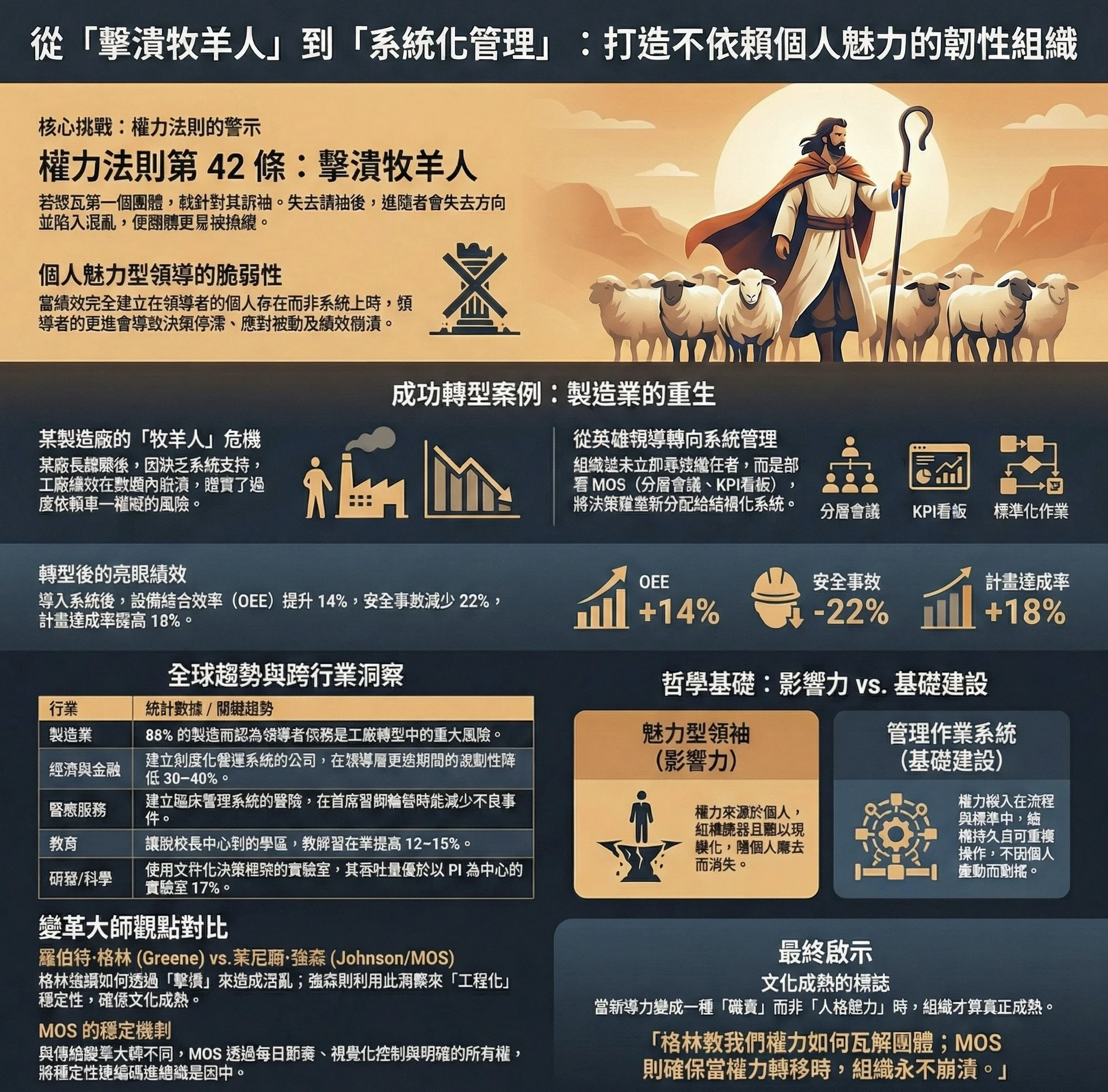
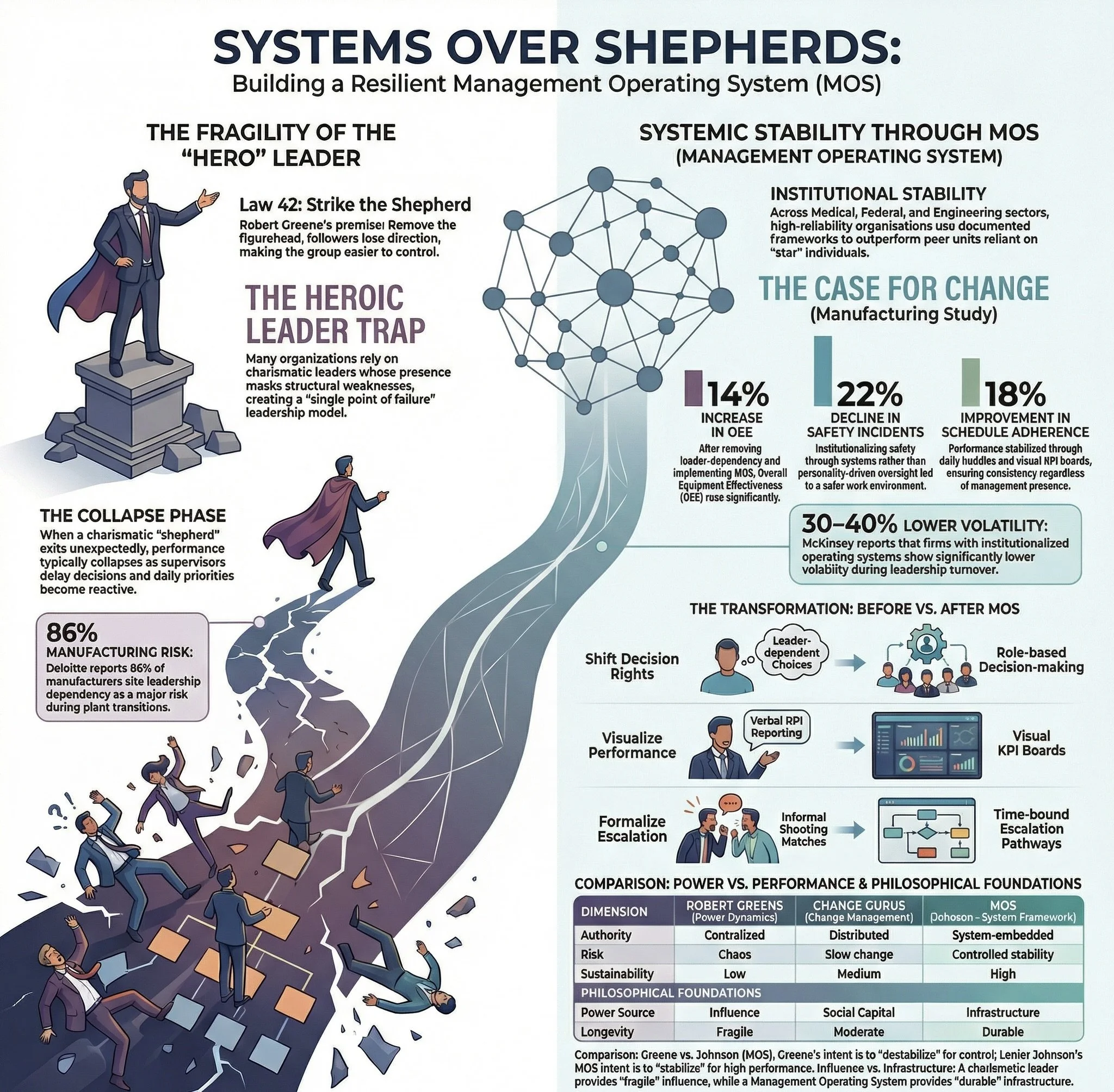
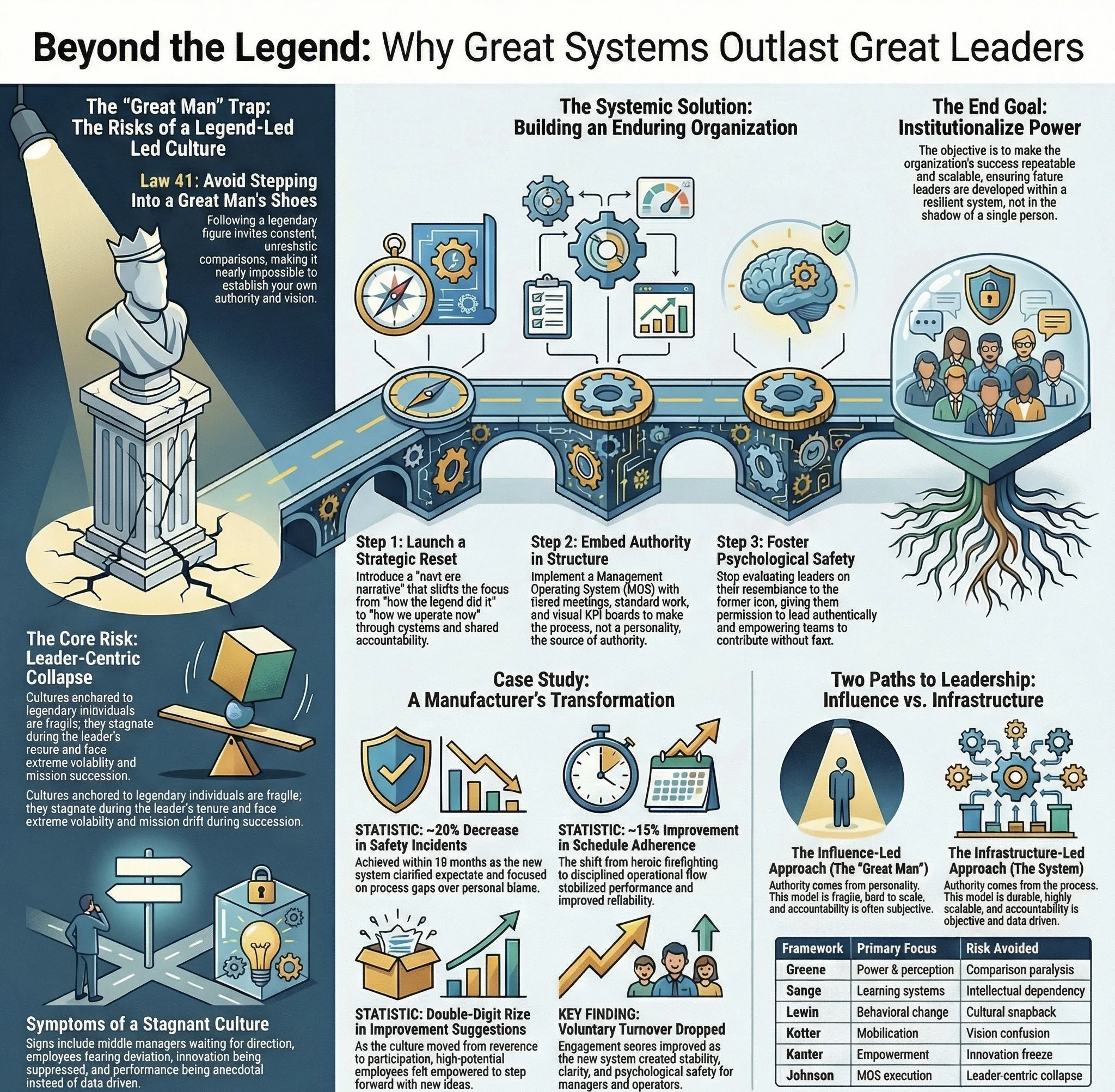
The most dangerous leaders are those whose charisma masks a total lack of infrastructure. Executives frequently fall into the trap of the "Hero Leader," mistake-proofing their own egos while leaving the organization fundamentally fragile. They mistake a cult of personality for a high-performance culture. But charisma is not a strategy; it is a structural liability.
The "Meeting-Action" Paradox
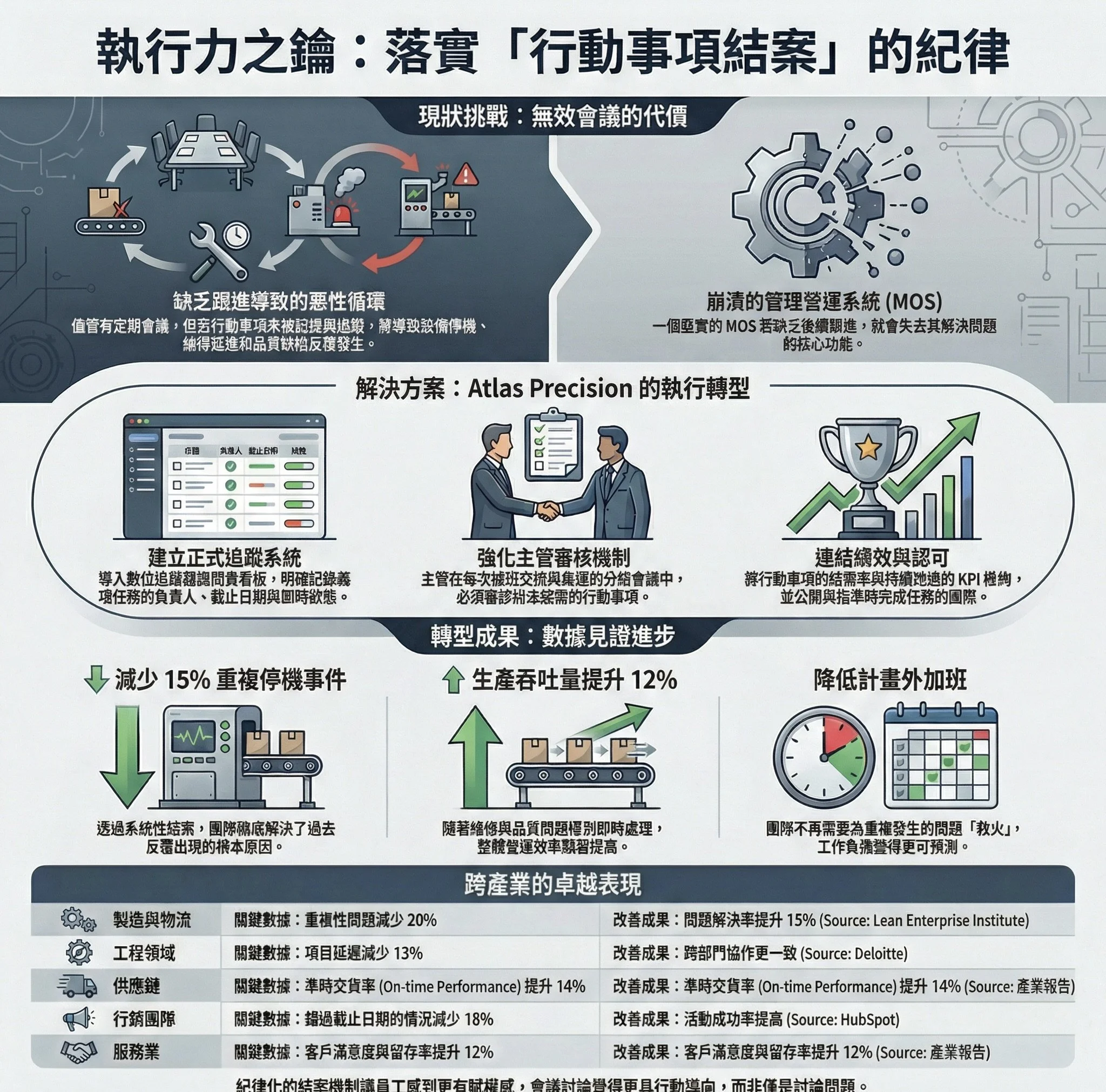
In the theater of modern business, few scenes are more common—or more deceptive—than the high-energy team huddle. A group of talented professionals identifies a critical bottleneck, aligns on a solution, and leaves the room feeling a profound sense of accomplishment. Yet, two weeks later, that same bottleneck remains, effectively calcified. This is the "Meeting-Action" Paradox: the phenomenon where robust communication fails to catalyze real-world change.
Stepping into a role previously held by a beloved, legendary figure is one of the most daunting challenges in leadership. The pressure is immense, the expectations are sky-high, and the predecessor’s shadow looms large. This is the successor's dilemma: how do you lead when you're constantly being measured against a ghost?
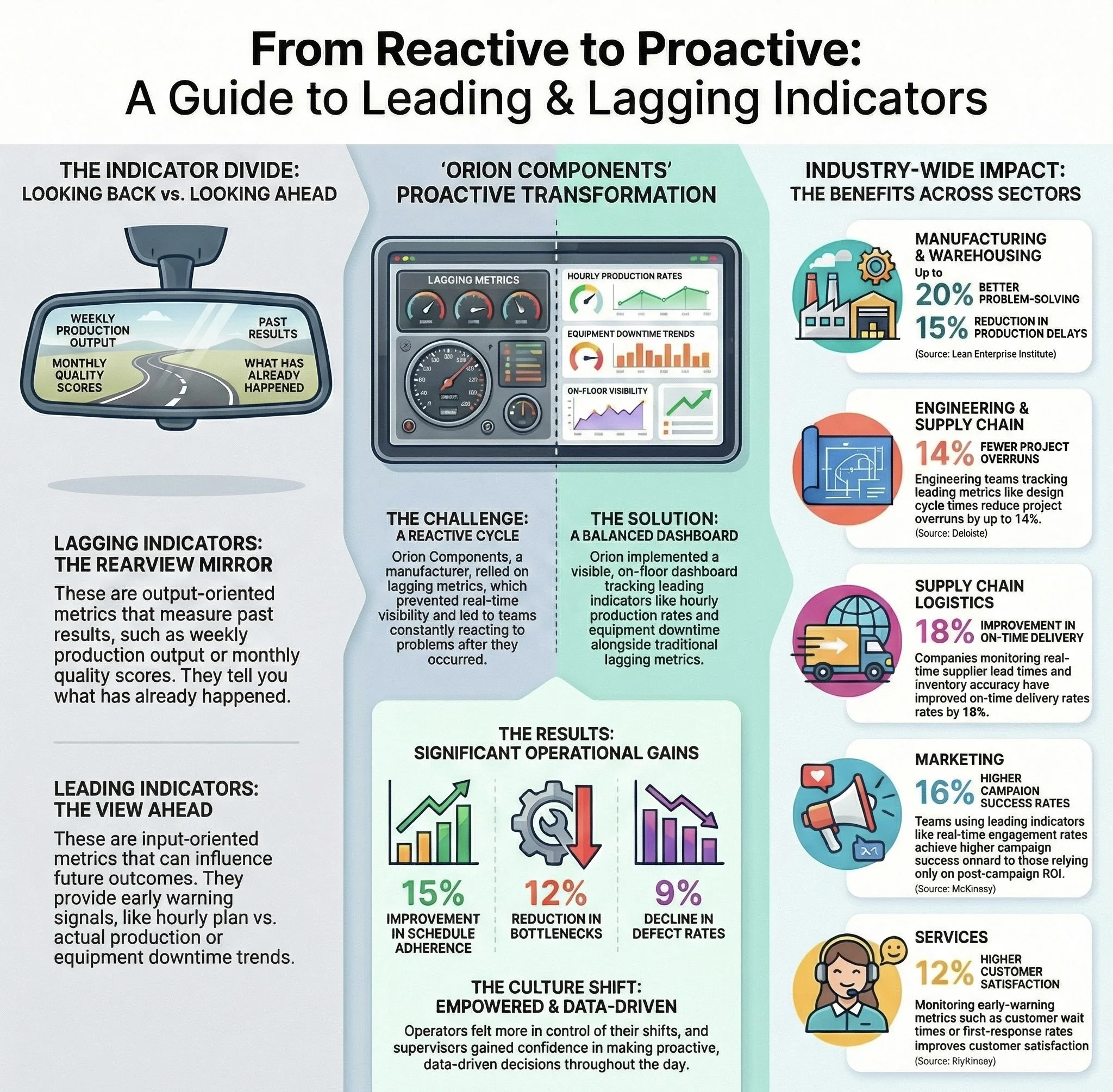
Are your team meetings spent discussing why you missed last week's targets? Do you feel like you're constantly "firefighting"—reacting to performance issues only after they've already occurred? This reactive loop burns out your best people, inflates costs, and erodes customer trust. It’s like trying to drive a car by only looking in the rearview mirror. You can see where you've been, but you have no idea what's coming up ahead.
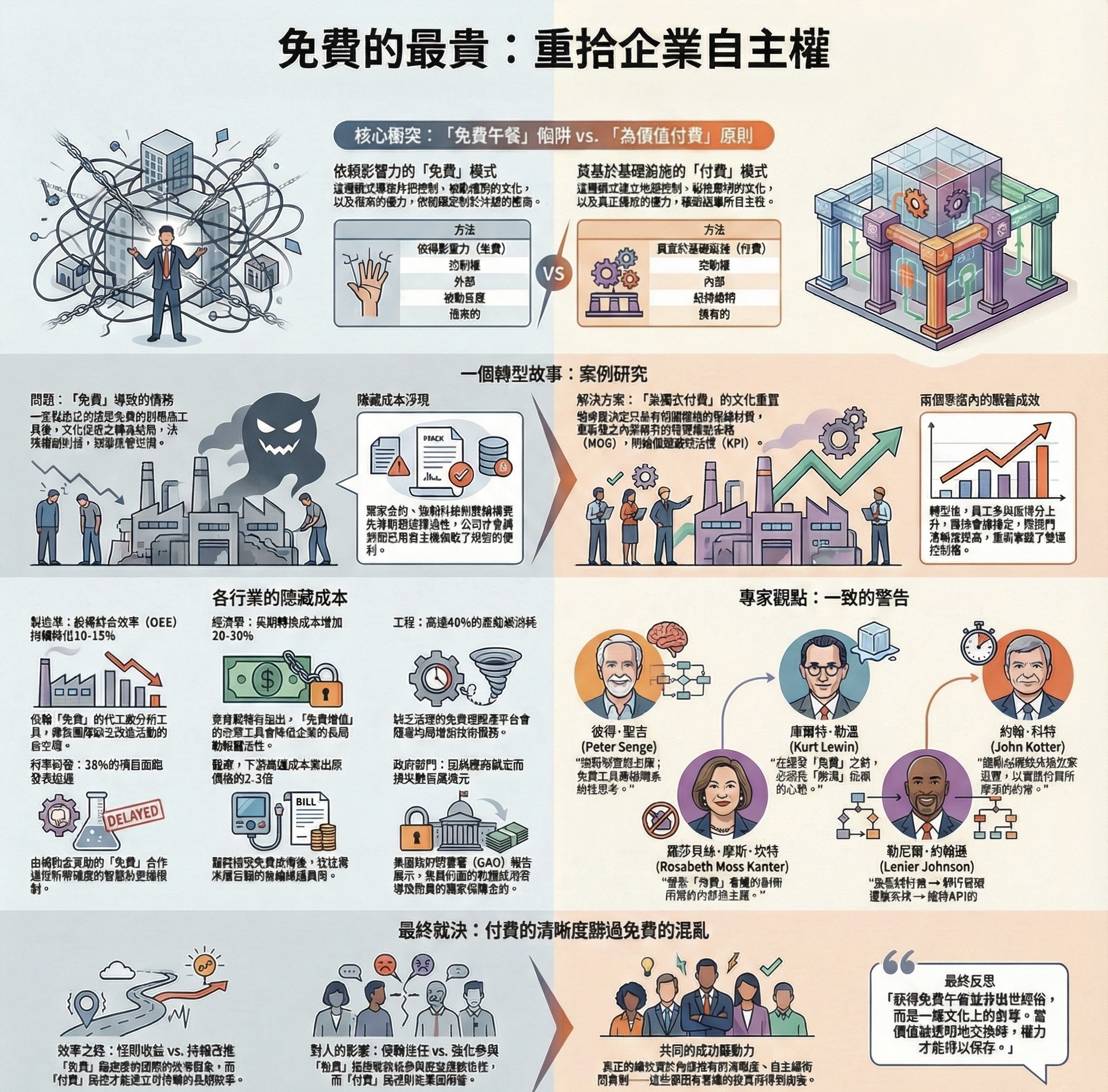
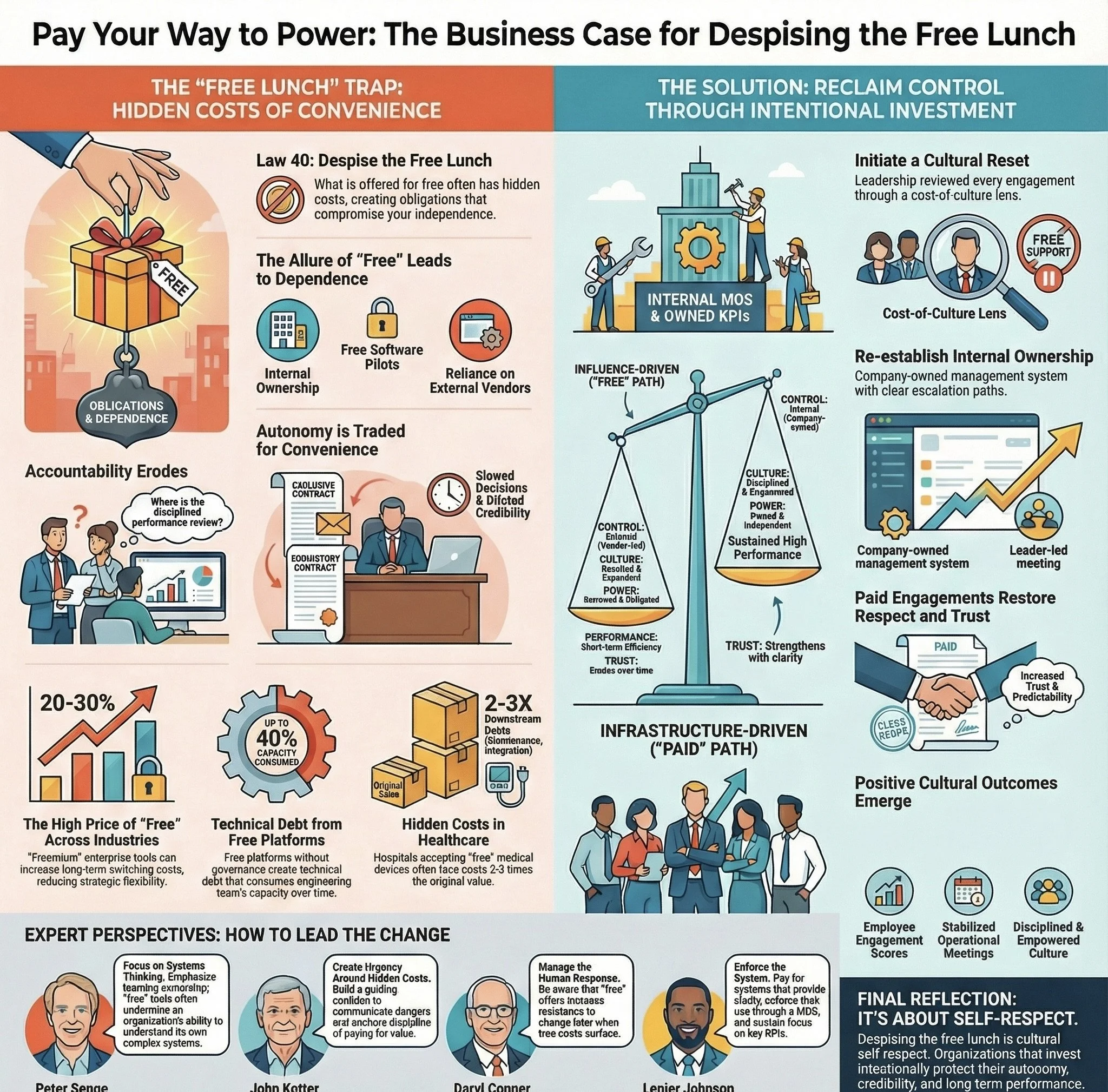
This collection of texts explores the strategic necessity of avoiding deceptive offers and maintaining organizational independence by applying Robert Greene’s principle to "despise the free lunch." The sources provide a comprehensive business case study illustrating how a manufacturing firm reclaimed its culture by transitioning from vendor dependency to internal ownership and disciplined management systems. Leadership insights across various sectors, from engineering to the federal government, further demonstrate the hidden costs and long-term risks associated with "free" resources. The material compares Greene’s power-based philosophy with traditional change management theories to highlight how financial investment fosters accountability. Detailed performance tables and implementation tools are included to help supervisors transition from a reactive mindset to one rooted in operational infrastructure. Ultimately, the text argues that paying for value is a fundamental requirement for preserving authority and ensuring sustainable success.