
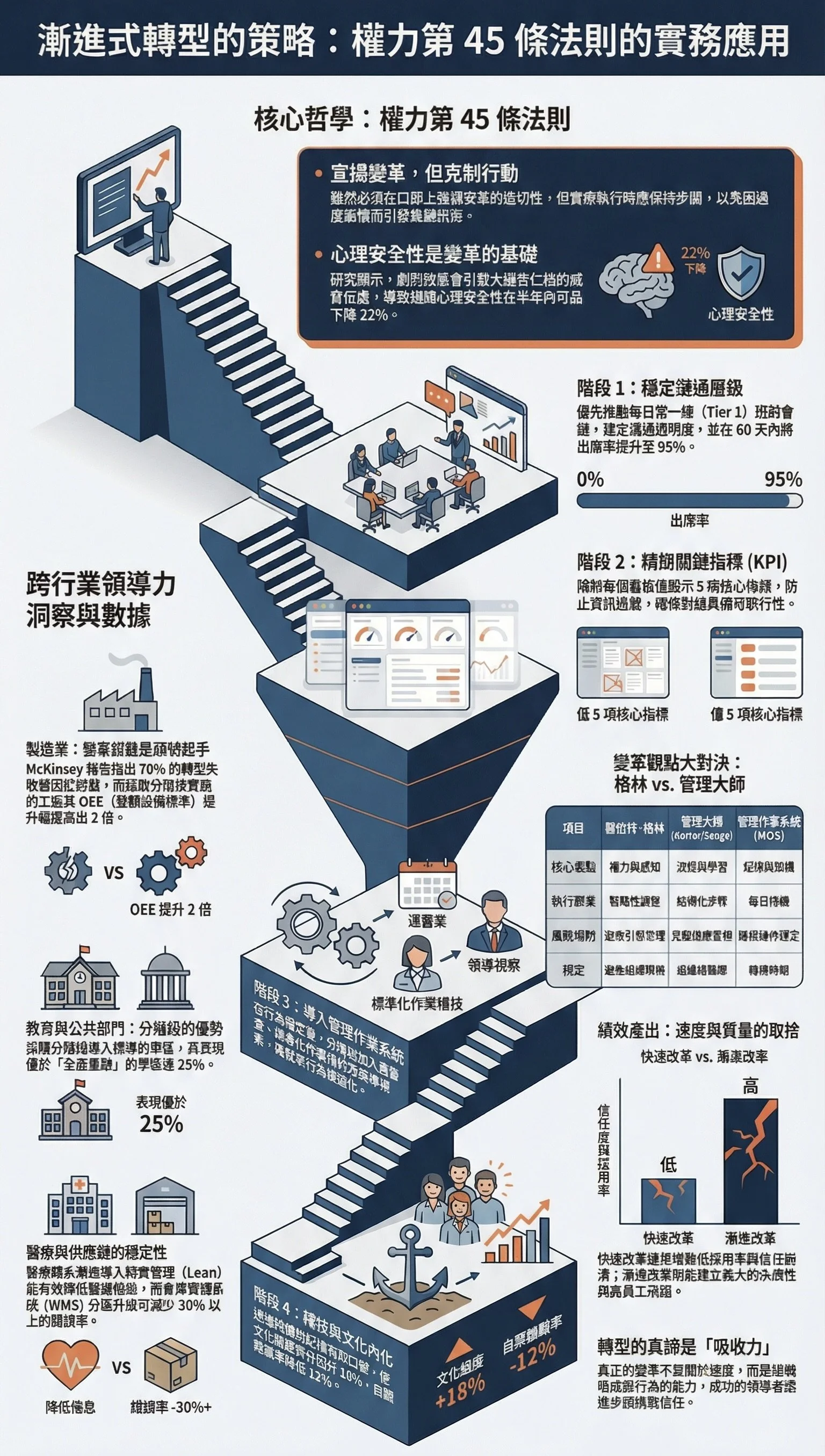
在當前這個追求極致效率與數位轉型的時代,領導者往往承受著巨大的壓力:如果不進行大刀闊斧的「閃電戰」改革,似乎就意味著平庸與落後。我們經常看到滿懷熱忱的執行長在全員大會上宣佈一套全新的組織架構、KPI 體系與數位工具,試圖在短時間內重塑企業基因。然而,這種急於求成的衝刺,往往會演變成一場災難——員工感到精疲力竭、信任感崩潰,甚至引發集體性的消極抵制。

During a podcast interview, a host and a guest discuss why companies should abandon the pursuit of a standalone AI strategy and instead focus on business outcomes and organizational goals. The conversation highlights how agentic AIoperates through a spectrum ranging from basic process retrofitting to complete workflow reimagination. Furthermore, the dialogue emphasizes that while autonomous agents can greatly accelerate productivity, human judgment remains vital for maintaining safety, handling context, and preserving accountability. Finally, the speakers explore how organizations can redesign their management operating systems to train future leaders and successfully navigate an era of unprecedented, rapid change.
The provided sources explore creationist biology, primarily through the academic background and publications of Dr. Robert Carter. They critically examine evolutionary tenets by discussing the origin of life, the information stored in DNA, and biological complexity from a young-earth perspective. The texts also analyze specific genetic topics, such as Neandertal mitochondrial genomes, arguing that genetic diversity and cellular machinery point toward intentional creation rather than unguided macroevolution. Additionally, the literature reviews fundamental biological principles like metabolism, cells, and natural selection, contrasting materialistic philosophies with theistic creationism.
Senior leaders face a familiar, costly paradox. Despite pouring millions into enterprise technology, culture workshops, and top-tier management consultants, major transformation efforts routinely stall out or fail entirely. When performance slips, the executive knee-jerk reaction is to deploy immediate, localized patches. But these band-aid solutions ignore a fundamental operational reality: they accrue crippling process debt—the hidden structural friction, redundant handoffs, and workarounds that quietly erode organizational performance over time.
When results stall, the leadership instinct is often to launch another planning cycle or order a strategy refresh. However, repeating the planning process fails to fix the underlying environment where the work actually takes place. Strategy is only as executable as the operational conditions surrounding the people expected to deliver it.
In the high-stakes environments of national security and elite military operations, the word "accountability" isn't a threat—it’s a survival mechanism. Yet, in most corporate boardrooms, the term triggers a defensive crouch. For many, accountability is treated as a post-mortem, a punitive tool invoked only after a project has cratered and a scapegoat is needed.
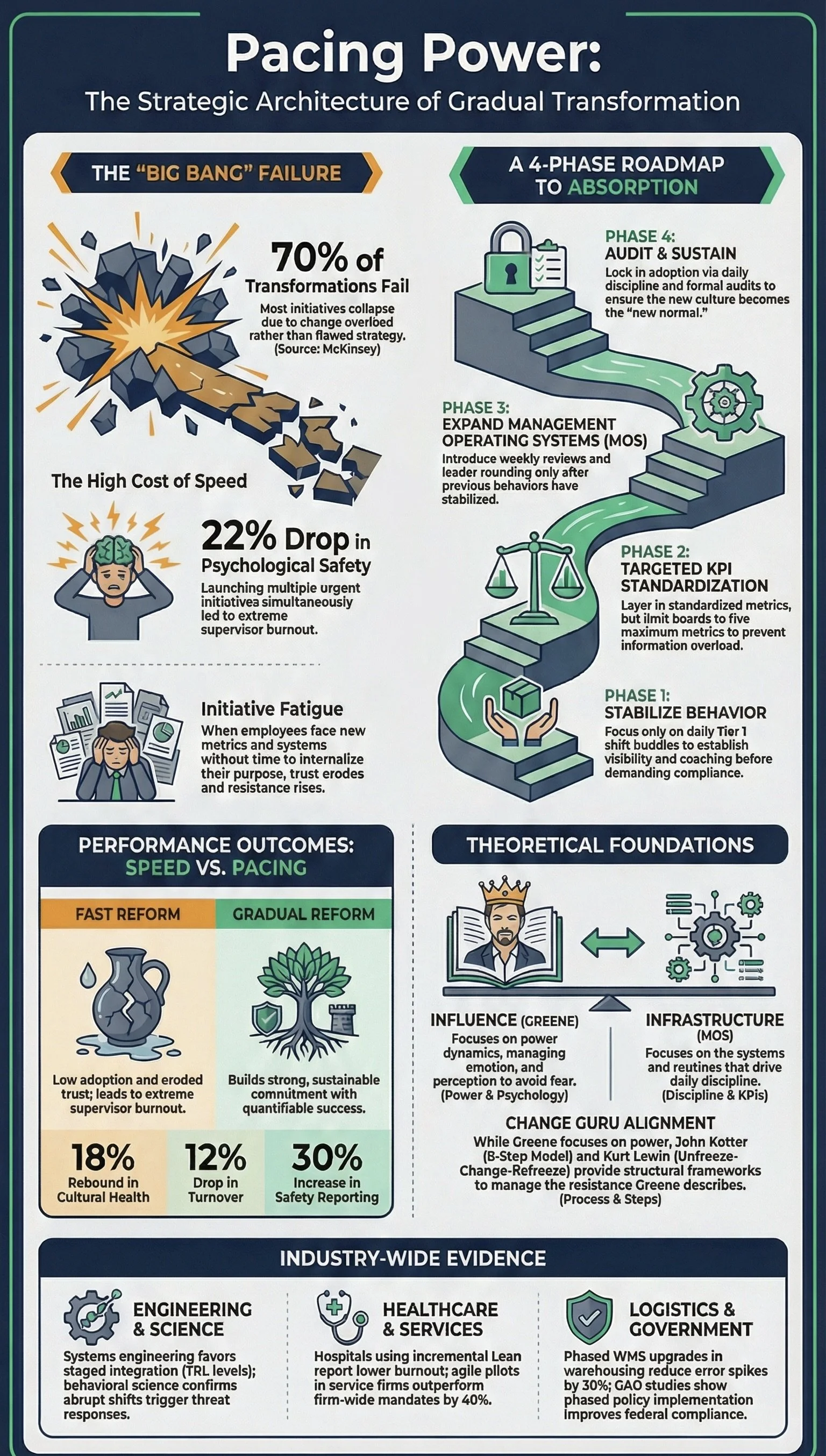
In the modern executive suite, the fallacy persists that the velocity of a transformation initiative is a direct proxy for its efficacy. This mindset precipitates the launch of multiple, uncoordinated "urgent" programs that inevitably collide, resulting in profound "initiative fatigue." While these shifts are born of a desire for progress, the strategic imperative is to recognize that the fastest route to systemic change is often a calculated deceleration. By adhering to Robert Greene’s Law 45—preaching the need for change while eschewing excessive reform—leaders can navigate the volatile space between stagnation and chaos.
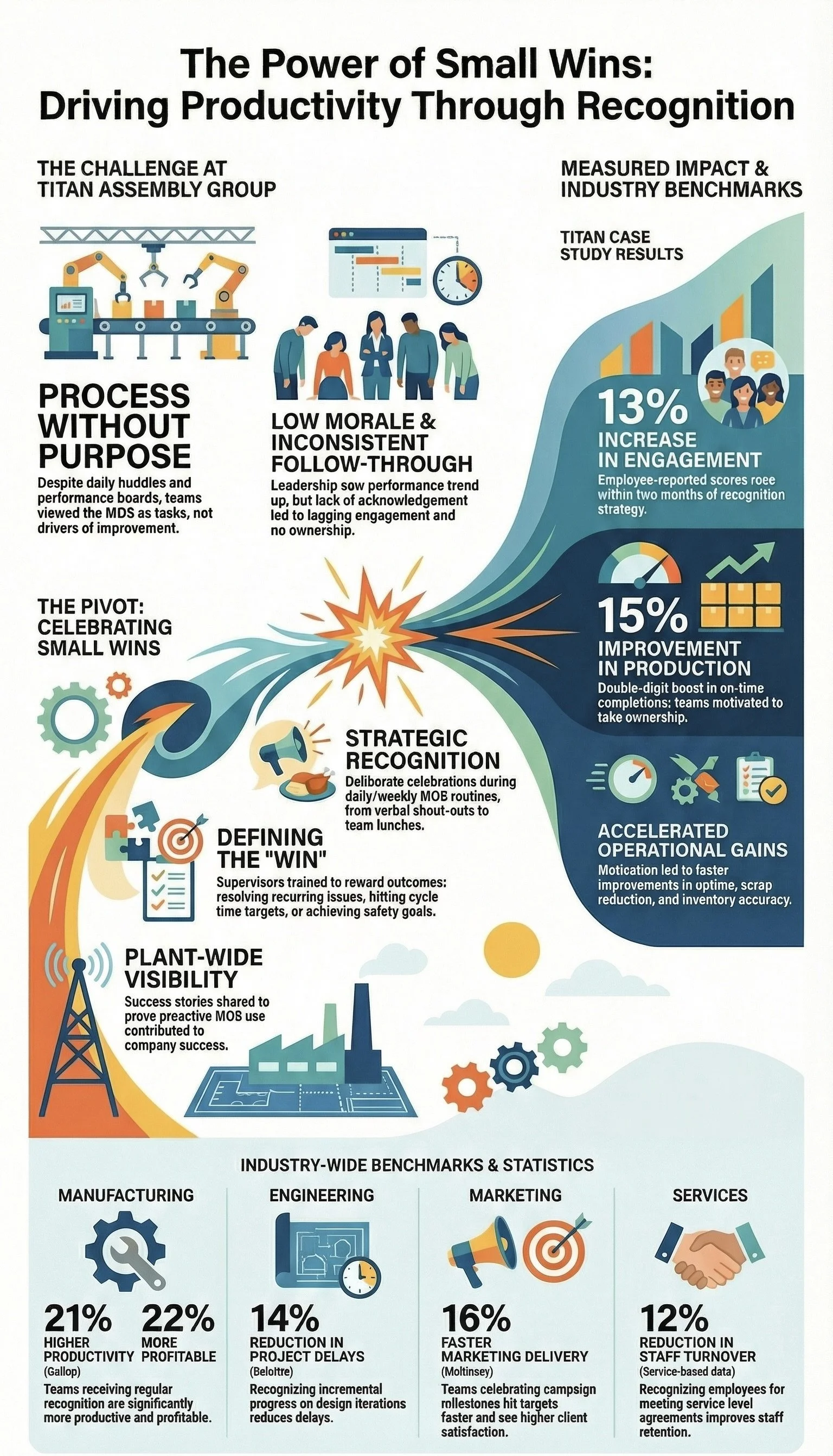
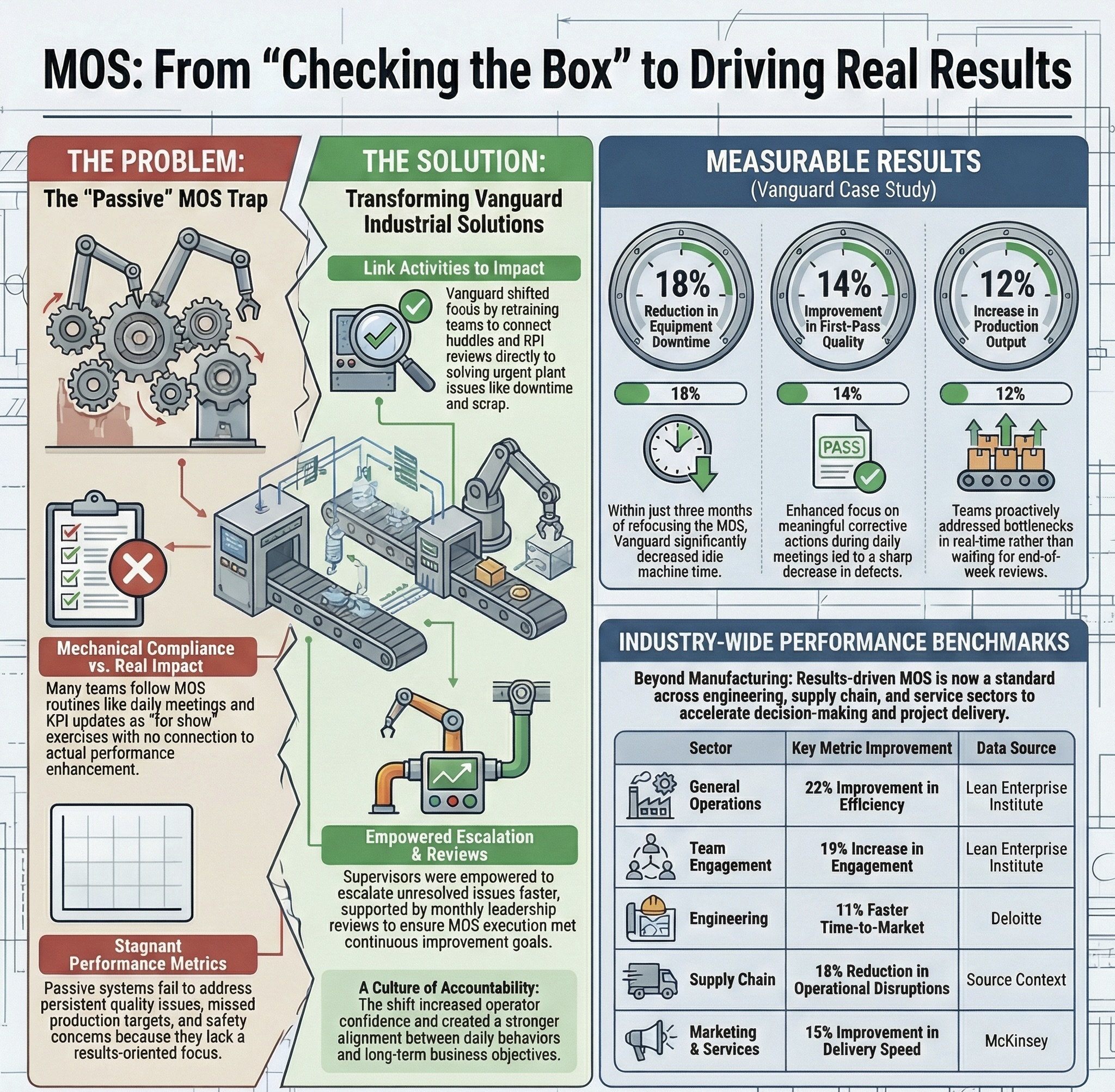
For many organizations, a Management Operating System (MOS) eventually feels like a lead weight. What began as a framework for excellence often decays into a "set of tasks"—a repetitive grind of huddles, performance boards, and action items that employees view as chores rather than catalysts for growth. This "checklist trap" doesn't just drain morale; it stalls the very progress the system was designed to accelerate.
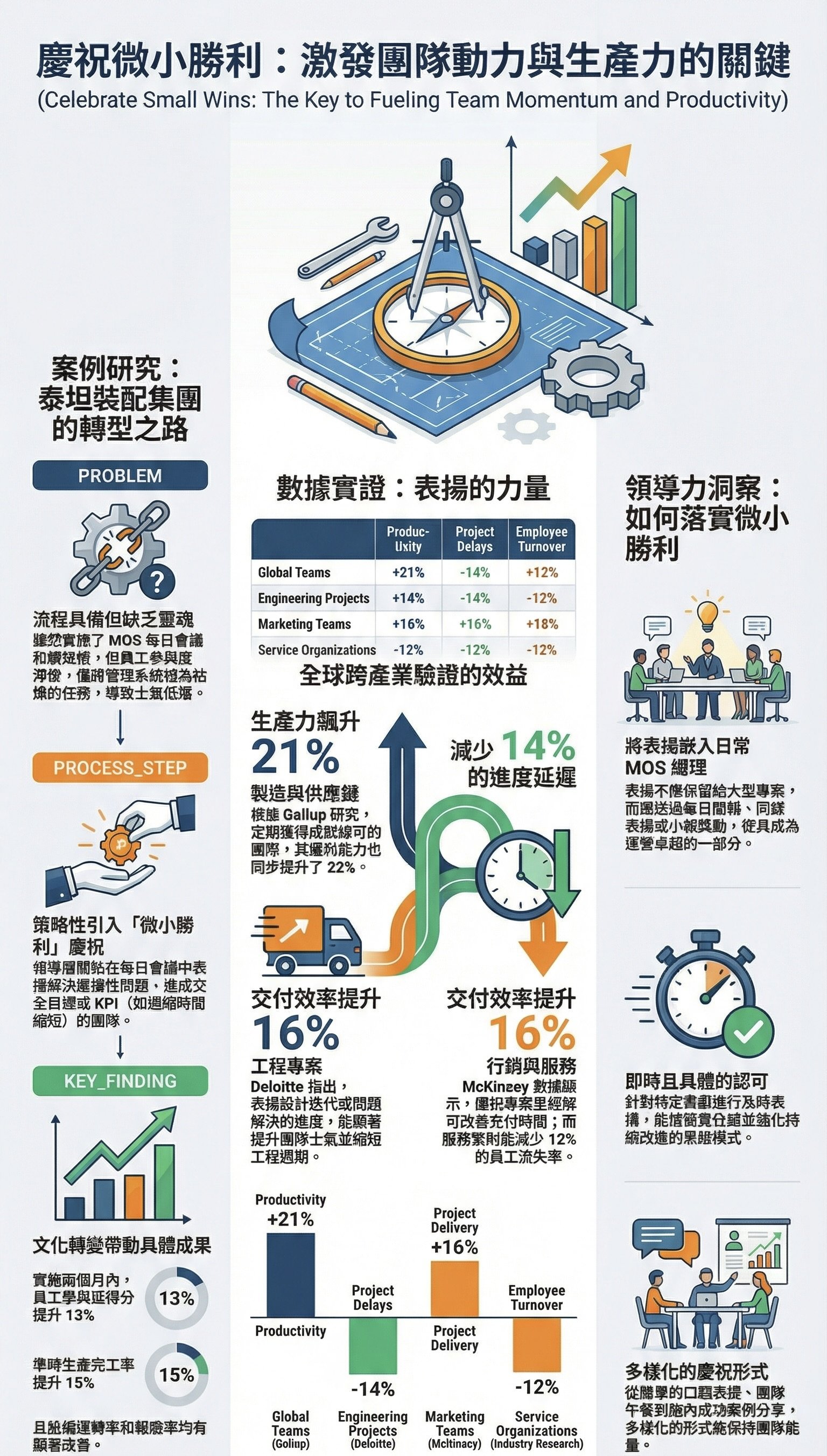
The solution isn't more discipline, tighter oversight, or more complex tracking. In fact, the secret to achieving 21% higher productivity lies in a counter-intuitive shift: better celebration. Recognizing incremental progress transforms a stagnant culture into a high-performance engine. This post reveals how identifying "micro-victories" can revolutionize your organizational culture and deliver serious bottom-line results.
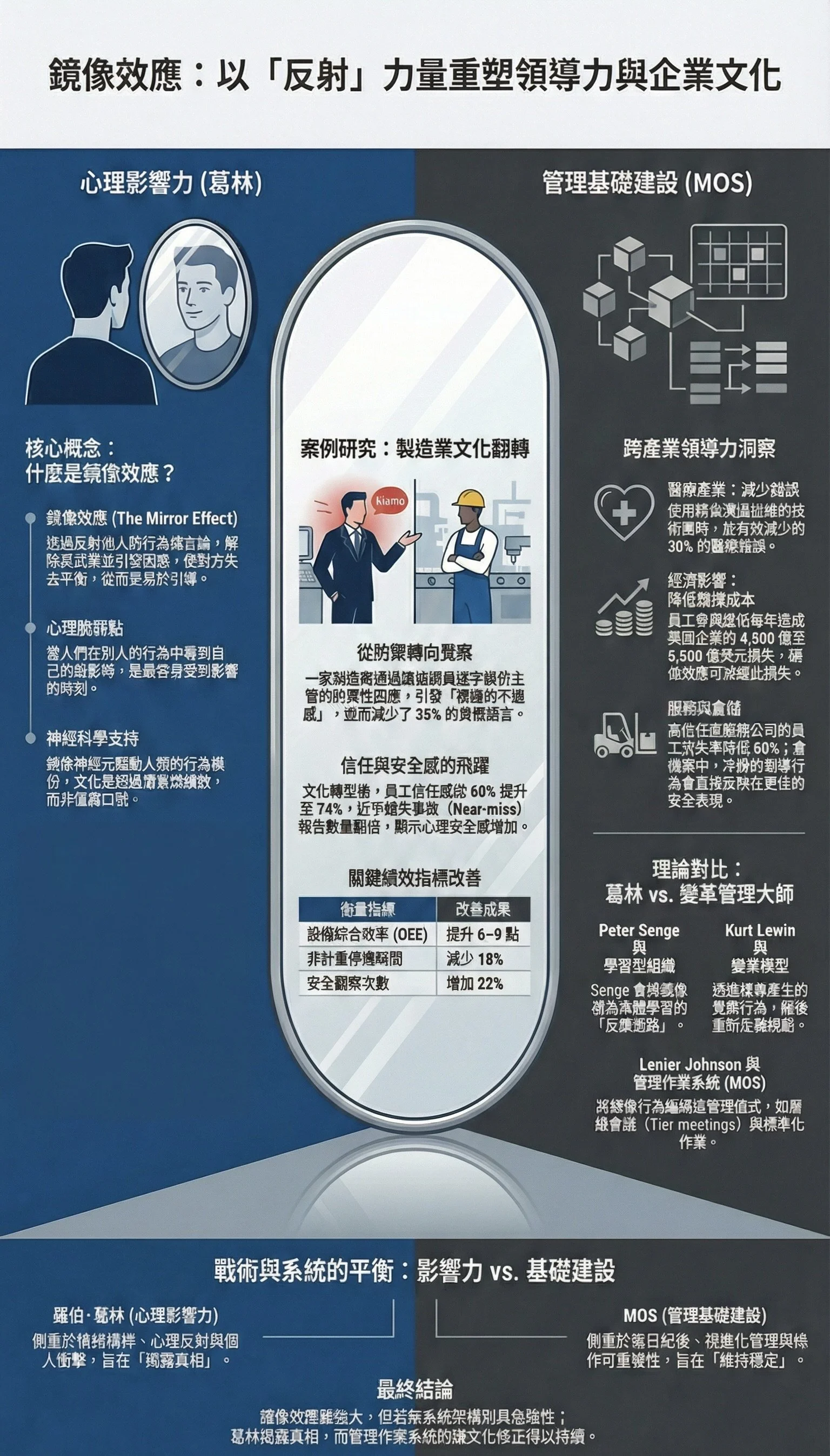
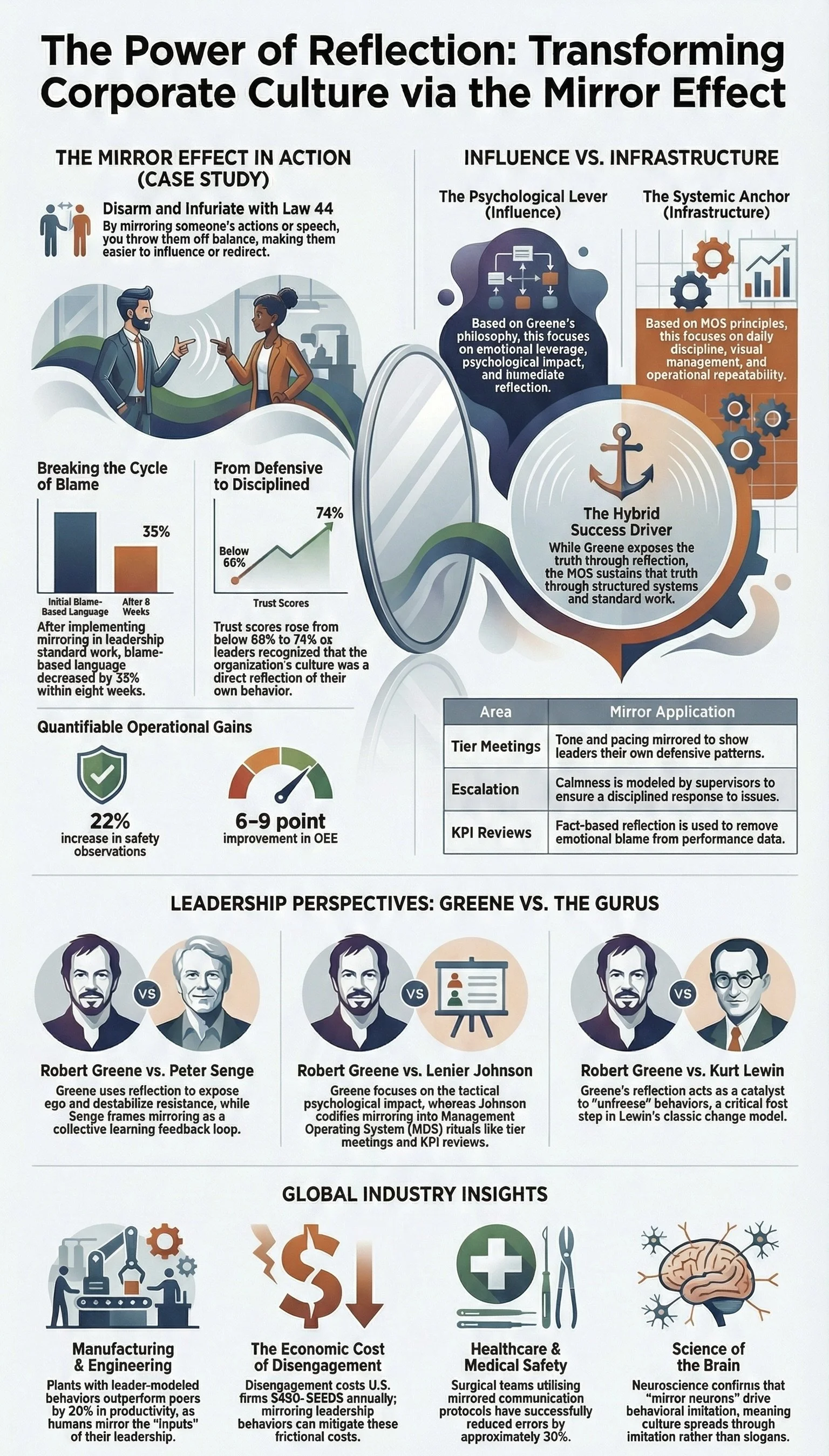
Modern leadership is suffering from a hypocrisy epidemic. We celebrate "accountability culture" in our town halls while simultaneously punishing the messengers of truth in our boardrooms. This creates a destructive defensive loop: leaders demand transparency but react with emotional volatility when faced with challenges, prompting their teams to retreat into performative behavior and silent resistance.
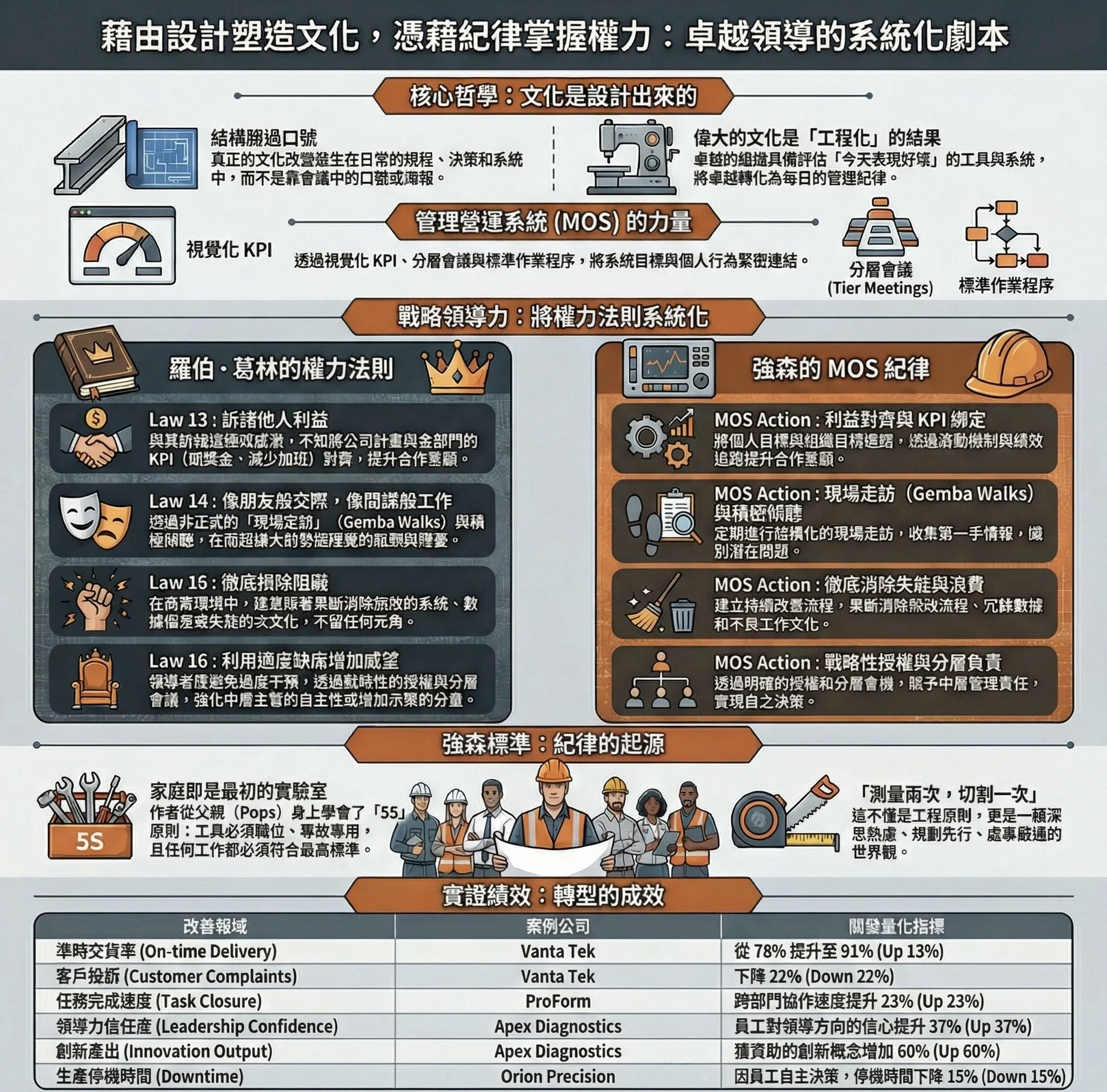
【別再喊口號!】深度解析:為什麼「系統結構」才是打造高績效文化的真正關鍵?
在許多企業的會議室裡,牆上貼滿了「以人為本」、「追求卓越」或「團隊協作」的精美口號。然而,觀察其實際運作,卻往往充斥著跨部門內耗、無效會議以及因循苟且的行為。身為一名曾在 General Electric (GE)、Nestlé、Kodak 與 Gillette 等 Fortune 50 企業深耕多年的系統策略師,我看到過無數卓越的願景在缺乏結構的土壤中枯萎。
領導力系統策略師 Lenier Johnson, Jr. 在其著作《設計文化,紀律賦能》(Culture by Design, Power by Discipline)中提出了一個核心工程準則:卓越的文化絕非偶然,而是「設計(Engineered)」出來的結果。
文化不是你在海報上寫了什麼,而是你透過「管理作業系統(Management Operating System, MOS)」、結構化紀律與刻意設計的權力動態,在日常運作中強化並保護的行為總合。本文將揭示五個來自 Johnson 實戰經驗的衝擊性洞見,教你如何透過「結構化流程」來實踐領導力。
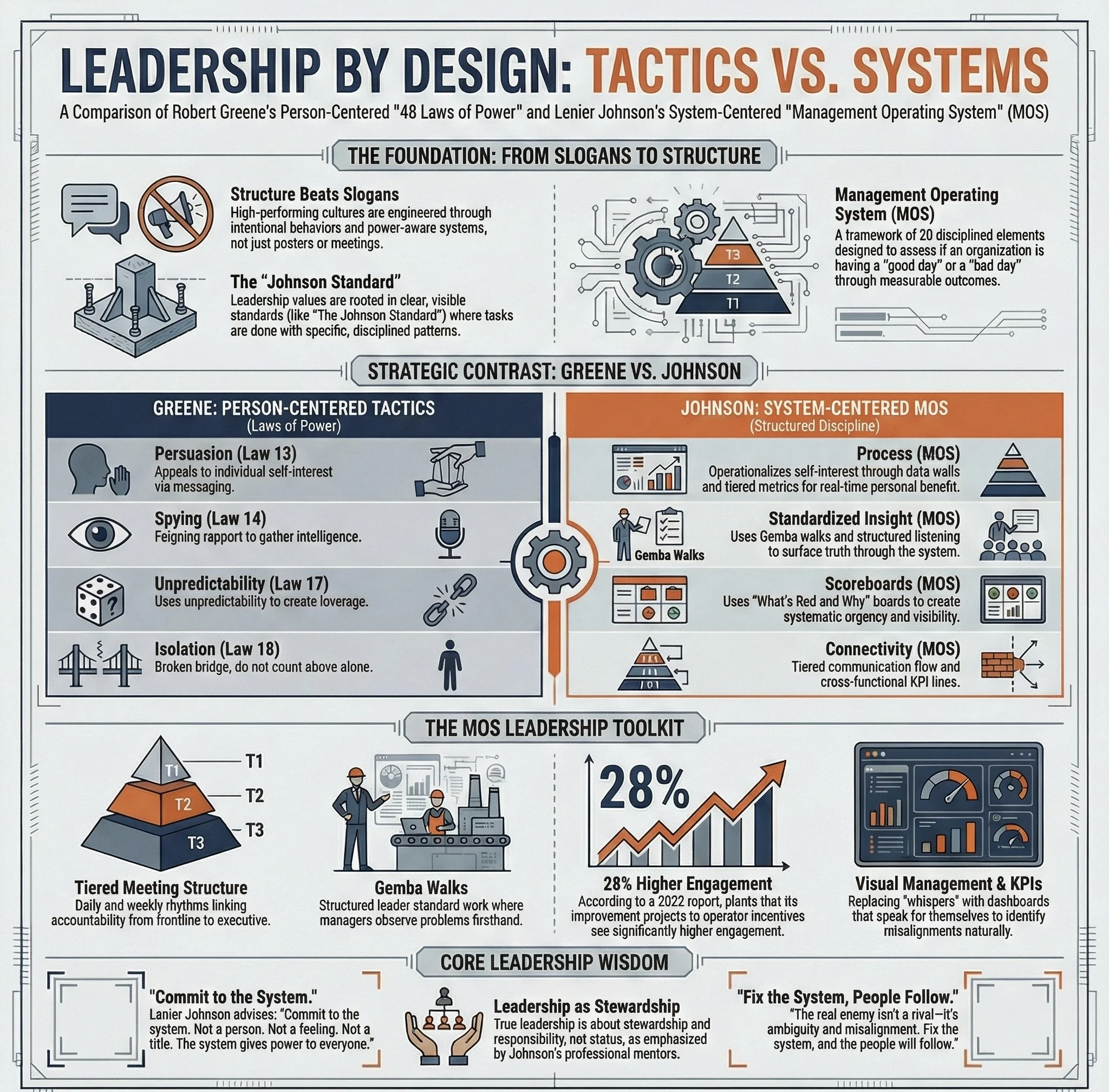
1. The High Cost of Posters and Buzzwords
Modern leadership is often reduced to a collection of comfortable slogans: “people over process,” “empower your teams,” and the ubiquitous “culture eats strategy for breakfast.” While these phrases perform well on breakroom posters, they frequently evaporate upon contact with the shop floor or the executive suite. The relatability problem is clear: organizations talk about excellence while operating in a fog of misalignment.
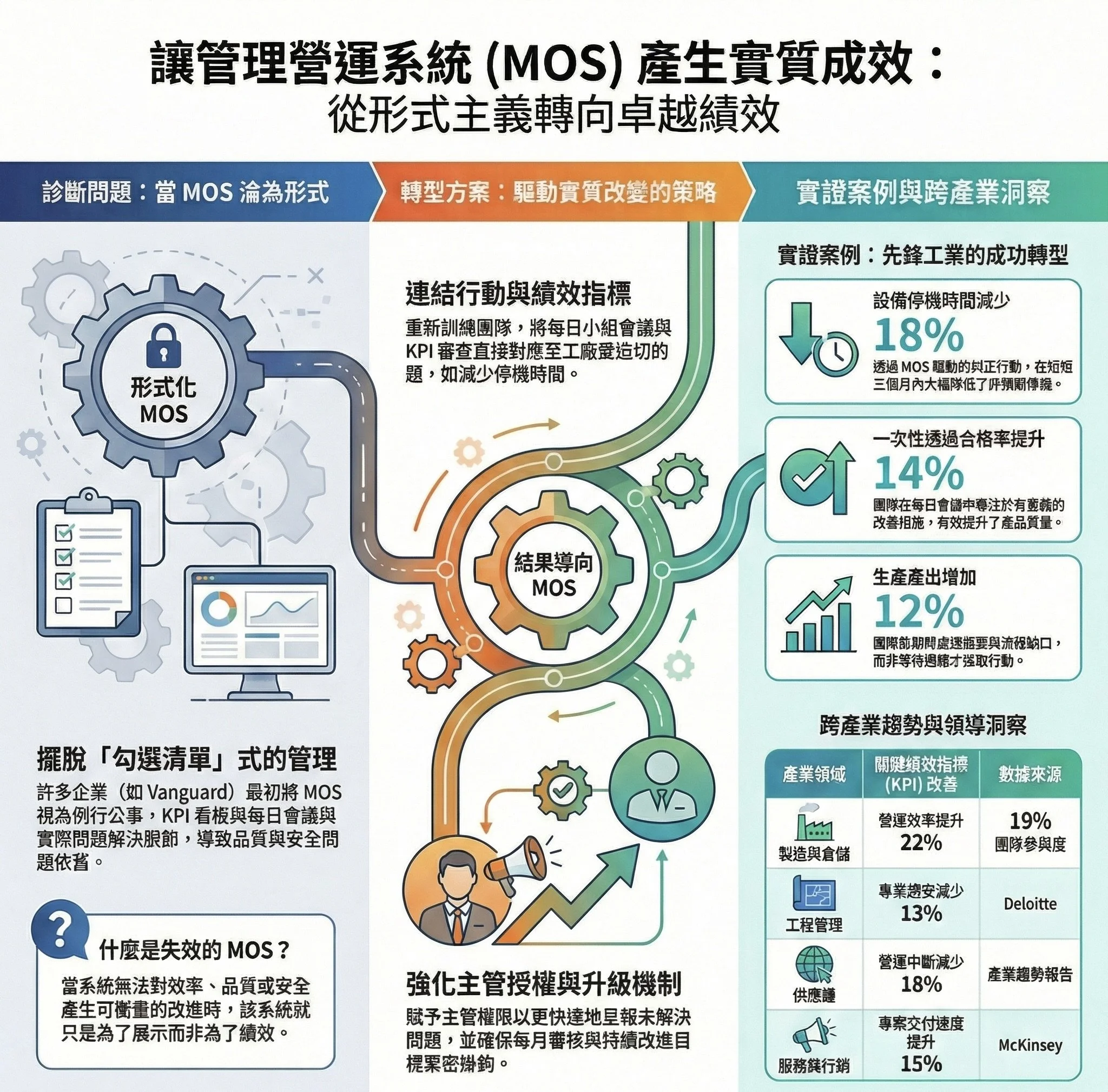
別讓管理系統淪為「走格子」遊戲:為什麼你的 MOS 必須以結果為導向?
前言:行政繁榮下的績效貧血
在許多企業中,管理營運系統(Management Operating System, MOS)早已淪為一種「神聖的祭儀」:主管與員工每天準時在看板前集合,熟練地更新數據、勾選檢查表,然後各自散去。表面上組織運作極其紀律,實則績效指標長年原地踏步。
作為顧問,我常看到企業陷入這種「行政繁榮」的幻覺。這種將 MOS 視為單純行政負擔而非營運引擎的行為,正是企業 ROI(投資報酬率)最大的流失來源。為什麼有些公司的管理系統能帶來翻天覆地的轉變,而多數公司卻只是在玩一場昂貴的「走格子」遊戲?關鍵在於你是否將系統從「機械式合規」推向了「成果導向」。
The Hook: The "Check-the-Box" Trap
For many organizations, the Management Operating System (MOS) has devolved into a costly collection of empty rituals. Leadership teams invest thousands of hours in daily huddles, KPI board updates, and complex reporting cycles, yet the needle on actual performance remains stubbornly stagnant. This "check-the-box" mentality is more than an administrative nuisance; it is a profound failure of leadership that masks inefficiency under the guise of process.