
5 Counter-Intuitive Truths About Business Transformation (And Why Quick Fixes Fail)
Senior leaders face a familiar, costly paradox. Despite pouring millions into enterprise technology, culture workshops, and top-tier management consultants, major transformation efforts routinely stall out or fail entirely. When performance slips, the executive knee-jerk reaction is to deploy immediate, localized patches. But these band-aid solutions ignore a fundamental operational reality: they accrue crippling process debt—the hidden structural friction, redundant handoffs, and workarounds that quietly erode organizational performance over time.
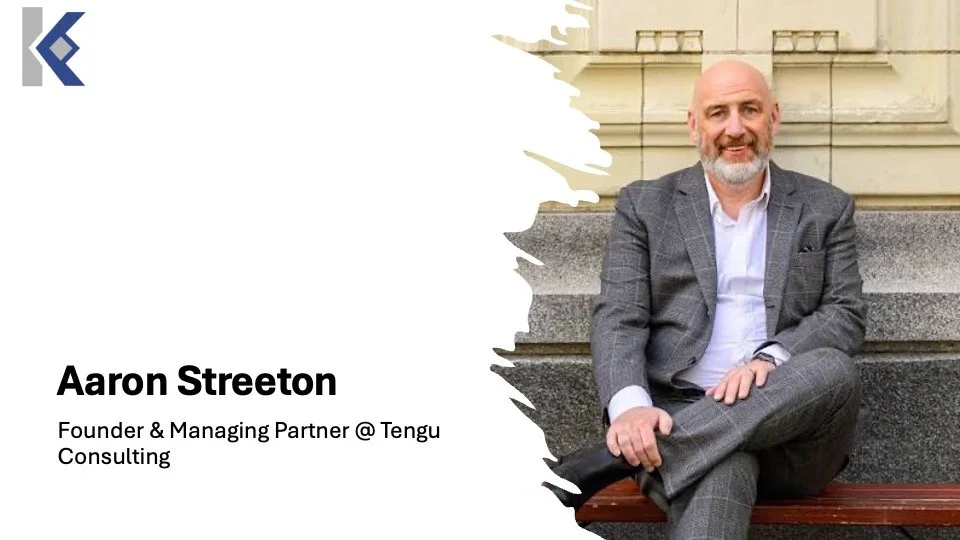
Canadian operations strategist Aaron Streeton, author of The Nine Essential Questions for Organizational Transformation, argues that these failures occur because leaders instinctively rush straight to tactical solutions instead of evaluating the enterprise as an integrated ecosystem. When executives treat systemic flaws with superficial fixes, they inadvertently compound chaos across the value stream. True, lasting transformation requires slowing down to understand how strategy, structure, culture, processes, and systems interact. Drawing directly from Streeton’s global operations career, this post distills five counter-intuitive operational truths that explain why quick fixes fail—and how to build an organization designed to execute.
1. Technology Can’t Fix Broken Processes (The "Ferrari on Potholes" Fallacy)
Organizations routinely mistake digital upgrades for operational improvements. When an enterprise software deployment slumps, executives reflexively blame vendor glitches or technical complexity. Yet modern system integrations rarely fail because of bad code; they fail because leadership forces developers to customize shiny new platforms to mirror 15-year-old operational habits.
This anti-pattern surfaced during an enterprise field service dispatch rollout. Rather than adapting internal workflows to out-of-the-box software standards, executive management insisted on 43 custom modifications to replicate their legacy user interface. This resistance stemmed from a subtle leadership failure: executive teams were reluctant to acknowledge operational friction and raise their hands during initial requirements gathering. The outcome was disastrous: implementation costs doubled, deployment timelines doubled, and field technician productivity dropped by 20%.
> "If you drive a Ferrari on a road full of potholes, you're still gonna get a flat tire. Sometimes you've gotta fix the road before you buy the Ferrari."
Buying software feels like decisive progress because technology is a tangible asset. In contrast, standardizing processes, eliminating workarounds, and instilling behavioral discipline requires unglamorous, grueling work. Overlaying expensive digital tools on top of broken workflows merely accelerates operational chaos, compounding process debt while hiding the underlying friction.
2. "Culture Eats Strategy" Is a Myth—Culture Is Top-Down Discipline
Corporate lore has long elevated Peter Drucker’s famous aphorism into gospel, convincing leaders that culture is an organic, bottom-up force beyond strategic design. This belief reduces culture building to soft HR initiatives—posters, corporate slogans, and sporadic team workshops. Streeton rejects this passive framing entirely, defining culture with sharp operational clarity: culture is simply the personality of an organization.
> "That old saying that Drucker... people talk about it, 'culture eats strategy for breakfast'—bunch of horse hockey as far as I'm concerned. You can define what your culture is, and that has to align to your strategy."
Culture is never a grassroots phenomenon; it is top-down and deliberate—the direct echo of executive behavior amplified across every tier of the enterprise. You get what you display, and you get what you tolerate. When leadership demands accountability or transparency but fails to model those behaviors personally, the workforce follows the incongruency, leading to operational drift and compromised standards.
Translating culture into execution requires behavioral engineering rather than motivational speeches. Under the "Power of 66" principle, embedding a new organizational habit takes an average of 66 deliberate repetitions. To operationalize this repetition, Streeton integrates The Three Rs:
Daily Rituals: Structured huddles and visual management reviews where performance and behaviors are openly evaluated.
Daily Routines: Standard workflows that actively reinforce corporate values through regular coaching and feedback.
Rewards and Recognition: Public peer callouts and promotion criteria explicitly aligned with target behaviors.
3. Stabilize Before You Improve (The Airline Lesson)
Under intense operational pressure, management invariably chases rapid improvements and quick wins. Yet attempting to optimize an unstable operation merely multiplies systemic noise. Long-term performance evolution follows a non-negotiable sequence: Stabilize → Standardize → Improve.
A major airline turnaround perfectly highlights this principle. Plagued by industry-worst "Airplanes on Ground" (AOG) emergency repairs and near-zero on-time departures, line maintenance leaders constantly pulled technicians off scheduled servicing to battle tarmac emergencies. Rushing to immediate breakdowns felt urgent and heroic, but abandoning planned, preventive maintenance steadily degraded fleet health, driving an escalating cycle of random failures.
> "The organizations that win aren't the ones with the boldest vision. They're the ones with the discipline to stay with the new swing long enough for it to become natural."
To halt the spiral, leadership enacted a hard operational boundary: planned, preventive maintenance schedules were locked for two full months, prohibiting any reassignment—even when unscheduled aircraft sat idle on the tarmac, causing short-term operational friction. Enforcing this boundary required what Streeton terms constructive intolerance—the executive courage to hold managers strictly accountable when they reflexively attempted to drift back to reactive firefighting. By protecting planned work, overall fleet health recovered, maintenance backlogs cleared, and emergency breakdowns plummeted.
4. Stop Working IN the Business and Start Working ON It
A primary engine of operational stagnation is executive micromanagement. Senior leaders frequently lose themselves in daily minutia and operational firefighting, constructing fragile organizations that depend entirely on their presence to function.
> "The simplest diagnostic for an executive is this: if you disappeared for thirty days, would the business fall apart or move forward. If it falls apart, you are working in it. If it moves forward, you are working on it."
Working in the business satisfies an executive’s ego by positioning them as the short-term savior in daily crises, but it prevents organizational scalability. Conversely, working on the business requires stepping back to architect an integrated operating model.
Building an enterprise that moves forward independently demands defining standardized leadership behaviors, mapping end-to-end systems of work, cascading key performance indicators (KPIs), and instituting rigorous management routines. Real organizational builders establish clear reporting structures and predictable management tools that empower teams to execute flawlessly—even in the executive's complete absence.
5. Higher Pay and Perks Won't Fix 700% Turnover—Career Pathways Will
Faced with staggering workforce attrition, companies usually rely on transactional bribes: signing bonuses, attendance rewards, referral incentives, and catered lunches. These superficial remedies fail because they treat compensation as a band-aid while ignoring why workers leave: the organization has created a dead-end job rather than a future.
Consider a manufacturing plant struggling with an astonishing 700% annual employee turnover. The average worker lasted under two months, meaning employee turnover exceeded inventory turnover. Leadership tried every monetary perk imaginable, yet workers kept quitting. The environment was rough and dirty, and employees quickly recognized that an extra fifty dollars a month could not offset a stagnant, transactional role.
> "The breakthrough came when the leadership team stopped asking how to get people to stay in the job and started asking how to help people move beyond it."
Real retention requires embedding the Employee Lifecycle into the broader Targeted Operating Model (TOM). Leadership replaced spot incentives with a transparent capability matrix that mapped out clear competency pathways—showing how an entry-level floor worker in a dirty manual role could systematically acquire skills to become a higher-paid forklift operator or warehouse specialist. Within a comprehensive TOM framework, the employee lifecycle spans pre-employment attraction, structured onboarding, internal capability development, and even active alumni networks. When organizations democratize skill building and render career progression visible, transactional jobs transform into long-term careers.
Conclusion: The Discipline of Transformation
Sustainable business transformation cannot be bought through vendor software deployments, solved with executive quick fixes, or drummed up through generic corporate slogans. An enterprise does not function as a collection of modular, isolated parts; it operates as a deeply interconnected ecosystem. True operational excellence demands a purposeful Targeted Operating Model where culture, leadership behaviors, organizational structure, systems of work, employee lifecycles, and technology are designed to reinforce one another.
High performance is never accidental—it is the direct product of deliberate design, rigorous operational assessment, and disciplined execution. When executives slow down, step off the reactive treadmill, and address the systemic root causes of process debt across their operating model, operational chaos turns into strategic clarity, and clarity yields undeniable performance.
If you look honestly at your current transformation efforts, are you truly fixing the road—or are you just driving a shiny new Ferrari straight into a pothole?