
Stop Playing the Blame Game: The Secret Language of High-Performing Teams
In the high-stakes environments of national security and elite military operations, the word "accountability" isn't a threat—it’s a survival mechanism. Yet, in most corporate boardrooms, the term triggers a defensive crouch. For many, accountability is treated as a post-mortem, a punitive tool invoked only after a project has cratered and a scapegoat is needed.
This is the Accountability Paradox: the very discipline required to drive performance has become the greatest source of organizational anxiety.
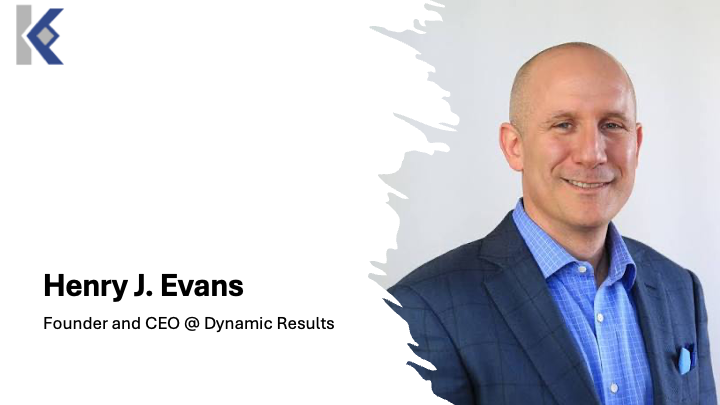
Henry Evans, CEO of Dynamic Results and a specialist in high-stakes execution, has spent decades dismantling this dread. Known as the "Invited Agitator" and "Chief Peacemaker to the C-Suite," Evans brings a rigor developed through training alongside operators from the Navy SEALs, Delta Force, and the Army Rangers. He argues that we have been defining the concept entirely wrong. To Evans, accountability is a "forward-looking discipline" and the "language of high performance."
To transform your team from a culture of blame to a unit of elite execution, you must adopt these six fundamental shifts in mindset and methodology.
1. Accountability Is Not a Punishment (It’s Clarity)
The primary barrier to high performance is a vertical disconnect in how accountability is perceived. Those at the top of the org chart define it as "performance" and "meeting goals." As you move down the hierarchy, it becomes increasingly punitive, defined as "getting caught," "getting in trouble," or "blame thrust upon someone."
True accountability is established at the start of a commitment, not the end of a failure. It is the infrastructure of execution. As defined in the Accountability Method™:
"Clear commitments that—in the eyes of others—have been kept."
By establishing this language on day one, accountability ceases to be a disciplinary measure and becomes a tool for engagement. When commitments are clear, people actually enjoy the work because they know exactly how to win.
2. The "Ferrari" vs. The "Bicycle" Brain
Standard Operating Procedures (SOPs) often fail during a crisis because "biological technology overrides the operating system." This is a neurological reality Evans explains through the metaphor of two brain speeds:
The Ferrari: The limbic system—the fast, emotional, and impulsive side of our brain.
The Bicycle: The analytical, rational, and slow-moving side.
In a crisis, the "Ferrari" takes the wheel. When a leader's limbic system is triggered, they often "pull the plug" on the very processes they ratified. They may "freeze" or default to hierarchy like it’s a god, ignoring the real experts on the ground. To survive the "Red Zone," leaders must build "Relationship Capital" long before the pressure hits. You build this capital out of crisis so you don’t have to "cuddle" people in the crisis.
"SOPs die in the red zone."
3. The "Accountability Puzzle" and the Single-Owner Rule
To eliminate the "it’s not my job" mentality, Evans utilizes the Accountability Puzzle. This framework requires an Internal Locus of Control—the belief that outcomes are influenced by one's own actions and mistakes, rather than an External Locus that blames "stupid customers," "random chance," or "environmental factors."
Bridging the Gap: Use S.M.A.R.T.E.R. expectations—Specific, Measurable, Attainable, Results-oriented, Trackable, Ethical, and Recorded.
Visual Association: Paint a picture of the outcome. Don’t just ask for a "sales report." Ask for a "three-slide deck with a regional map on each slide."
Specific Timing: Eliminate ambiguity by using exact dates, times, and time zones (e.g., "October 3rd at 5:00 PM EST").
One Task, One Owner: Accountability is a social contract declared to the group. A team cannot own a task; only an individual can.
4. Emotional Safety Is a Data Transmission Metric
"Psychological safety" is often dismissed as a soft concept, but Evans treats it as a critical operational matrix: the "Speed of Bad News."
A crisis has momentum. The velocity with which your team shares bad news must move faster than the crisis itself, or the organization will get run over. If employees don't feel safe, the leader operates in a state of ignorance—a "data vacuum." In this state, a leader remains the authority but becomes a liability because they are making high-stakes decisions without Human Intelligence (HI). Remember, intuition is also data; it is the aggregation of past experience.
"You don't want to learn CPR while you're watching someone drown."
5. Why You Need a "Pessimist" in the Room
Most high achievers suffer from "Positive Bias Trap." They believe they can win every battle, which makes them prone to overlooking obstacles and hazards. To stress-test a plan, you must intentionally invite "naysayers" into the room.
The key is to separate the person from the opinion. For a leader, this requires active listening that validates the individual while challenging the idea. For example, instead of dismissing a concern, try: "I like working with you and I like most of your ideas, but I’m struggling to understand how the idea you just gave me is going to help us generate cash flow."
6. Flip the Script on Difficult Conversations
To foster peer-to-peer accountability, you must stop "holding people accountable" and instead flip the onus. This shifts the responsibility for the results back to the individual, making them the owner of their own social contract. Evans recommends a 3-Question Process (adapted from Jean Marie DiGiovanna) to end every tough talk:
What will you take on and by when?
How do you want to be held accountable?
If you don't do what you say you will, how do you want me to be?
When the employee chooses the consequence in Question 3, the power dynamic shifts. The follow-through is no longer a punishment from the boss; it is the execution of a commitment the employee defined themselves.
Conclusion: From Intention to Result
Redefining accountability changes the very air a team breathes. It moves the needle from "intent" to "results," transforming a culture of blame into one of precision and trust. When the rules of engagement are clear and bad news moves fast, execution accelerates.
Ask yourself: Is your team’s current language of accountability driving performance, or is it just a code word for who gets blamed?