
From $3.2 Million to $400: How 'Vibe Coding' and Human Agency are Redefining the AI Era
In 2016, building a tech powerhouse required $13 million and a permission slip from Silicon Valley. In 2025, it requires $400 and a weekend.
For decades, the path to innovation was guarded by a formidable resource barrier. If you had a transformative idea, the prerequisite was a mountain of venture capital, grueling development cycles, and an army of specialized engineers. This was the "resource wall," and it forced countless visionaries into innovation paralysis.
The resource wall has been pulverized.
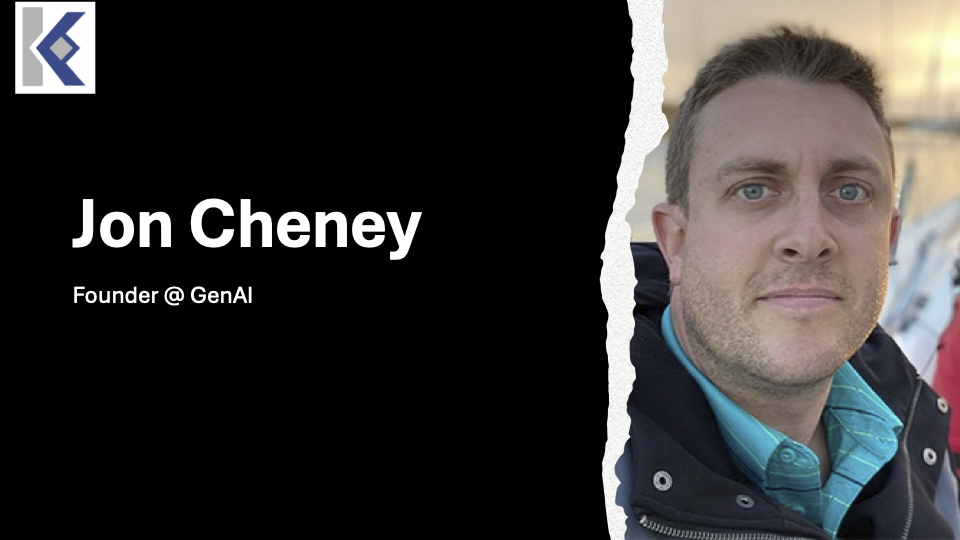
Consider the trajectory of Jon Cheney. His first major venture, Seek, was an augmented reality giant that raised $13 million in venture capital. At its peak, the platform managed a staggering 70 million digital treasure chests deployed across the globe, requiring a massive engineering team and years of traditional development to sustain.
But when Cheney founded the General AI Proficiency Institute (GenAIPI), he didn't call a recruiting firm or draft a pitch deck for VCs. He sat down and built the foundation himself. What previously required a $3.2 million investment and 18 months of development was live in three days for the cost of a nice dinner.
This blog post explores the counter-intuitive takeaways from the front lines of this revolution and why your greatest competitive advantage is no longer your budget, but your agency.
The 99% Discount: The Arrival of "Vibe Coding"
The term "Vibe Coding" represents a fundamental shift in how we manifest ideas into software. It describes the ability of a non-developer to build fully functional platforms through natural language and vision. By describing a vision to AI agents, the "builder" shifts from writing manual syntax to orchestrating outcomes.
The economic implications are not just incremental; they are disruptive. When comparing the development of Seek's traditional infrastructure to the AI-enabled creation of the GenAIPI platform, the "99% discount" becomes visible:
Metric
Pre-AI Development (Seek)
AI-Enabled Development (GenAIPI)
Direct Cost
$3.2 Million
$400
Time to Market
18 Months
3 Days
Personnel
Large Engineering Team
Solo Non-Developer
This isn't a hobbyist’s experiment. Within five days of "vibe coding" his initial app, Cheney secured a client contract valued at $15,000. For a $400 investment, that is a return on capital that was statistically impossible less than a decade ago.
"I did the math... it would have taken me 18 months and $3.2 million to do it in the pre-AI time. Here it was three days and 400 bucks. With tools like Replit, that’s how much cheaper it is. It changes the entire math of entrepreneurship." — Jon Cheney
The Greatest Risk: Losing Agency, Not Jobs
Because the barrier to entry has vanished, a new danger has emerged. When building becomes this easy—$400 and 72 hours—leaders are tempted to let AI do the thinking as well as the building.
The "GenAIPI Doctrine" argues that the public's obsession with job loss misses the point. The real threat is the loss of Human Agency: our capacity for critical thinking, judgment, and purposeful creation.
Traditional consultants are still trying to sell you their "future" through 100-page static strategy decks that are obsolete by the time they hit your inbox. These decks are the antithesis of agency. They create a culture of dependence on outside "experts" rather than building internal muscle.
Leaders must refuse to outsource their future. You cannot delegate your vision to a consultant or a chatbot. The Doctrine serves as a manifesto for the AI era:
"AI may assist. AI may amplify. AI may accelerate. But it must never replace human responsibility, human judgment, human creation, human service, or human becoming." — The GenAIPI Doctrine
To survive this shift, organizations must move away from "consumption" and toward "creation." The goal is to build internal capability so that the people closest to your problems are the ones empowered with the tools to solve them.
Beyond Chatbots: The Shift to "Permanent AI Infrastructure"
Most companies are currently "playing" with AI—using a chatbot to summarize a meeting or plan a trip to Italy. That is activity, not transformation. Real competitive advantage comes from "installing" AI as a permanent infrastructure.
This is the role of the fCAIO (fractional Chief AI Officer). Organizations don't need a one-time workshop; they need embedded leadership that works on a structured monthly cadence to identify where AI matters and, crucially, where human judgment must remain protected.
The centerpiece of this infrastructure is "Jenna"—the organization's internal AI brain. Unlike a standard dashboard, Jenna is a conversational interface accessible via Slack, email, or text. Because she is connected to your CRM, fleet management, and financial systems, she doesn't just show you data; she executes workflows.
A leader can send a simple Slack message: "Jenna, find 100 new leads similar to our top five clients and draft personalized outreach." Or: "Jenna, run the payroll report, identify any discrepancies, and schedule the transfers for 9:00 AM tomorrow."
This transformation system rests on three pillars:
Strategy: Defining high-impact AI opportunities while ensuring human judgment is never replaced in critical decision-making.
Transformation: Moving from theory to hands-on creation, building internal agents that produce measurable ROI.
Education: Moving every employee from a "user" to a "builder," certifying them in the human-centric skills that AI cannot replicate.
Future-Ready: Lessons from the BYU Athletics Partnership
The shift in the economic landscape is being signaled in unexpected arenas. GenAIPI recently announced a groundbreaking partnership with BYU Athletics’ "Built4Life" program, the first-of-its-kind in collegiate athletics.
By providing AI education to student-athletes, BYU is acknowledging that AI proficiency is no longer a "tech skill"—it is a survival skill. These athletes are learning to use tools like Replit to become "entrepreneurial builders" before they even enter the professional workforce.
They are being trained for the "Next-Gen Job": the Agent Orchestrator. This role involves managing a fleet of AI agents to perform complex, multi-step tasks. It requires high-level human oversight, not manual labor.
"The future of work belongs to entrepreneurial builders—people who know how to use AI to build, learn, and adapt." — Amjad Masad, CEO of Replit
Conclusion: Reclaiming Your Time to Be Human
Ultimately, the AI revolution is not about making us more like machines; it is about using machines to automate the mundane so we can reclaim the time to be human.
We should use AI to handle the "noise"—the scheduling, the data entry, the repetitive administration—so we can focus on higher-value work and a higher quality of life. Jon Cheney’s lifestyle is the blueprint: despite running a high-growth institute that reached $1 million in revenue in six months, he maintains a 5-acre farm, cares for 50 chickens, and composes music. AI is the tool that protects his time for his family and his 5-acre property in West Mountain.
As we move deeper into this economy, the question for every leader is simple: Are you ready to stop being a consumer of technology and start being a purposeful creator of it?
The resource wall is gone. Your agency is all that remains. Use it.