
The Most Expensive Thing in Your Business Might Be Free
In the business world, the word "free" is magnetic. A free software pilot, a complimentary consulting engagement, a no-cost analytics tool—these offers seem like strategic shortcuts to growth and efficiency. But what are the unseen obligations that come attached? What is the real price of accepting something for nothing?
The most powerful and counter-intuitive business principles often challenge conventional wisdom. By exploring one such principle from Robert Greene's The 48 Laws of Power—"Despise the Free Lunch"—we can uncover why intentionally paying for value is a critical strategy for maintaining control, building a strong culture, and reclaiming your organization's independence.
"Free" Isn't Freedom, It's a Debt
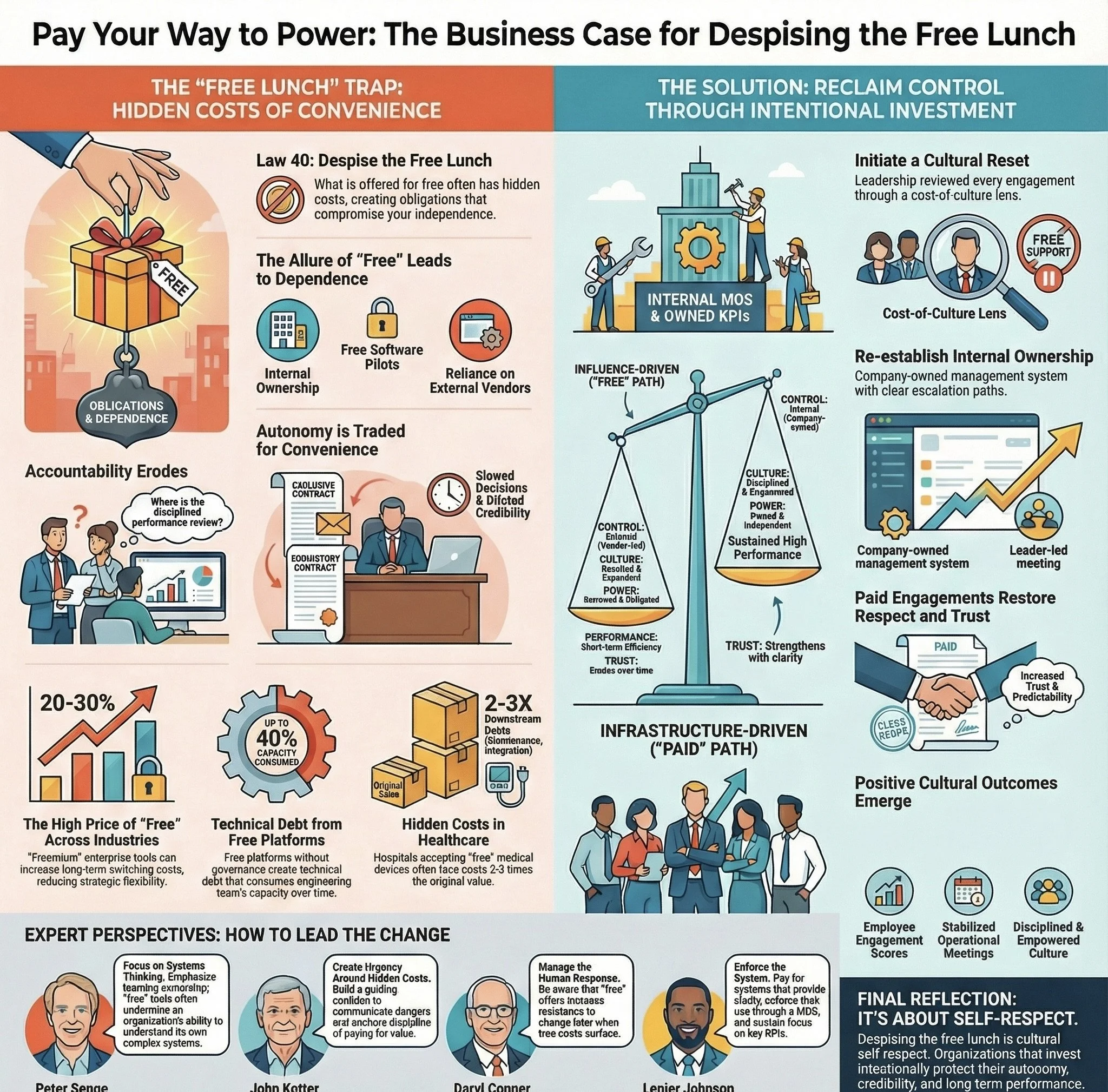
When something is offered for free, it rarely comes without strings. These hidden costs create a sense of obligation, subtly eroding autonomy in exchange for short-term convenience. This isn't just a philosophical concept; it has tangible cultural consequences. A mid-size manufacturing organization learned this lesson firsthand when it began accepting "free" vendor pilots and tools. This influx of complimentary support created a culture of dependence and deferred decision-making. Accountability eroded as supervisors began to defer to vendor dashboards and recommendations instead of using and owning their internal KPIs. This creates a dangerous psychological loop: convenience breeds dependency, and dependency smothers the proactive problem-solving that defines a resilient organization. This cultural erosion isn't just a feeling; it's a measurable liability that shows up on the balance sheet and in performance metrics.
The Hidden Costs Are Measurable and Massive
The bill for "free" always comes due, and it's itemized in the hard data of operational drag and strategic inflexibility. The initial convenience often gives way to long-term liabilities and significant financial strain. Analysis reveals a clear pattern:
• Manufacturing: Plants that rely on "free" analytics from equipment manufacturers often see 10–15% lower sustained OEE (Overall Equipment Effectiveness) due to a lack of ownership in the improvement actions.
• Economics: McKinsey reports that "freemium" enterprise tools can increase long-term switching costs by 20–30%, trapping companies and reducing their strategic flexibility.
• Engineering: Free, open-source platforms implemented without proper governance can dramatically increase technical debt, eventually consuming up to 40% of engineering capacity to manage and fix.
• Federal Government: According to GAO reports, no-cost software pilots for defense agencies frequently result in sole-source lock-ins that end up costing taxpayers millions in the long term.
Confronted with this stark data, the manufacturing firm realized that the only way to reverse the trend was to fundamentally change its philosophy on value.
A Culture of Ownership Must Be Paid For
Recognizing the cultural decay, the manufacturing organization initiated a reset. It paused all "free" external support and made a strategic decision to pay its way. By engaging paid advisors with clearly defined scopes and termination clauses, the company immediately restored a sense of respect and trust. By writing a check, leadership didn't just buy expertise; they bought clarity and commitment, signaling to the entire organization that accountability was no longer a negotiable asset.
The return on this investment in independence was immediate and transformative. Supervisors regained their authority by owning their metrics instead of outsourcing interpretation to a third party. The power dynamic with vendors normalized, shifting from one of persuasion to a true partnership. As a result, employee engagement scores rose and operational discipline returned. This experience validated a core truth:
Despising the free lunch is not cynicism—it is cultural self-respect.
The True Price of Independence
Intentionally investing in the tools, systems, and expertise you need is not just a financial transaction; it is a strategic act of preserving autonomy, credibility, and power. Paying your way ensures that your objectives drive your decisions, not the hidden obligations that come with a free lunch. This is how a culture is forged: not by accepting what is easy, but by intentionally paying the price for discipline, self-reliance, and absolute control over its destiny.
Looking at your own team or organization, where has the allure of "free" cost you more than you bargained for?